
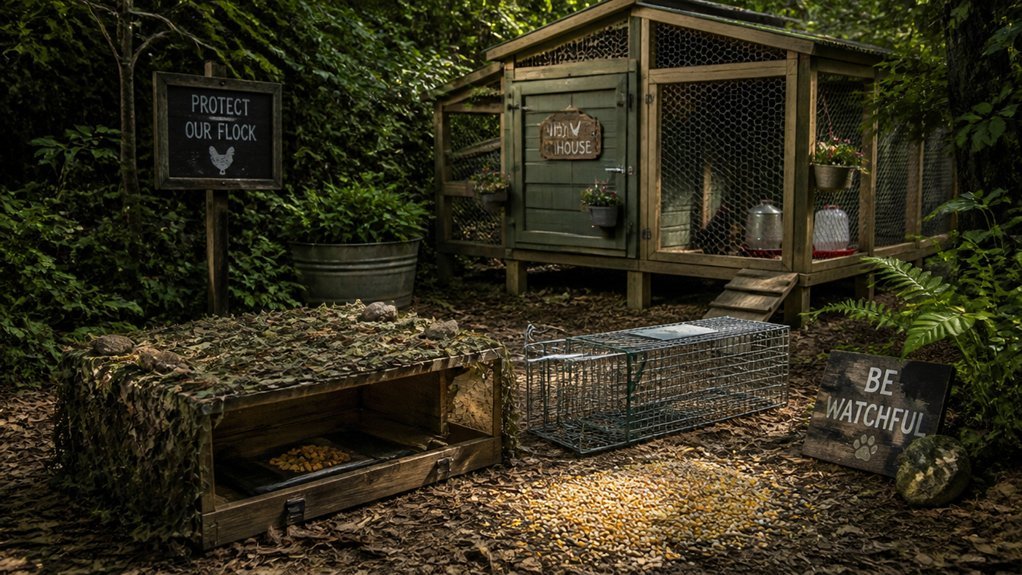
First, figure out which predator’s visiting by checking tracks, droppings, feathers, bite marks, and digging. Then choose the right humane live trap for the animal, like a sturdy raccoon cage or a compact weasel trap. Place it along fence lines, brush edges, or other travel routes, but keep chickens away from it. Bait it with the predator’s preferred food, and check and reset traps at least twice daily so you can protect your flock and learn what works best.
Figure Out Which Predator Is Visiting
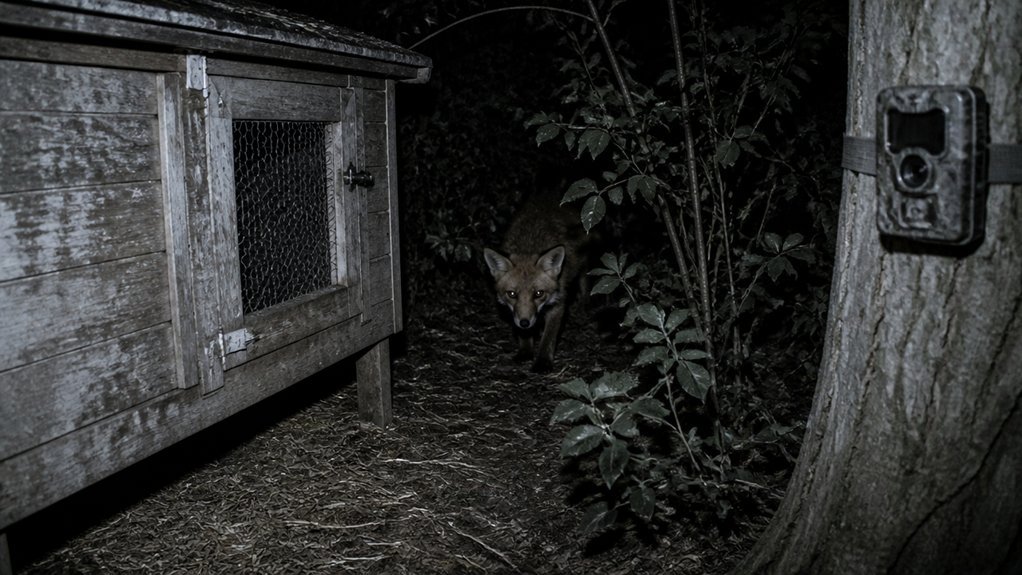
Before you set a trap, figure out which predator is actually visiting your coop. Check for tracks, feathers, droppings, bite marks, and digging patterns.
Before trapping, identify the predator by tracks, feathers, droppings, bite marks, and digging signs.
A raccoon often leaves handlike prints and can pry open latches. A fox usually attacks at night, grabs one bird, and leaves clean tracks. A weasel can slip through tiny gaps and kill several chickens.
Hawks strike from above and leave scattered feathers with little sign on the ground. Snakes may take eggs and leave no mess. Watch the timing of losses, too, because repeated daytime raids point to different threats than nocturnal ones.
Use a trail camera if you can, and inspect the coop every morning. When you identify the visitor, you’ll choose a trap that fits its habits.
Understanding predator deterrent systems can also help you prevent visits before they happen.
Choose the Right Chicken Trap
Now that you know what’s coming after your chickens, match the trap to the predator’s size, habits, and location.
For raccoons, use a sturdy live trap with a sensitive trigger and enough room for the animal to enter fully.
For foxes, choose a larger cage trap that won’t tip or flex.
For smaller raiders like weasels, pick a compact trap with narrow openings they can’t avoid.
If you need to protect birds without harming them, select a humane live trap rather than a lethal model.
Check the trap’s build, latch, and trigger quality before you buy it, and make sure it’s easy to bait and reset.
A well-matched trap works faster, wastes less effort, and gives you a better chance of stopping repeat attacks.
Additionally, choosing a trap with tamper-resistant features can help prevent accidental captures of your chickens or other non-target animals.
Place Traps Safely Around the Coop
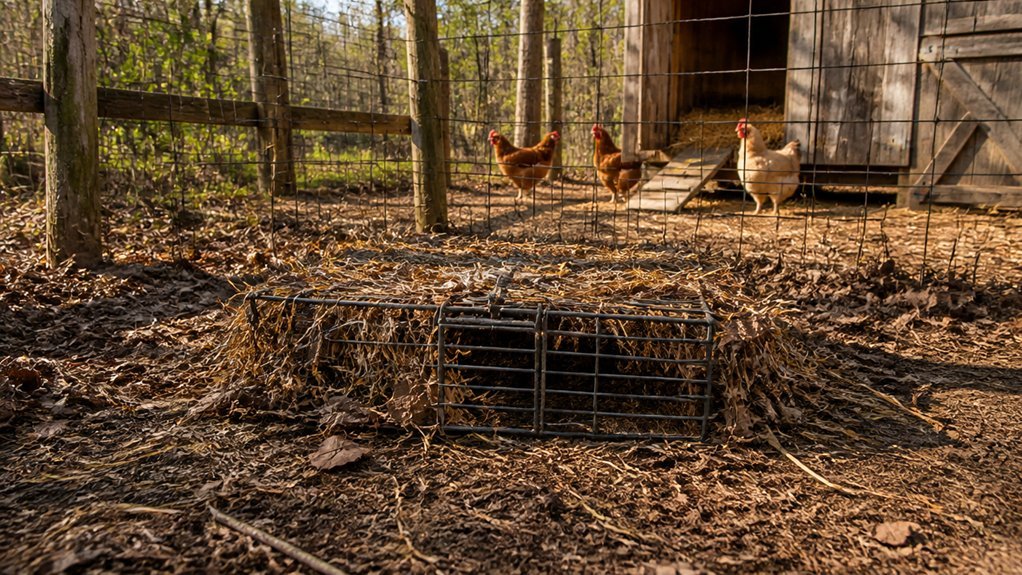
Once you’ve picked the right trap, put it where predators naturally travel, not where they’ll spook or where your chickens can reach it. Position it along fence lines, brush edges, burrows, or paths that lead toward the coop, because predators often hug cover. Using electrified fences to create a barrier can also help deter predator entry around your trap setup area. Keep the trap level and stable so it won’t rock, tip, or catch on loose debris. Use a secure enclosure or anchor it if pets, kids, or livestock might wander nearby. Check the ground for tracks, droppings, or disturbed soil so you can confirm the route before you set anything. Leave enough open space around the trap for safe approach and quick inspection. Mark the area clearly and check local rules before you place any trap.
Bait the Trap Effectively
Use bait that matches the predator you’re targeting, and place it so the animal must fully commit to enter the trap. You can tempt raccoons with fish, marshmallows, or eggs; foxes often respond to fresh meat; opossums may investigate cat food. Keep bait small, centered, and slightly past the trigger so the animal steps in. A secure locking mechanism can help prevent raccoons from opening the trap once captured.
Check and Reset Traps Regularly
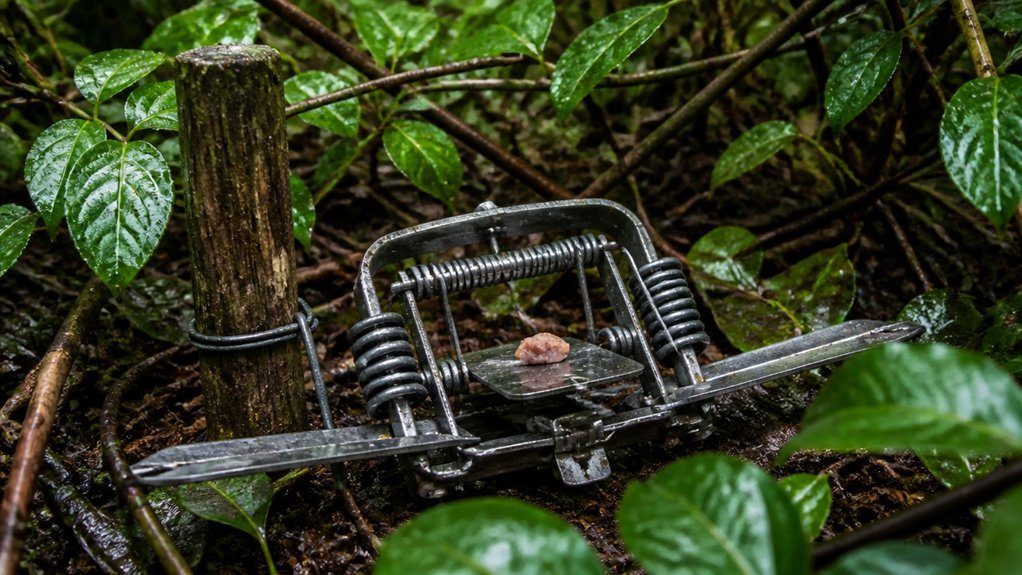
Check your traps at least twice a day so you can respond quickly and keep animals from suffering. When you find a catch, handle the situation calmly and follow local wildlife laws. Remove the animal, then inspect the trap for damage, dirt, or weak springs. To ensure effective protection, choose traps made with tear-resistant fabrics, which help maintain their integrity after repeated use. Reset it immediately if it’s still safe to use, because a ready trap protects your flock sooner. If you haven’t caught anything, confirm that the trigger still works and the bait hasn’t spoiled or dried out. Reposition the trap if tracks suggest predators are using a different route. Keep a simple log of check times, catches, and repairs so you can spot patterns. Regular checks also let you replace worn parts before a missed catch costs you chickens.
Frequently Asked Questions
What Signs Show a Predator Attacked Chickens at Night?
You’ll notice missing birds, feathers scattered, bloody wounds, disturbed bedding, tracks, droppings, dug holes, and broken fencing. If you hear nighttime alarm calls or find eggs untouched, a predator likely attacked your chickens.
How Do I Identify Tracks Around My Coop?
You can identify tracks around your coop by checking print size, toe count, claw marks, stride, and direction. Compare them to local wildlife guides, then photograph tracks before rain, mud, or wind erases them.
Which Local Predators Threaten Chickens Most Often?
You’ll usually face raccoons, foxes, coyotes, opossums, weasels, hawks, and stray dogs most often. You can spot them by tracks, droppings, and damage patterns, then strengthen your coop and runs quickly.
Are Live Traps Legal in My Area?
You’ll need to check your local, state, and federal wildlife rules, since live traps aren’t always legal. Contact your game warden, animal control, or extension office before setting one to avoid fines or harming protected species.
What Should I Do After Trapping a Predator?
You should secure the trap, stay calm, and follow local laws. Then contact animal control, wildlife officials, or a licensed trapper. Don’t handle the predator directly, and move your chickens somewhere safe immediately.
In Summary
Now that you know the best ways to trap predators harming your chickens, you can take quick, careful action to protect your flock. Identify the animal, pick the right trap, place it safely, and bait it wisely so you get better results. Don’t forget to check your traps often and reset them as needed. With a little patience and the right setup, you’ll keep your coop safer and your chickens much more secure.



