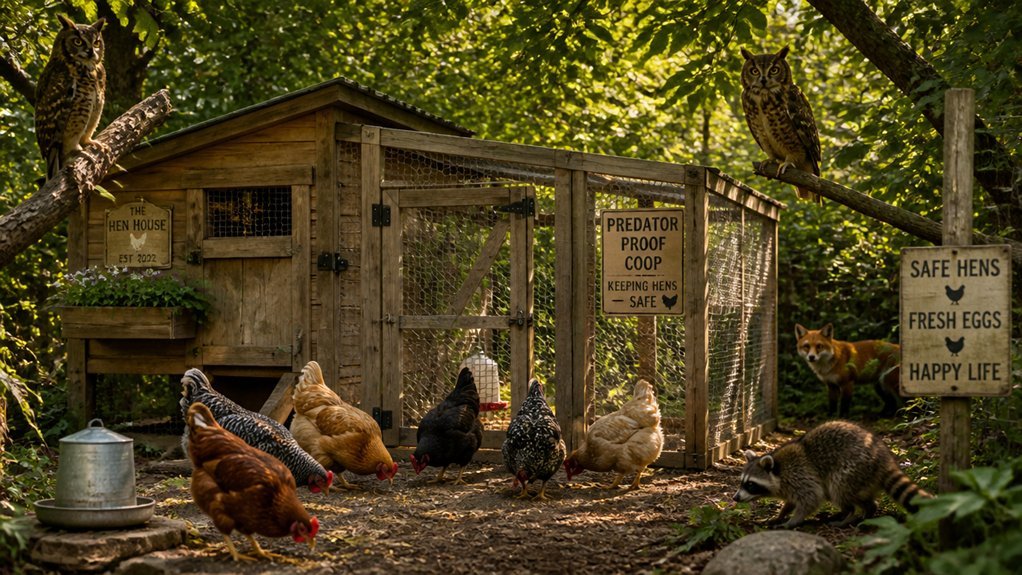
Predator pressure changes all year, so you should adjust chicken protection by season. In spring, foxes, raccoons, coyotes, hawks, and snakes may hunt near coops for eggs, chicks, and hens. Summer heat pushes predators to dawn, dusk, and night. Fall and winter often bring more raccoons, foxes, and coyotes closer as food gets scarce. Lock birds up early, use hardware cloth, lights, and motion deterrents, and you’ll see what else helps keep them safe.
Why Predator Risk Changes by Season
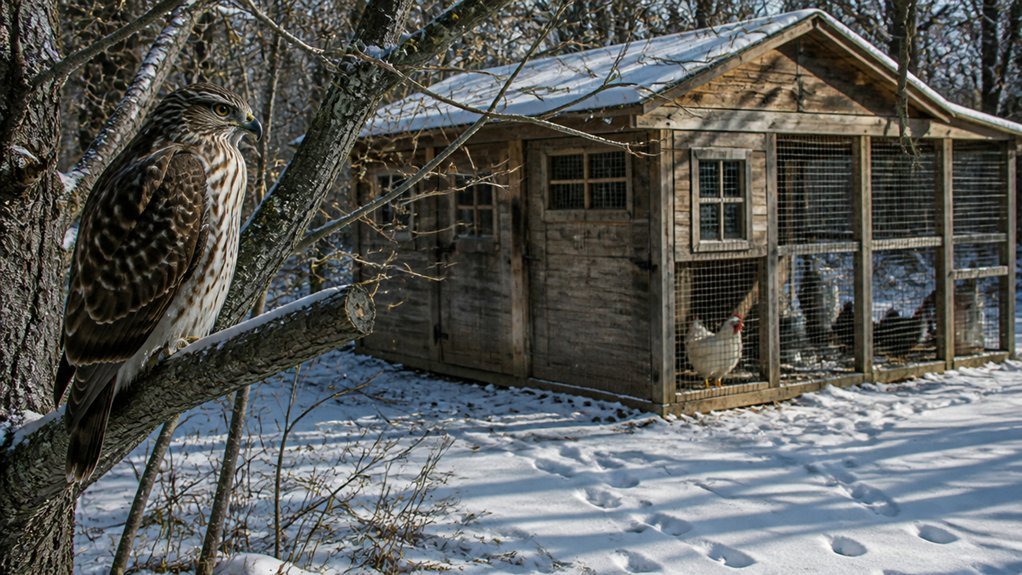
Predator pressure doesn’t stay the same all year, and your chickens feel those shifts quickly. In colder months, wild animals often hunt more aggressively because food gets scarce and daylight shrinks.
When temperatures rise, many predators spread out, follow breeding cycles, or raise young, which can change how and when they target your flock. Rain, snow, and heat also affect cover, scent trails, and travel routes, so a coop that felt safe last month may suddenly sit on a busy path.
You need to watch local patterns, because foxes, raccoons, hawks, and coyotes each respond differently to seasonal food supply, shelter needs, and nesting demands. If you track those shifts, you can adjust your flock’s protection before danger gets worse. Considering predator resistance features in your fencing can also help mitigate risk during vulnerable times.
Spring Predator Threats to Backyard Chickens
As spring returns, you’ll often see predator activity shift closer to your coop as animals leave winter scarcity behind and start feeding more often to support breeding and young. You should watch for foxes, raccoons, coyotes, hawks, and snakes, because each one targets hens, chicks, or eggs in different ways. Fresh growth can hide tracks, while nests and den sites draw predators into yards. Proper fencing with hardware cloth and deep burial can be crucial in keeping them out.
- Lock birds in before dawn and after dusk.
- Repair weak wire, gaps, and loose latches.
- Remove spilled feed and eggs quickly.
- Trim cover that gives predators easy ambush points.
You’ll protect your flock best by checking fencing daily and staying alert for signs like paw prints, feathers, or digging near run edges.
Summer Predator Risks and Hot-Weather Gaps
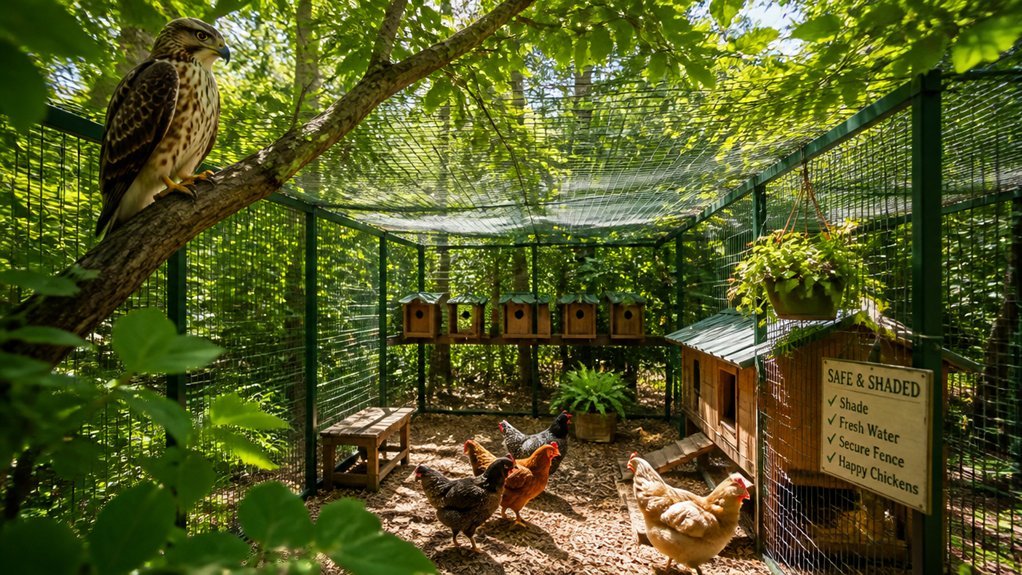
Summer heat can push predators to move more at dawn, dusk, and through the night, so you need to stay alert when your flock is most exposed.
You should also check shade lines and fence edges, because dry ground and shifting cover can open small breaches predators use fast.
Keep water stations protected too, since thirsty birds gather there and predators can exploit that routine.
Regularly inspecting predator deterrent features and ensuring they are functioning properly is crucial to maintaining an effective safeguard for your chickens.
Heat-Driven Predator Activity
When temperatures climb, many predators change their routines and move around more at dawn, dusk, and through the night, which can leave chickens exposed during the cooler gaps in your daily checks. You need to watch these shifts closely and adjust your habits so you’re not assuming daytime calm means safety.
Heat can push foxes, raccoons, coyotes, and hawks to hunt when your flock is least active. Incorporating electric poultry fence kits designed for predator resistance can significantly enhance protection during these vulnerable times.
- Check birds early and late each day.
- Count every chicken before dusk.
- Remove spilled feed that attracts hunters.
- Listen for alarms or sudden silence.
Keep water fresh and routines consistent so birds stay alert. By matching your checks to predator patterns, you reduce surprise losses and protect your flock when summer heat changes the timing of danger.
Shade Fence Breaches
Hot weather can expose fence weak spots because chickens and shade-seeking predators both crowd the same cool edges of your yard. You should inspect those borders daily, especially where panels sag, soil shifts, or weeds hide gaps. When your flock presses against the fence for shade, raccoons, foxes, and dogs can test loose wire and widen openings fast. Regularly checking the fence installation and ensuring it remains secure helps prevent these breaches from forming.
| Checkpoint | Action |
|---|---|
| Fence base | Pack soil and cover burrows |
| Corners | Tighten mesh and posts |
| Shaded sections | Trim brush and clear cover |
| Gates | Latch firmly after every visit |
Walk the perimeter at dusk, then repair any breach before nightfall. Add hardware cloth over weak spots, and don’t rely on hot, dry ground to stay stable. Consistent checks keep summer shade from becoming an easy entry point for predators.
Water Station Vulnerabilities
Water sources can become predator magnets in the heat, so you need to treat every trough, bucket, and nipple line as a potential weak point. Shallow water draws raccoons, dogs, hawks, and snakes, especially when birds cluster and splash.
Keep stations inside fenced runs, not along open edges where predators can snatch a distracted hen.
- Raise containers off the ground to reduce scent trails.
- Add tight covers that still let chickens drink easily.
- Refresh water often so you don’t leave stagnant puddles nearby.
- Check for leaks that create muddy, vulnerable approach paths.
You should also place lighting nearby and inspect each station at dusk. If you move water after dark, you may guide chickens into safer zones and keep predators guessing.
Additionally, maintaining a dry environment around water stations and ensuring proper coop ventilation can help reduce humidity and discourage pest and predator activity.
Fall Predator Pressure Around Chicken Coops
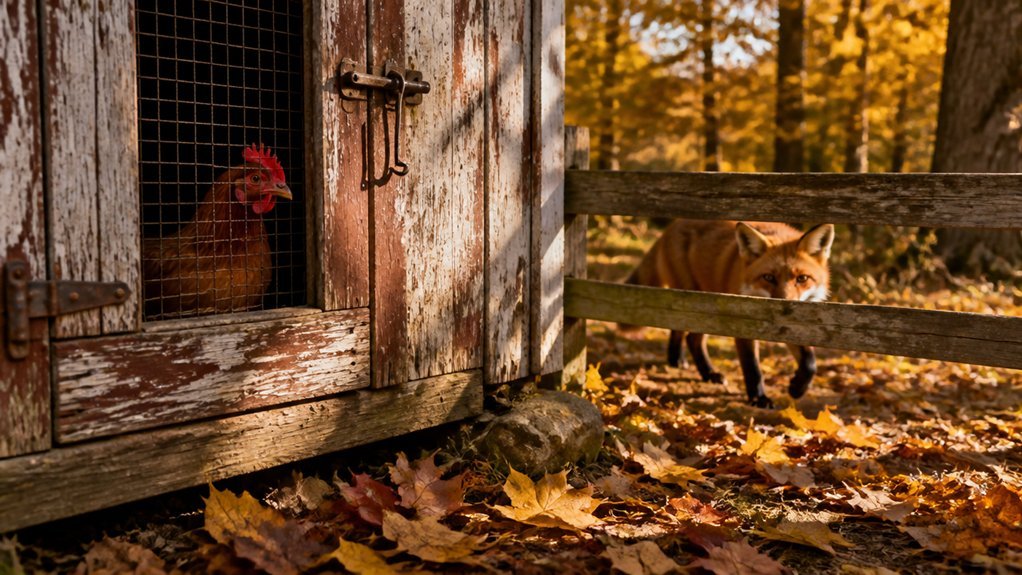
As temperatures drop and daylight shrinks, fall often brings more pressure from predators around your coop, and you may notice more bold, frequent visits from raccoons, foxes, coyotes, opossums, and even hawks.
You should tighten your routine now, because hungry animals roam farther and test weak spots. Lock birds in before dusk, and check latches, wire, and roof panels every evening. Clear brush, stacked wood, and fallen fruit near the run so predators can’t hide nearby. Use secure feed storage, since spilled grain attracts trouble fast. If you free-range, supervise closely and bring birds in earlier. Motion lights and sturdy fencing help you spot threats before they reach your flock. Choosing raccoon-resistant hardware such as self-locking, padlock-compatible latches can make a significant difference in preventing break-ins.
Stay consistent, and you’ll cut the odds of a costly fall attack.
Winter Predator Attacks on Chickens
Winter can push hungry predators closer to your coop as food gets scarce. You’ll need to watch for nighttime attacks, since your chickens are most vulnerable after dark. Snow can also expose tracks and make it easier for hunters to find your flock. Using predator deterrent lights can provide an effective humane deterrent by mimicking predator eyes and fire.
Winter Food Scarcity Pressure
When food gets scarce, hungry predators turn to easy meals, and your chickens can quickly become a target. In winter, you face more pressure from foxes, coyotes, raccoons, and birds of prey as wild prey disappears.
You can reduce risk by limiting temptation and making your flock less obvious.
- Clean up spilled feed fast.
- Store grain in sealed containers.
- Keep brush and debris trimmed back.
- Reduce attractants like fallen fruit and scraps.
You should also check fences, close gaps, and keep birds active during daylight so they’re less isolated. A consistent feeding routine helps, too, because predators learn where meals appear.
When you remove easy rewards, you force hungry hunters to keep moving instead of lingering near your coop.
One effective strategy is to enhance walk-in coop security, ensuring predators cannot easily access or hide near the coop.
Nighttime Coop Vulnerability
After dark, your coop becomes far more vulnerable, because most chickens are asleep, visibility drops, and predators can work with less interruption. Raccoons can pry, foxes can dig, and weasels can slip through tiny openings. Check doors before sunset and lock them securely. Use hardware cloth, not flimsy wire, on vents and windows. Keep roosts high enough to reduce easy grabs. Also, ensure your coop’s predator protections are sturdy and well-maintained to prevent any successful breaches.
Snow Cover Tracks Hunters
Snow changes the threat pattern because it hides tracks, muffles movement, and makes it harder for you to spot a predator before it reaches the coop. You can’t rely on prints to warn you, so you need sharper winter habits and stronger barriers.
- Check the run each morning for disturbed snow, feathers, or gaps.
- Lock birds in a secure coop before dusk.
- Clear brush and stacked lumber that let hunters stalk close.
- Use motion lights or cameras to catch silent approaches.
Foxes, coyotes, raccoons, and even hungry dogs use snow cover to move in fast and vanish just as quickly.
When you feed chickens, keep feed sealed and remove leftovers so you don’t attract them. A tight roof, buried wire, and routine patrols help you stay ahead of winter attacks.
Protect the Coop From Predators
To keep your chickens safe, start by making the coop a hard target for predators. Use sturdy latches, cover gaps with hardware cloth, and inspect walls, roof, and floor for weak spots. Replace loose boards right away, because raccoons and foxes pry at anything sloppy. Keep feed sealed and store it away from the coop so smells don’t invite visitors. Add a motion light near the door if you can.
| Task | Why it helps |
|---|---|
| Check locks nightly | Stops easy entry |
| Patch holes quickly | Blocks climbing and chewing |
| Remove spilled feed | Cuts down on scent trails |
You should also watch for digging or scratching around the base, then reinforce those spots before dusk.
Secure the Run and Yard
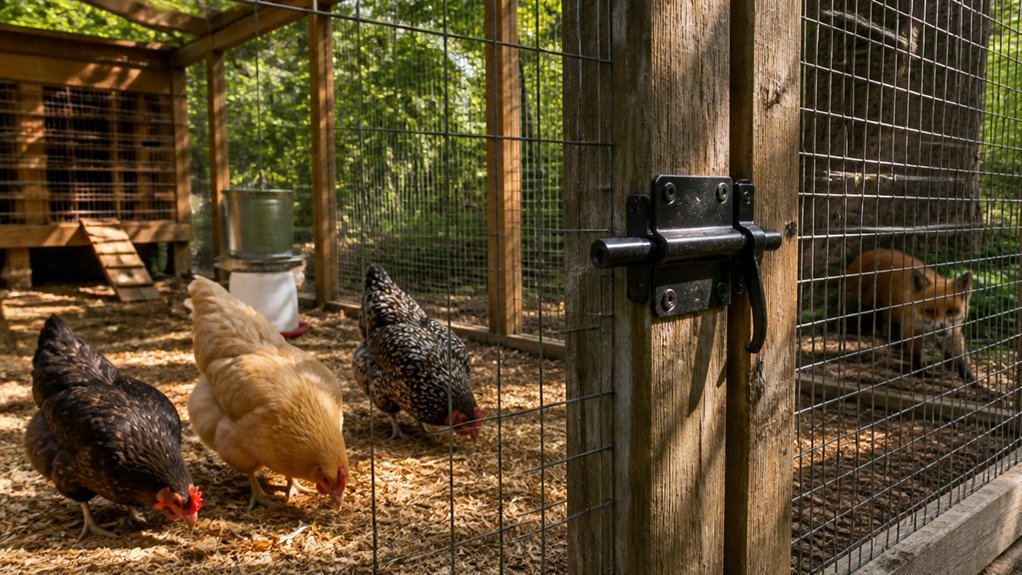
Next, lock down the run and yard so predators can’t get close enough to test your defenses. You can start by checking every panel, post, and corner for gaps that a fox, dog, or raccoon might exploit. Use sturdy wire mesh, and bury it outward to stop digging.
Keep grass trimmed, brush cleared, and feed stored away so you don’t invite unwanted visitors.
- Inspect fencing after storms
- Patch holes immediately
- Reinforce weak gates
- Remove hiding spots
Walk the perimeter often and look from a predator’s angle. If you spot loose mesh or shifting soil, fix it before nightfall. A secure run reduces stress on your flock and gives you more control when seasonal pressure rises.
Add Locks, Lights, and Motion Deterrents
Once your run is secure, add strong locks to every door and gate so raccoons, dogs, and even clever foxes can’t work them open. Choose latches you can secure with clips or carabiners, and check them every evening.
Install bright motion lights around the coop and run; sudden light can startle nighttime visitors and help you spot trouble fast. You can also use motion-activated sprinklers or alarms to make predators think twice before approaching. Place the lights high enough that chickens won’t peck at cords or fixtures.
Keep batteries fresh and test sensors after storms or cold snaps. If you use solar units, wipe the panels clean so they keep charging. Small upgrades like these make your flock less inviting and give you extra peace of mind.
Identify Predator Signs and Strengthen Weak Spots
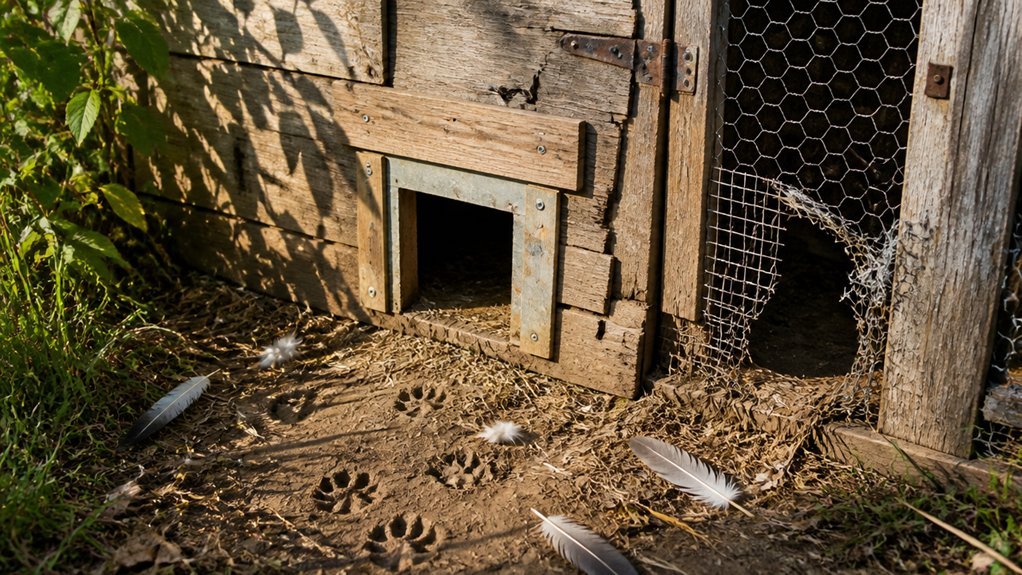
Even a well-built coop can show clues when a predator is testing it, so check for tracks, dug-out edges, feathers, scratch marks, bent wire, or scattered bedding around the run. Walk the perimeter at dawn and dusk, when fresh signs stand out.
Check for tracks, dug-out edges, feathers, or bent wire—early signs a predator is testing your coop.
You can spot weak points fast if you inspect doors, latches, vents, corners, and buried wire.
- Fill burrows and pack soil firm.
- Reinforce gaps with hardware cloth, not chicken wire.
- Replace loose boards and rusted fasteners.
- Add apron wire or pavers along the base.
If you notice repeated damage, assume the animal’s learning your setup and upgrade right away. Trim nearby brush, remove feed spills, and seal nesting areas that invite digging or climbing.
A few careful repairs now can stop a costly breach later.
Frequently Asked Questions
How Do Free-Ranging Chickens Affect Predator Attraction?
Free-ranging chickens can attract predators because you leave birds visible, scattered, and vulnerable. You’ll draw hawks, foxes, raccoons, and dogs unless you supervise closely, provide cover, and bring them in before dusk.
Can Guardian Animals Reduce Chicken Predator Attacks?
Yes, you can use guardian animals to cut predator attacks. They’ll scare off foxes, coyotes, and hawks, especially when you pair them with sturdy fencing, secure coops, and consistent supervision for better protection.
Which Chicken Breeds Are Safest From Predators?
You won’t find predator-proof breeds, but you’ll do best with alert, fast, flighty breeds like Leghorns, Easter Eggers, and Australorps. You should still secure housing, because breed alone won’t keep predators out.
How Often Should Coop Security Be Checked?
You should check coop security daily, and do a thorough weekly inspection for gaps, latches, and damage. After storms or predator sightings, inspect it immediately so you can catch problems before trouble starts.
Do Predator Risks Differ Between Day and Night?
Yes, you’ll face different threats: hawks and dogs strike more by day, while raccoons, foxes, and owls hunt at night. You should stay alert, because predators exploit daylight activity and darkness differently.
In Summary
Predator risks change with every season, so you need to stay alert year-round. In spring, summer, fall, and winter, different threats can slip in when you least expect them. Check your coop often, secure the run, and patch weak spots before predators find them. Add strong locks, motion lights, and other deterrents to raise the odds in your favor. If you spot signs of a predator, act fast and protect your flock.