
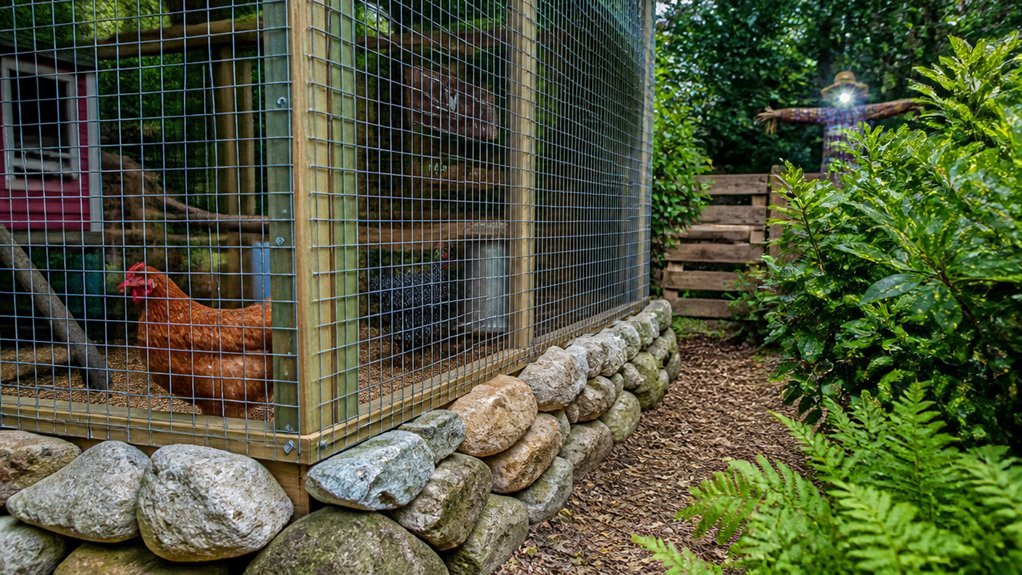
You can shield chickens from snakes and predators by sealing every gap in the coop, especially floor edges, vents, doors, and roof lines. Use 1/2-inch hardware cloth, screws, and washers instead of flimsy wire or nails. Bury fencing in an L-shape to stop diggers, and trim branches that give predators access. Store feed in sealed bins, clean up spills, lock birds up at dusk, and add motion lights plus weekly inspections for extra peace of mind.
How to Snake-Proof Your Chicken Coop
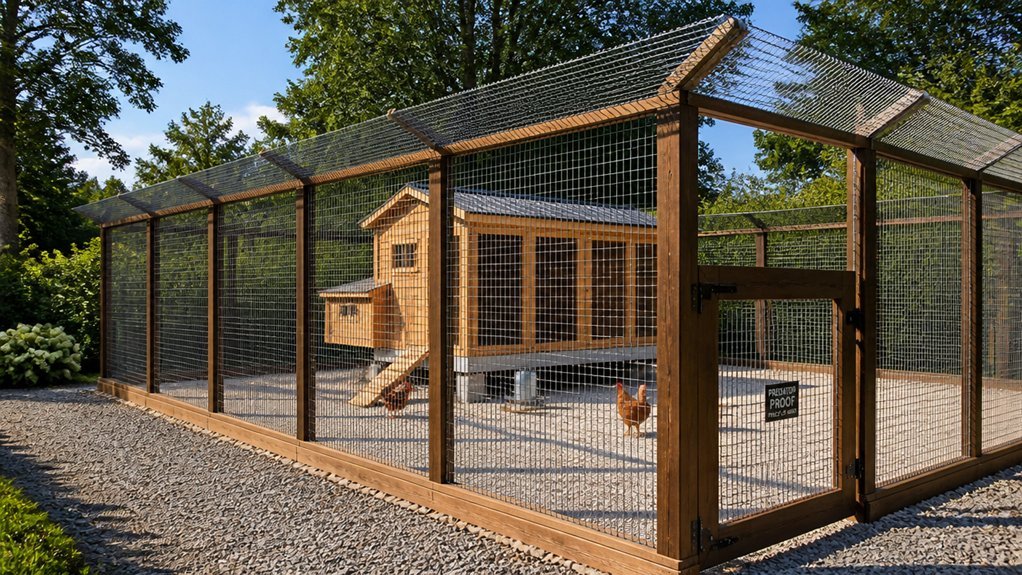
Snakes can slip into a coop through tiny gaps, so how do you stop them before they reach your birds? You start by sealing the floor edge with hardware cloth, not chicken wire, because snakes can push through flimsy mesh.
Anchor the material tightly and overlap seams so nothing wiggles loose. Raise feed and water off the ground, and keep spilled grain cleaned up, since it attracts rodents that snakes follow.
Lock doors at dusk and use snug latches that predators can’t pry open. Trim grass and brush around the coop to remove hiding spots.
If you use vents, cover them with fine mesh. These steps make your coop harder to enter and less appealing to hunters.
Check for Snake Entry Points
Next, you should check your coop for any snake entry points and seal every gap you find. Inspect floor openings closely, since even small holes can let snakes slip in. Don’t forget to block roof access, because snakes can climb into weak spots above too. Ensuring that the mesh size of your hardware cloth is appropriately small, such as 1/2 inch, is essential to prevent predators from squeezing through.
Seal Coop Gaps
Inspect your coop for any gaps, cracks, loose boards, or openings around doors, vents, corners, and the roofline, because snakes can slip through surprisingly small spaces.
Once you spot weak points, seal them with hardware cloth, metal flashing, or exterior-grade caulk, depending on the size and location of the opening. Tighten latches, replace warped trim, and secure panels so predators can’t pry them apart. Use screws instead of nails where you can, since they hold better over time. Don’t leave even small daylight cracks unaddressed, because a determined snake will exploit them.
After repairs, walk around the coop again and check for fresh gaps after storms, shifting wood, or seasonal wear. A snug coop blocks entry and helps keep your flock safer overall.
Inspect Floor Openings
After you’ve sealed the walls and corners, turn your attention to the floor, where hidden openings can give snakes a direct route inside. You should inspect every board, seam, and edge for cracks, rot, or loose hardware that creates an entry point.
Probe around feed-room thresholds, nesting areas, and any place where soil meets wood or concrete. If you spot daylight, widen the area only enough to measure it, then patch it fast.
- Replace warped boards and rusted mesh.
- Fill small holes with hardware cloth and sturdy sealant.
- Pack gaps under doors and low sills with tight-fitting material.
- Ensure proper drainage around the foundation to prevent soft spots that can be exploited by snakes.
Keep the floor dry and level so snakes can’t slip through soft spots or enlarged seams. Recheck after rain, frost, and heavy use.
Block Roof Access
Even if the walls and floor are sealed, snakes can still get in through the roofline, so check for loose panels, gaps at the eaves, and openings around vents, rafters, and flashing. You should seal every crack with hardware cloth, metal flashing, or exterior-grade sealant, and fasten panels so wind can’t lift them. Ensure the roofing materials are weatherproof and durable to prevent damage that could create entry points. Trim back branches that give predators a bridge to the coop roof. If you use a vent, cover it with sturdy mesh that keeps airflow high but blocks slim bodies. Inspect after storms, because shifting materials can reopen entry points. Don’t forget ridge caps, skylights, and corrugated seams. By closing roof access, you make the coop much harder to infiltrate and keep your chickens safer from snakes and other climbers.
Fortify the Coop With Predator-Proof Hardware
You can stop snakes and other predators by covering weak spots with hardware cloth instead of chicken wire. Reinforce doors and vents with sturdy latches and tight-fitting frames so nothing can pry or squeeze in. These upgrades make your coop far harder to breach. Using weather-resistant, heavy-duty materials helps ensure the lasting durability of your hardware, making it even more secure against predators.
Install Hardware Cloth
Hardware cloth is one of the best upgrades you can make if snakes, raccoons, and other predators threaten your coop. You should choose galvanized cloth with small openings so snakes can’t squeeze through. Cut it to cover exposed gaps, then secure it tightly with screws and washers so predators can’t pry it loose. Overlap seams and seal edges to keep your barrier continuous.
- Use 1/2-inch hardware cloth for strong, reliable protection.
- Attach it flush to frames to reduce weak points.
- Inspect it often for rust, bends, or torn spots.
When you install it correctly, you add a tough physical barrier that helps keep your chickens safer day and night.
Reinforce Doors And Vents
Doors and vents are common weak spots, so fortifying them should be a top priority. Replace flimsy latches with predator-proof locks, such as carabiners, barrel bolts, or locking hasps, so raccoons can’t pry them open. Check that doors sit flush in their frames and repair any gaps with wood strips or metal flashing. Add sturdy hinges and secure screws that won’t pull out under pressure. Consider incorporating weatherproofing techniques to prevent water and debris from compromising the coop’s integrity. For vents, cover every opening with hardware cloth, then fasten it tightly with screws and washers, not staples alone. If you use sliding doors, install a stop so snakes can’t slip through a partly open edge. Test each door and vent from the outside, because a weak point you miss can become an easy entry for hungry predators tonight.
Bury Fencing to Block Digging Predators
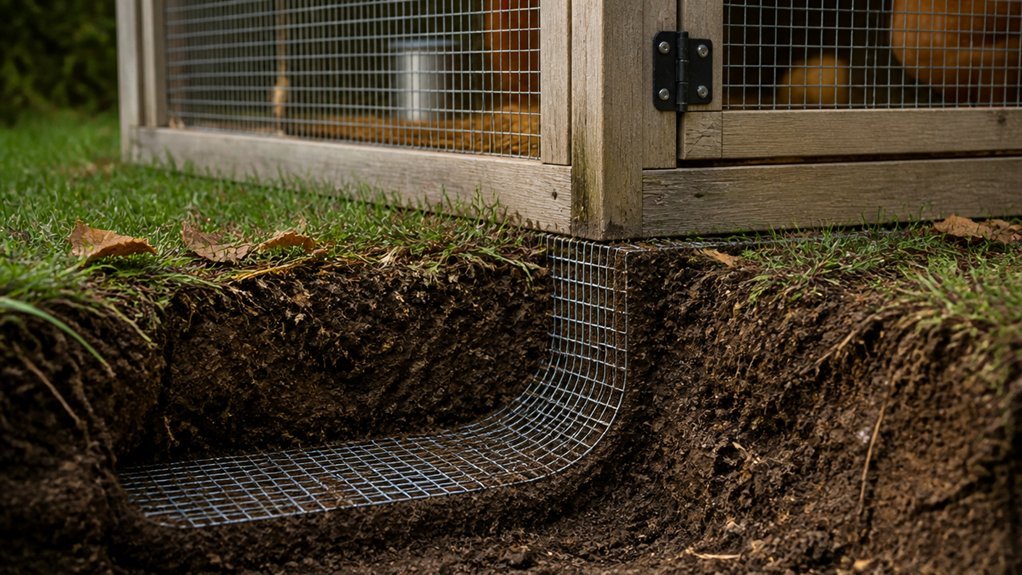
Even the toughest fence won’t stop a predator that digs underneath, so bury the bottom edge to shut that route down. Dig a trench at least 12 inches deep, then bend hardware cloth outward in an L-shape so a digger hits metal and gives up. Backfill the trench tightly with soil and rocks to lock the barrier in place. Using durable post materials, such as fiberglass or galvanized stakes, further reinforces the barrier against persistent diggers.
If you’re upgrading an existing run, add buried panels along weak spots first, then work around the perimeter.
- Use 1/2-inch hardware cloth, not loose chicken wire.
- Extend the buried section 12 to 24 inches for determined diggers.
- Check after heavy rain, since washouts can expose gaps.
This simple defense protects your flock from foxes, dogs, raccoons, and other sneaky threats that test weak spots at night.
Seal Feed Storage and Remove Attractants
Once your fence is secure, turn your attention to anything that might lure predators in the first place. Store chicken feed in tight lids, metal bins, or heavy plastic containers, and sweep up every spilled kernel after each feeding. Keep compost, pet food, and garbage sealed too, because odors draw snakes, rats, raccoons, and other opportunists. Trim tall weeds, stack lumber neatly, and clear brush piles where pests can hide.
| Attractant | Risk | Fix |
|---|---|---|
| Open feed sacks | Easy meal | Use sealed bins |
| Spilled grain | Rodents and snakes | Sweep daily |
| Trash scraps | Strong odor trail | Latch cans |
Check around runs, coops, and storage areas weekly. When you remove food and shelter, predators lose interest fast, and your flock stays safer.
Lock Chickens Up Safely After Dark
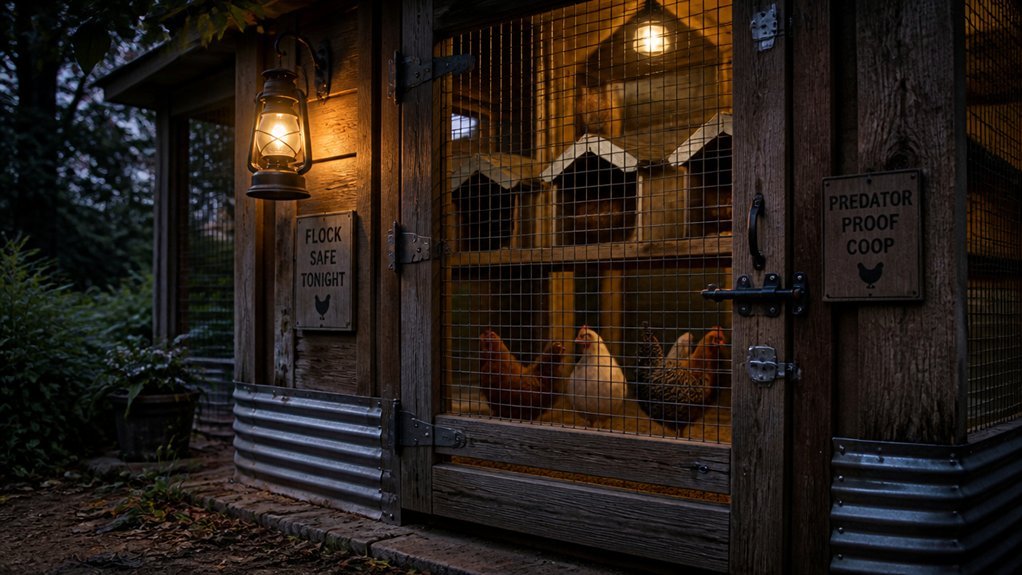
As dusk falls, you should get every chicken back into the coop and latch it securely before predators start prowling. Close pop doors, slide bolts fully, and check that latches can’t wiggle loose when a raccoon tests them. Keep the flock roosting inside, not on fences or in brush, where snakes and night hunters can reach them. Ensuring proper predator protection around your coop and run reduces the risk of intrusion.
At dusk, secure every chicken in the coop and make sure latches stay tight against prowling predators.
- Count each bird before you shut the coop, so none get left outside.
- Use a sturdy door with tight-fitting hardware that you can fasten in seconds.
- Keep the run closed after dark, because open access invites trouble fast.
When you make locking up a nightly habit, you cut risk and protect birds with minimal effort.
Add Motion Lights and Weekly Inspections
Motion-activated lights can scare off snakes, raccoons, and other nighttime visitors by exposing sudden movement around the coop and run. You should place them at entry points, along fence lines, and near feed storage so intruders get caught in sudden light. Choose weatherproof fixtures with adjustable sensitivity so chickens won’t trigger them constantly.
Then inspect your coop and run every week. Check for gaps, loose boards, burrows, chewed wire, and sagging doors that predators can exploit. Walk the perimeter at dusk, when problems stand out more clearly. Tighten hardware, replace damaged mesh, and clear brush that hides movement. If you spot fresh tracks or droppings, act fast. Regular lighting and inspections help you stay ahead of snakes and predators before they reach your flock.
Frequently Asked Questions
What Chicken Breeds Are Best for Predator Resistance?
You’ll want dual-purpose, alert breeds like Rhode Island Reds, Barred Rocks, Buckeyes, Australorps, and Leghorns. They’re hardy, vigilant, and quicker to escape predators, though no breed’s completely safe without good protection.
How Do I Protect Free-Range Chickens During the Day?
You can protect free-range chickens by fencing areas, supervising them, providing overhead cover, and using guard animals. You should keep feed inside, trim brush, and bring birds in when predators lurk nearby.
Can Guard Animals Help Keep Snakes Away?
Yes, they can help. You can use dogs, geese, or donkeys to alert you and deter snakes, but you’ll still need secure fencing, clean feed storage, and regular coop checks for real protection.
What Plants Deter Snakes Around a Chicken Coop?
You can plant lemongrass, marigolds, rosemary, and garlic around your coop; they may discourage snakes. Keep grass short, remove clutter, and avoid dense groundcover, because snakes hide there and plants alone won’t stop them.
How Often Should I Replace Coop Bedding?
You should replace coop bedding weekly, and sooner if it’s wet, smelly, or heavily soiled. You’ll keep chickens healthier, reduce pests, and make cleanup easier by adding fresh bedding between full changes.
In Summary
To keep your chickens safe, stay alert and make small upgrades that make a big difference. Check for gaps, reinforce the coop, bury fencing, and store feed securely so you don’t attract snakes or other predators. Lock your birds up before dark, add motion lights, and inspect the coop each week for damage. When you take these simple steps consistently, you’ll give your flock a much better chance to stay healthy, protected, and stress-free.



