
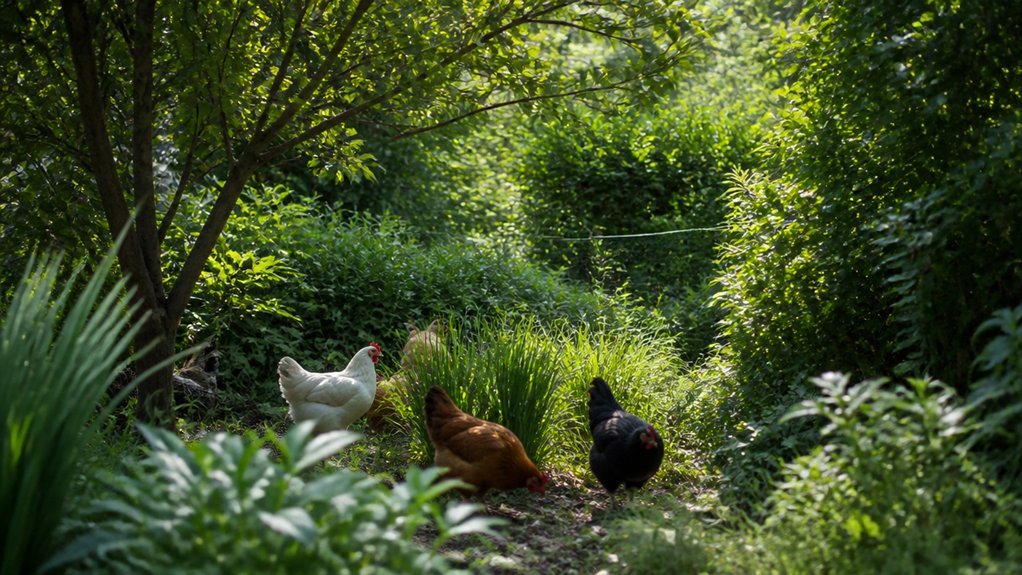
You can build a predator-proof chicken run without traditional fencing by using hardware cloth, not chicken wire, as your main barrier. Set the run on a level gravel base, bury the mesh 12 inches deep or flare it outward, and seal every seam and gate latch tightly. Add a solid roof to stop hawks and climbers, and keep feed, water, and clutter secure. With the right layout, you’ll greatly reduce risks and uncover smarter upgrades next.
What Makes a Chicken Run Predator-Proof
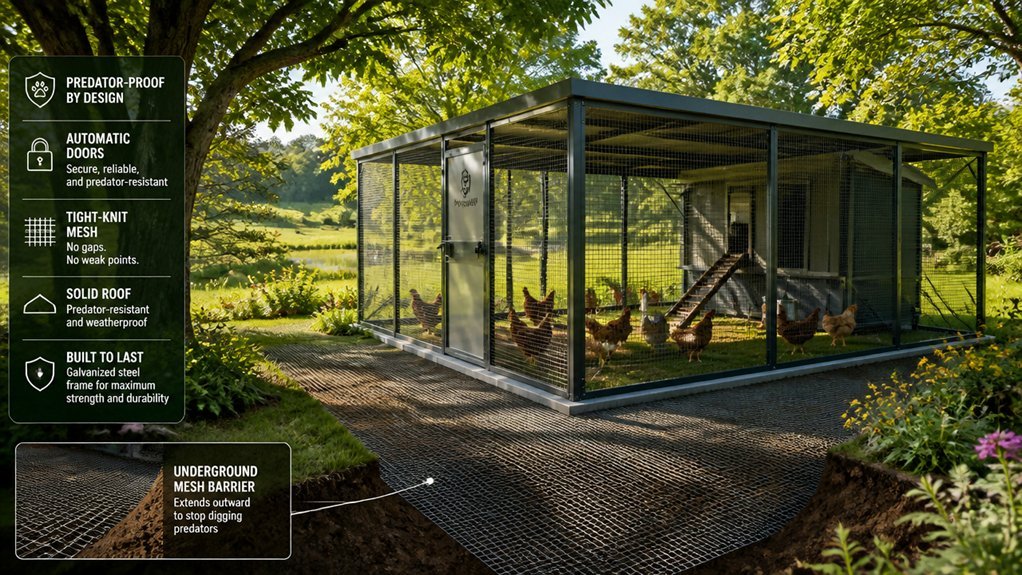
A chicken run becomes predator-proof when you stop giving predators easy access to your flock. You need barriers that block digging, climbing, squeezing, and reaching. That means tight openings, strong connections, and complete coverage from ground to top.
You also need hardware that won’t flex, split, or rust under pressure. Every gap matters, because raccoons pry, dogs lunge, snakes slip through, and hawks strike from above. Your run should make entry slow, noisy, and frustrating for anything hunting your birds.
If a predator can test weak spots and win, the run isn’t secure. When you plan for the strongest threats first, you create a space that keeps your flock contained and predators out. Proper fence height and gap control play crucial roles in maintaining a secure environment.
Build a Solid Run Base
Start with a compacted gravel foundation so your run stays level, drains well, and resists digging.
Then bury a hardware barrier around the perimeter to stop predators from tunneling underneath. Together, these layers give your chicken run a strong base that’s much harder to breach. Incorporating a mesh size of 1/2 inch and using durable, rust-resistant hardware cloth such as galvanized or vinyl-coated options enhances the barrier’s effectiveness.
Compacted Gravel Foundation
Although it may look like a simple base layer, compacted gravel gives your chicken run the stability and drainage it needs to stay predator-resistant over time. You should clear the site, level the ground, and spread a few inches of crushed stone before tamping it down firmly.
That dense foundation helps posts stay aligned, keeps muddy spots from forming, and makes the run less inviting to digging pests. Because water drains through the gravel, you’ll avoid soggy corners that can weaken your structure and stress your flock. Add a slight slope so rain moves away from the run, and check for settling after heavy weather.
Using a durable material like compacted gravel creates a stable base that enhances the overall security of your chicken run. When you compact the surface well, you create a durable footing that supports every other defense you build above it.
Buried Hardware Barrier
Even with a sturdy frame, the real defense begins below ground, where a buried hardware barrier stops predators from digging under the run. You’ll want to lay welded wire along the perimeter, then bend it outward like an apron or drop it straight down into a trench.
This creates a tough underground shield that raccoons, dogs, foxes, and coyotes can’t easily breach. Picture it like this:
- A wire skirt flaring beneath the soil.
- Packed earth pressing hard against the mesh.
- A hidden wall blocking every claw and snout.
- Proper post spacing ensures the barrier remains taut and effective over time.
Cover the barrier with gravel and soil, then tamp it firm so no gaps remain. When you tie the mesh to the frame and check corners carefully, you build a run base that feels locked to the ground.
Use Hardware Cloth as the Main Barrier
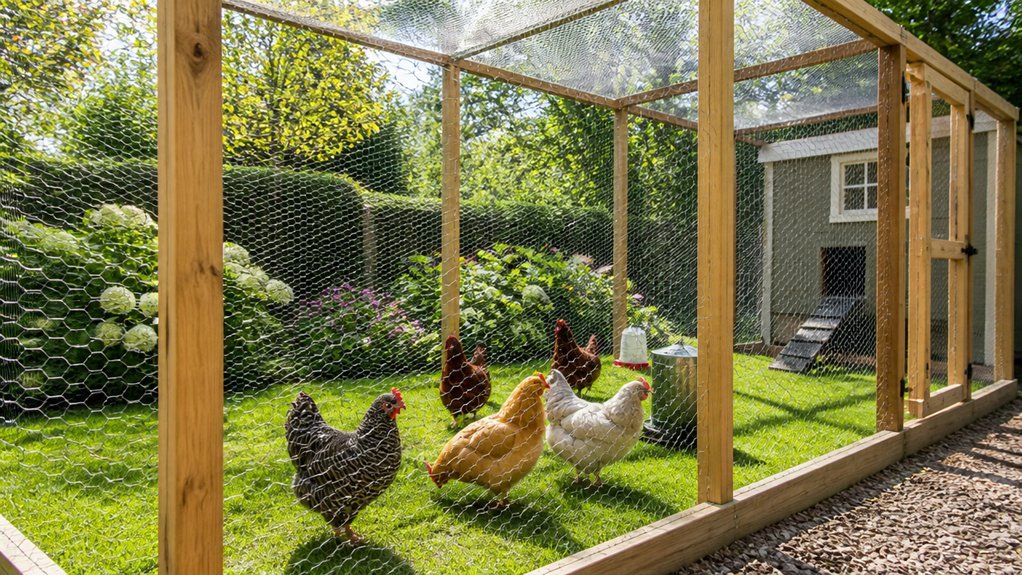
You should use hardware cloth as your main barrier because it’s strong enough to stop raccoons, foxes, and other determined predators. Unlike chicken wire, it won’t bend or tear as easily, so your flock gets far better protection. Install it tightly with overlapping seams and secure fasteners so there’s no gap for anything to squeeze through. Using double-spiked posts can further ensure stability and prevent predators from dislodging the fencing.
Hardware Cloth Advantages
When predators target a chicken run, hardware cloth gives you a far stronger barrier than standard chicken wire. You get tight woven openings that resist chewing, prying, and clawing, so raccoons and opossums can’t easily tear through.
It also stands up to weather better, keeping its shape when wind, rain, and sun hit it day after day.
Picture these advantages:
- A fox noses the side and meets a rigid metal wall.
- A raccoon grips the mesh and can’t widen an opening.
- A hawk spots movement but can’t reach the flock below.
You’ll also appreciate how hardware cloth helps you create a cleaner, more durable run that lasts longer and protects your birds with less worry. Weather resistance ensures that your barrier maintains its integrity over time, even in challenging outdoor conditions.
Secure Mesh Installation
To make the run predator-resistant, install hardware cloth as the main barrier and fasten it securely to the frame with screws and washers or heavy-duty staples. Cut each panel so it overlaps the joints, then press it tight against every edge. You should bury the bottom at least 12 inches or bend it outward as a skirt, so diggers can’t slip under it. Cover doors, vents, and gaps around latches with the same mesh, and inspect corners for openings. Use galvanized 1/2-inch hardware cloth, not chicken wire, because raccoons and dogs can tear weak material. After installation, run your hand along the mesh to find sharp ends, then fold or trim them. Regularly check the integrity of your installation, especially after storms, as loose fasteners invite predators. Remember, proper predator protection is essential to keep your flock safe.
Add a Predator-Proof Roof
A roof closes one of the biggest gaps in a chicken run, stopping hawks, owls, raccoons, and climbing predators from striking from above. You can cover the top with welded wire, hardware cloth, or sturdy panels, depending on your climate and budget. Keep the surface taut so nothing sags into a tempting landing spot.
- Picture a bright, airy canopy that lets sunlight filter through while blocking talons overhead.
- Imagine rain beading off a sloped cover instead of pooling above your flock.
- Envision branches, cats, and curious wildlife hitting a barrier they can’t cross.
Add a slight pitch for runoff, and secure every seam so predators can’t pry open a weakness. A well-fitted roof keeps your birds calm, dry, and protected.
Strengthen Walls and Framing
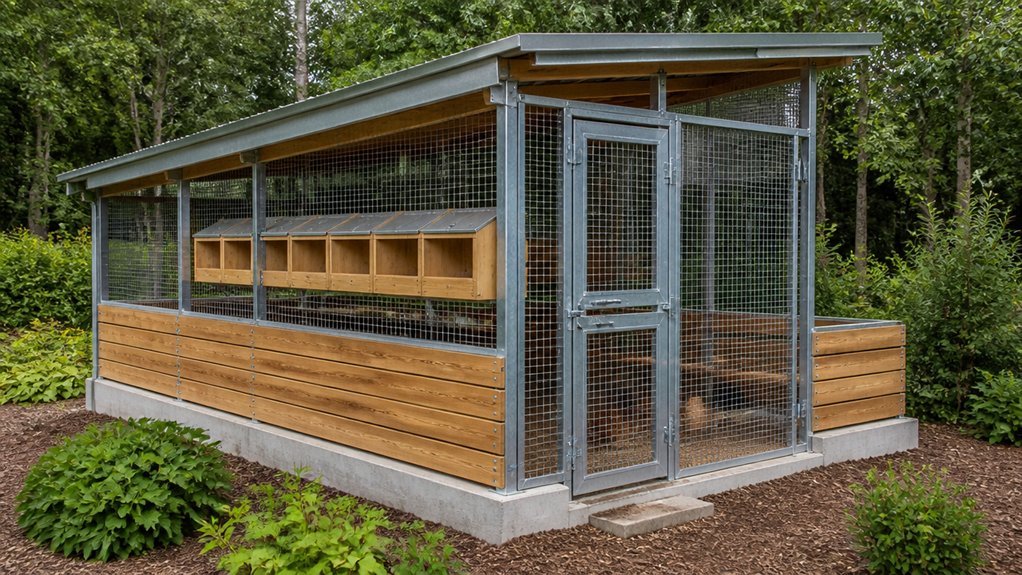
Even with a secure roof, predators will test the rest of the enclosure, so focus on building walls and framing that won’t flex, gap, or collapse under pressure. Use sturdy lumber or metal tubing for the frame, and anchor each corner firmly to posts or a base that can’t shift. Brace long spans with crossmembers so a raccoon can’t push them inward. Additionally, integrating easy-clean tray systems into your design can help monitor and manage potential breaches or damage, allowing for quick repairs. Cover the frame with rigid panels, welded wire, or hardware cloth stretched tight, then fasten it with screws and washers so it stays snug. Overlap seams and reinforce edges where animals might pry. Check for any movement when you lean on the structure, because weak framing invites damage fast. If the walls feel solid, you’ve already cut down the chances of a breakout.
Secure Gates and Latches
Gates are one of the easiest places for predators to find a weakness, so you need hardware that closes tightly and stays that way. Choose a solid gate frame, then mount heavy-duty hinges that won’t sag.
Add a lockable latch you can operate with one hand, but that raccoons can’t pop open. Check it daily for gaps, rust, or wobble. If you use a spring or hook latch, make sure it snaps shut with real force. Using raccoon-resistant locking features enhances security and prevents paw access.
Train yourself to close the gate every time you enter or leave, and your run stays safer.
Block Digging Predators at Ground Level
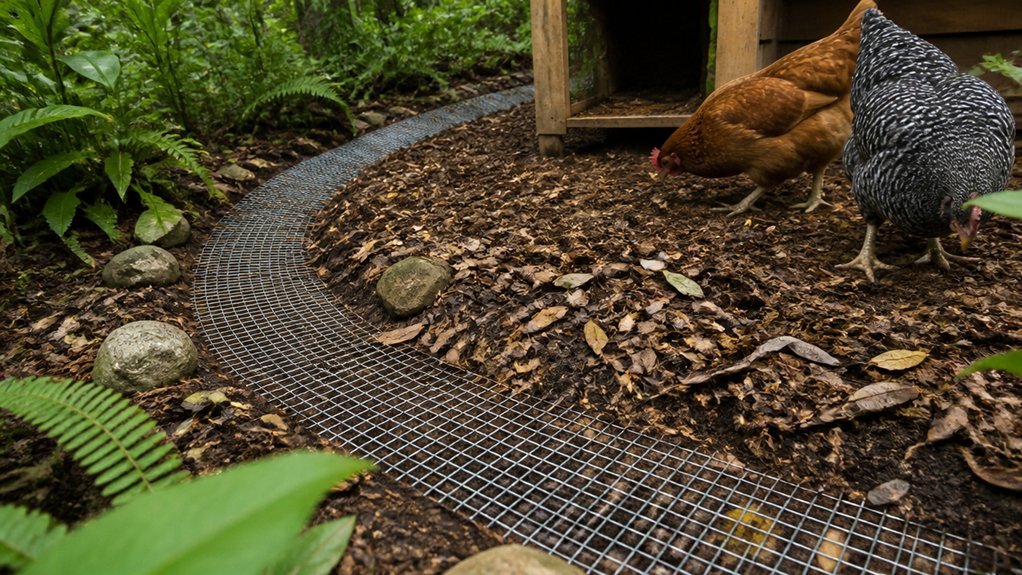
Because many predators don’t just climb or squeeze in, you also need to stop them from digging under the run. You can bury hardware cloth around the perimeter and extend it outward in an L-shape apron, so paws hit metal instead of soil. Use galvanized material with small openings, then fasten it securely to the base frame with staples, screws, or clamps. Proper placement at predator eye level increases the effectiveness of deterrents and prevents tunneling attempts. Cover the apron with soil, gravel, or mulch so it stays flat and hard to spot. If you already built the run, you can add a trench and backfill it after installation. Check the edge regularly for loose spots, fresh holes, or lifted sections. When you keep the ground barrier continuous, you make it far harder for foxes, dogs, raccoons, and coyotes to tunnel inside.
Place the Run in a Safer Spot
You can make your chicken run safer by placing it on slightly elevated ground, which helps reduce flooding and makes it harder for some predators to approach unnoticed.
Natural cover like shrubs, hedges, or trees can also act as barriers that break up sightlines and slow intruders. With the right spot, you’ll add another strong layer of protection before a predator ever reaches the fence.
Elevated Ground Placement
Choosing a slightly elevated spot for your chicken run can make a big difference in keeping predators out. You give your flock a better chance when rainwater drains away and mud doesn’t turn the ground soft enough for digging.
Pick a rise that feels solid underfoot, not a low pocket where animals can lurk unseen.
- A gentle hilltop with dry footing
- A packed slope beside a shed
- A raised patch near your coop
You’ll also make routine checks easier because the area stays cleaner and more visible. When you place the run higher than the surrounding ground, you reduce easy access points and create a setting that feels less inviting to raccoons, foxes, and dogs.
Keep the site stable, open, and simple to inspect.
Natural Cover Barriers
Even a well-built run works better when you place it where the landscape helps guard it. Put it near hedges, brushy borders, stone walls, or a tree line so predators have fewer clear approaches.
You can use thick shrubs as visual blockers, but keep them trimmed enough that you can spot trouble fast. Avoid open edges where foxes, dogs, and hawks can watch from afar.
If you’ve got a slope, tuck the run below a rise or behind natural dips that break sightlines. Don’t rely on cover alone; it should slow access and make your setup less obvious.
Add Lights and Alarms
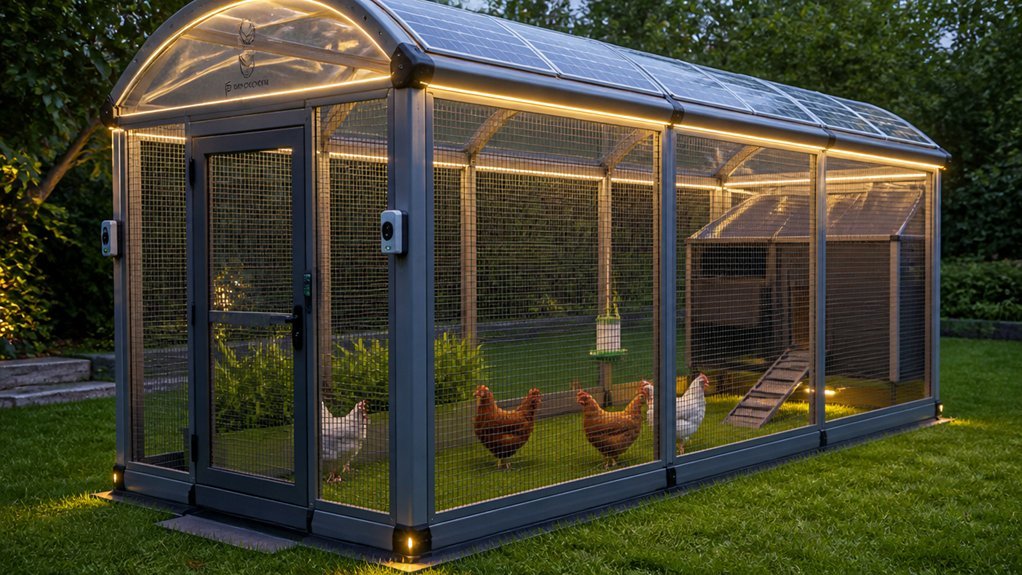
Motion-activated lights and alarms can make a chicken run far less inviting to predators by startling them before they get close. You can mount bright LED lights along the run’s perimeter and point them toward likely entry paths.
Motion-activated lights make a chicken run less inviting by startling predators before they get too close.
Pair them with a sharp siren or beep that triggers instantly when something moves. At night, the sudden flash and noise can break a predator’s approach and give you time to respond.
- A white beam cuts across the yard like lightning.
- A piercing alarm echoes through the dark.
- A startled raccoon freezes, then bolts back into the brush.
Test each device at dusk so you can adjust sensitivity and range. Keep wiring protected, and place controls where you can switch them on quickly when needed.
Set Up Feed and Water Safely
Once your lights and alarms are in place, turn to the feeder and water setup, since spilled grain and standing water can draw in raccoons, mice, and other predators. Hang feeders high enough that hens can reach them, but pests can’t easily tip or raid them. Use covered, gravity-fed containers or treadle feeders to limit waste.
Place waterers on raised platforms or sturdy blocks to keep them clean and discourage digging beneath them. Choose narrow-mouthed or nipple-style waterers when possible, because they reduce splashing and limit access.
Move feed indoors at night, and never leave open buckets, bags, or leftover scraps in the run. Keep all food and water stations away from walls, corners, and hiding spots so you make it harder for predators to linger.
Inspect and Maintain the Run
Inspect the run regularly for weak points, loose hardware, gaps, and signs of digging or chewing, because small problems can turn into easy entry points fast. Walk the perimeter after storms and again each week. Tighten latches, replace bent clips, and patch any opening before dusk.
Check your run often for weak spots, loose hardware, and small gaps before they become easy entry points.
- Picture a fox pressing its nose against a warped panel.
- Imagine rain softening soil until a tunnel starts at the corner post.
- See a raccoon testing a latch that’s almost, but not quite, secure.
Trim grass, remove spilled feed, and clear brush near the run so predators can’t hide. Keep the ground dry and level, and refresh bedding or wire covers when they wear thin. Consistent upkeep keeps your chickens safer and your setup stronger.
Frequently Asked Questions
How Much Does a Predator-Proof Chicken Run Usually Cost?
You’ll usually spend $200 to $1,500, depending on size, materials, and predator protection features. If you build it yourself, you can often cut costs, but stronger wire and roofing raise the price.
Can I Build One on Uneven or Rocky Ground?
Yes, you can build one on uneven or rocky ground. You’ll need adjustable posts, shims, and a raised frame, plus extra anchoring. Clear sharp rocks where possible, then level key support points securely.
Which Chicken Breeds Are Safest in Predator-Prone Areas?
You’ll want hardy, alert breeds like Plymouth Rocks, Australorps, Dominiques, and Leghorns; they’re vigilant, fast, and less likely to panic. Even so, you’ll still need strong protection, because no breed’s truly predator-proof.
How Do I Keep Chickens Cool Inside a Covered Run?
You can keep chickens cool by adding shade cloth, airflow, and frozen water bottles. You’ll also want deep bedding, plenty of fresh water, and misters if needed, but avoid trapping heat inside the run.
Do Predator-Proof Runs Need Planning Permission or Permits?
Usually, you don’t need permits for a small run, but you should check your local zoning rules, HOA bylaws, and setbacks first. You’ll avoid fines if you confirm before building and adding roofing.
In Summary
A predator-proof chicken run without traditional fencing can still keep your flock safe if you plan carefully and build with the right materials. By securing the base, using hardware cloth, adding a strong roof, and reinforcing every weak point, you’ll make it much harder for predators to get in. Don’t forget smart placement, safe feeding, and regular inspections. With consistent upkeep, your chickens can stay protected and healthy every day.



