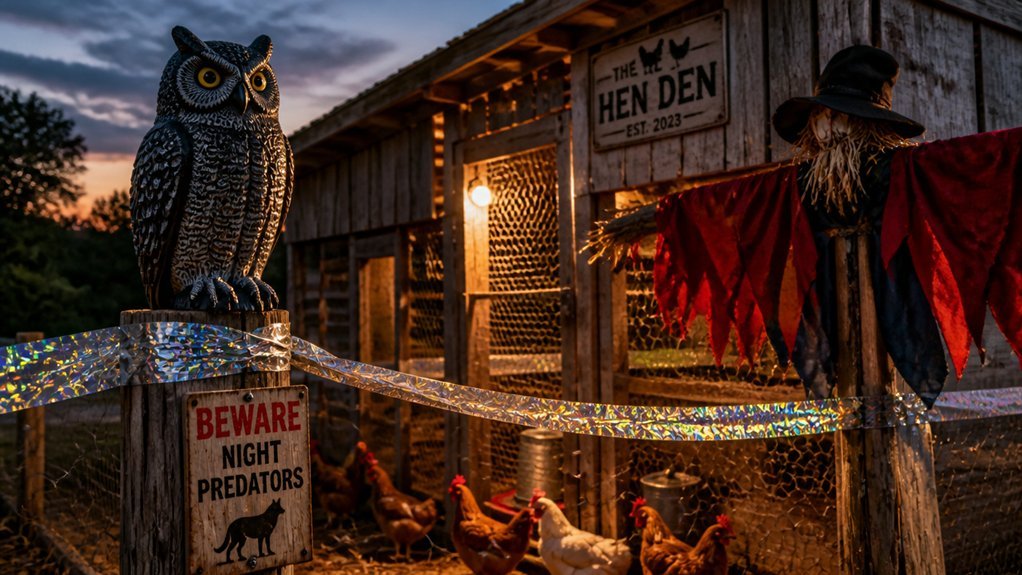
You use owl deterrent strategies to keep your chickens safe from silent nighttime attacks. Owls often target small, isolated birds near trees, fences, and other cover, so a secure coop and covered run can make a big difference. Netting, motion lights, reflective items, and noisemakers all help discourage strikes, while routine checks reveal weak spots before predators do. These simple layers of protection can give you more peace of mind and better flock security as you learn the rest.
Why Owls Target Backyard Chickens
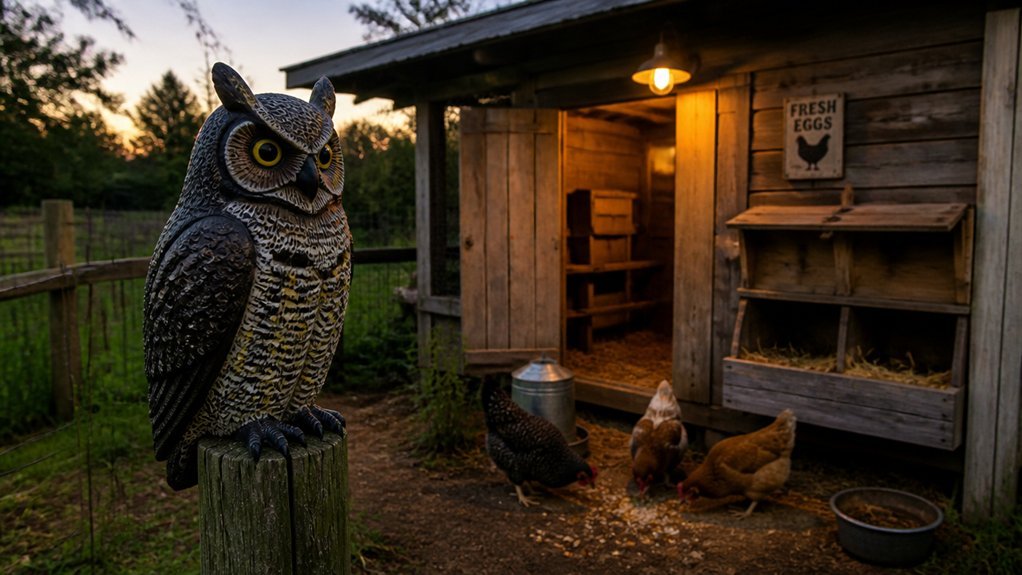
Why do owls go after backyard chickens? You’re offering an easy meal. Owls hunt at dusk and night, when your hens settle down and can’t see danger well.
A small chicken looks like natural prey, especially if it’s alone, slow, or roosting in the open. Hungry owls also target chicks because they’re tiny and vulnerable. If your birds range in open spaces near trees, fences, or posts, you’re making it easier for an owl to swoop in silently.
During breeding season or cold spells, owls may press closer to homes as wild food gets scarce. Understanding this behavior helps you predict risk and respond before an attack happens. Stay alert, and you’ll protect your flock better. Proper predator protection measures, such as reinforced wire fencing and secure latches, are essential for safety.
Check Your Coop for Weak Spots
Start with a careful inspection of your coop, because even a small flaw can give an owl an opening.
Walk around with a flashlight and look for gaps, loose boards, warped hinges, and cracked panels. Press on doors and windows to see whether they shift or rattle. Pay attention to corners where weather and time have worn away your coop’s strength.
- Spot daylight shining through nail holes or seams.
- Check for soft wood that bends under your hand.
- Notice broken latches, bent wire, or splintered edges.
You can’t fix what you don’t see, so make this check routine. When you find weak spots, repair them quickly so your chickens stay enclosed and calm.
A solid coop leaves owls with nowhere to test their weak spots and the structure’s overall integrity.
Cover the Run to Stop Owl Attacks
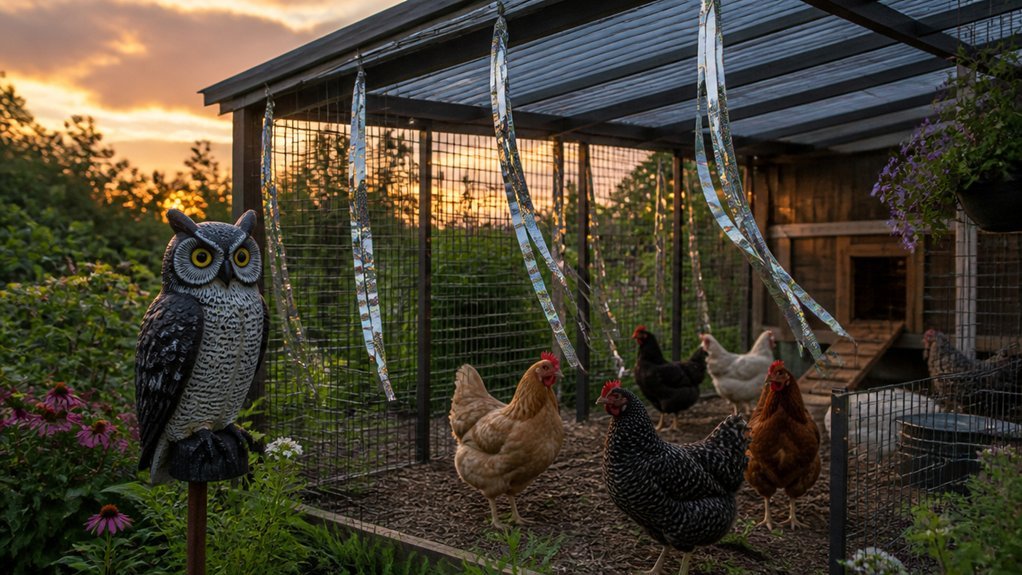
Once you’ve checked the coop, cover the run so owls can’t swoop down on exposed chickens. Use a sturdy roof or rigid panels that block overhead access while still letting light and air circulate. Your flock stays calmer when they can move, scratch, and dust-bathe beneath reliable shelter.
| Run Area | Protection | Effect |
|---|---|---|
| Feeding corner | Covered top | Less nighttime exposure |
| Dust bath | Solid shade | Safer daytime use |
| Roosting edge | Reinforced cover | Fewer surprise dives |
You’ll also reduce shadows that attract hunting owls at dusk. Keep the cover tight against posts and fence lines, and inspect it after wind or snow. A secure run gives your birds a safer outdoor space without shutting them inside all day.
Install Netting Over Open Areas
If your run has open sections you can’t fully roof, stretch heavy-duty netting across the gaps to block owls from dropping in. Choose small mesh so talons can’t slip through, and pull the netting tight enough that it won’t sag into inviting pockets.
Stretch heavy-duty netting across open gaps, keeping it taut and small-meshed to block owls from dropping in.
Anchor every edge to sturdy posts, fencing, or roof framing so wind and weight don’t loosen it. Check for holes after storms and repair them right away, because even a small opening can give an owl a direct path to your flock.
Using mesh size considerations, ensure the openings are small enough to prevent predators from slipping through while still allowing proper airflow and sunlight.
Add Motion Lights Around the Coop
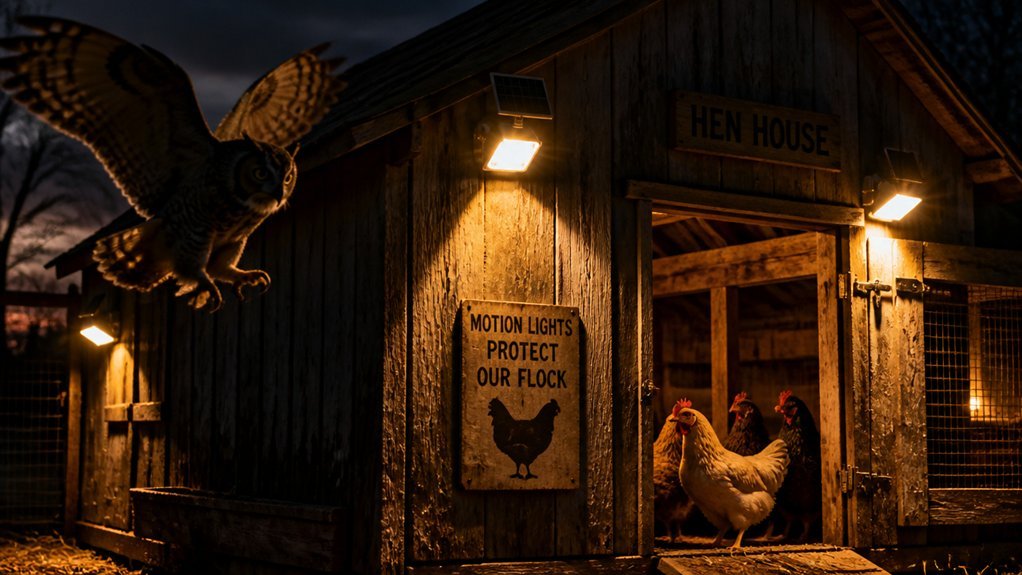
Motion-activated lights can surprise owls before they get close enough to test your coop. You should place them along the coop, run, and nearby perches so sudden light hits an approaching owl from several angles.
Aim the sensors low enough to catch movement from flying predators, but not so low that your chickens trigger them constantly. Use bright, wide-beam fixtures and check that they cover dark corners, fence lines, and landing spots. Test them after dark to confirm they turn on fast and leave no shadowy gaps.
Pairing lights with other defenses makes your setup harder to predict. When owls lose the cover of darkness, they’re less likely to linger, circle, or strike. Regularly clean lenses so dust and cobwebs don’t weaken the effect.
Additionally, choosing weatherproof lighting ensures the lights remain functional in various weather conditions, maintaining your deterrent system’s effectiveness year-round.
Remove Food and Shelter Attractants
You can make your coop less inviting to owls by cleaning up feed spills right away and keeping food sealed. Lock down coop shelter so it doesn’t offer easy access or protection for predators. Then clear away tall grass, brush, and other nesting cover that could hide an owl’s approach. Ensuring proper fence height and gap size around your yard adds an extra layer of protection against predators.
Remove Feed Spills
Even a few spilled pellets can turn your coop into a buffet for owls and other predators, so clean up scattered feed as soon as you notice it. You’ll lower the odds of drawing nighttime hunters when you keep every grain off the ground and out of reach.
Sweep around feeders daily, check under roosts, and empty old scraps before dusk. Try this:
- Tip feeders only until they’re level, not overflowing.
- Scrape loose mash from boards, corners, and steps.
- Store extra bags in sealed bins away from the coop.
- Use weather-resistant materials in your feeders to prevent moisture and spoilage, which can attract pests and predators.
When you remove easy meals, owls have less reason to circle overhead. Your chickens stay calmer, your yard stays tidier, and you make your flock less noticeable to hungry visitors.
Secure Coop Shelter
A tidy coop does more than look neat—it also removes the cover owls use to lurk nearby. You should lock doors, repair gaps, and fasten latches so owls can’t slip in or wait outside for an easy strike. Keep bags, scratch grain, and kitchen scraps in sealed bins, because leftover food can draw rodents, and rodents can draw owls. Trim back clutter around the shelter, and move stacked boards, tools, or unused crates away from the coop so predators lose places to perch or watch. Use solid roofing and tight wire mesh to protect openings, and check for loose panels after storms. When you secure the shelter and limit attractants, you make your coop far less appealing to hungry owls. Proper hardware cloth with appropriate mesh size and secure installation can significantly help deter predators like owls and other wildlife.
Eliminate Nesting Cover
Reduce the things that draw prey animals in, because where mice and insects gather, owls often follow. You can make your run far less inviting by trimming tall grass, pulling weeds, and clearing brush piles around the coop. Keep feed in sealed bins, sweep up spills, and remove scraps after every meal so pests don’t move in.
When you deny cover and easy food, you shrink the hunting edge owls look for.
- Stack firewood away from the coop.
- Move compost and trash bins out of sight.
- Mow under fences, sheds, and feeders.
Open ground lets you spot movement sooner, and it gives your chickens fewer hiding places during a swoop. A clean, bare perimeter works like a warning light, making your yard feel exposed to predators.
Use Reflective Deterrents at Night
At night, you can hang reflective deterrents like aluminum pie plates, old CDs, or mirrored tape near your coop to catch moonlight and create sudden flashes that may startle owls. Place them where breeze or movement lets them turn freely, because shifting reflections work better than still ones. Position several pieces around the run, especially near open edges and posts, so an owl can’t easily predict the pattern. Keep the area around them clear so the light reaches them. Check the surfaces often and replace anything dull, dirty, or damaged. You can also move the items occasionally to keep their effect fresh. Incorporating weather-resistant materials into your deterrents can help ensure they remain effective over time despite exposure to the elements. These simple tools won’t guarantee safety, but they can make your chickens’ space less inviting and help reduce nighttime owl visits.
Set Up Noisemakers That Scare Owls
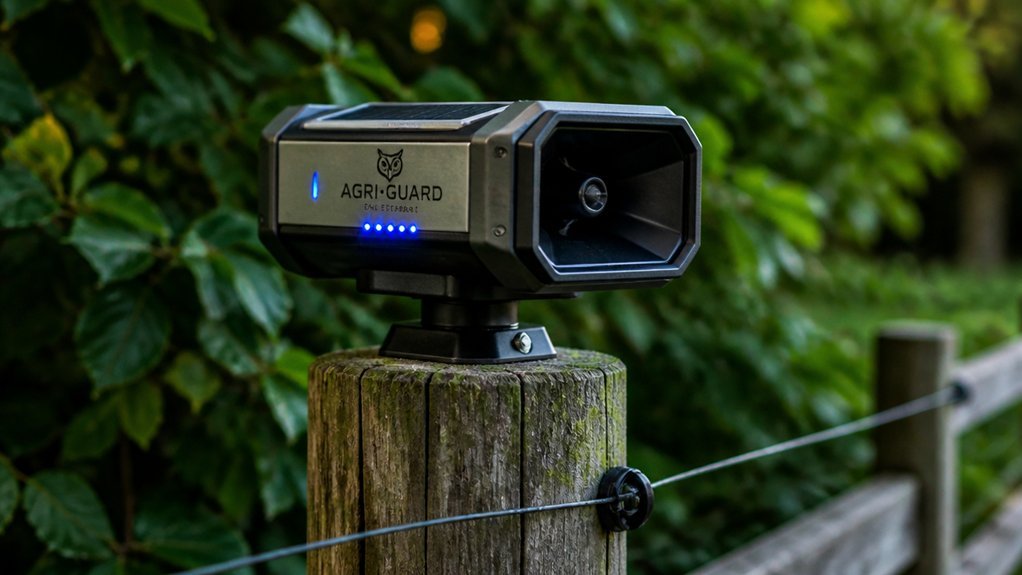
You can scare owls away by setting up motion-activated alarms near your coop, so they startle when they get close. Wind-driven noise makers also help because they create random sounds that can make predators hesitate. Use a mix of both to keep your chickens safer at night. Incorporating electrified fencing can further enhance deterrence by delivering a harmless shock to predators that attempt to breach your setup.
Motion-Activated Alarms
Motion-activated alarms can startle owls before they get close enough to threaten your flock. You place them near coop doors, runways, and favorite perches, then let sudden sound do the work for you.
When an owl glides in, the alarm bursts loud enough to interrupt its hunt and send it away.
- A red coop light flashes beside a feeding area.
- A sharp siren cuts through the night air.
- Your hens huddle safely while the predator veers off.
Choose alarms with adjustable volume so you can protect your birds without disturbing neighbors too much. Test the sensor range, keep batteries fresh, and check placement after storms.
Using deterrent lights that mimic predator eyes can further enhance your defenses by deterring nocturnal predators, making your poultry safe from multiple angles.
With reliable activation, you add another strong layer of defense around your chickens.
Wind-Driven Noise Makers
Wind-driven noise makers add a constant layer of surprise that can unsettle owls before they settle in near your coop. You can hang tin pie plates, metal chimes, or plastic strips where the breeze keeps them moving. As they clatter and flutter, they break up quiet spaces owls prefer when hunting.
Place several noisemakers around the run, especially near trees, fences, and other perches. Vary their height and spacing so the sound doesn’t become predictable. Check them often, because tangled cords or still air can reduce their effect.
You can also combine them with other deterrents to keep owls guessing. When you change the layout now and then, you make your coop feel less safe to predators and more secure for your flock.
Layer Deterrents for Better Protection
Layered deterrents give your flock better protection because no single tactic works perfectly against owls. You can stack simple defenses so an owl meets noise, light, and barriers at once. That confusion often sends it searching elsewhere.
- Hang reflective tape near the coop so moonlight flashes and movement catch an owl’s eye.
- Add motion lights around the run to startle silent swoops after dusk.
- Use a secure roof or netting over the enclosure to block direct dives.
When you combine these layers, you make your chickens look harder to reach and less appealing. Each tactic supports the others, and that pressure matters when predators test your setup.
Keep the design tight, visible, and unpredictable, and you’ll raise the odds that owls pass by without stopping.
Keep Chickens Safe With Routine Checks
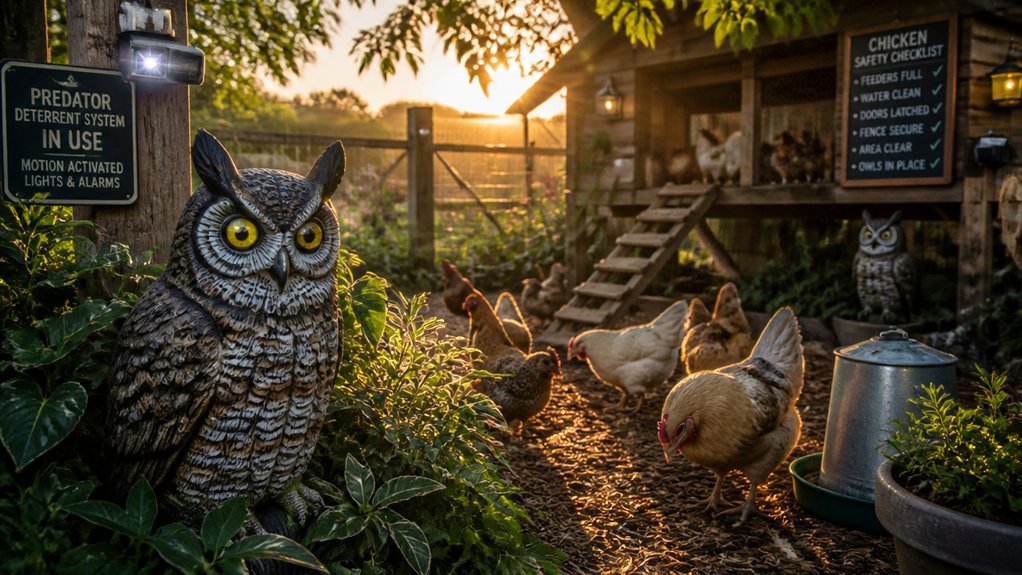
You can keep your chickens safer by checking the coop every day for weak spots, loose locks, or signs of damage.
Look closely at fence gaps and repair any opening an owl could use to slip in.
At night, monitor for unusual activity so you can catch problems before they turn into attacks.
Daily Coop Inspections
Daily coop inspections help you catch owl-related risks before nightfall. You’ll spot trouble fast when you walk the coop with fresh eyes each afternoon. Look for signs that birds can’t sleep safely, such as loose hardware, dark hiding spots, or stressed hens.
- Imagine sunlight fading while you check doors, latches, and roof edges.
- Picture feed scattered near the run, drawing unwanted attention at dusk.
- Visualize your flock settling calmly after you remove clutter and secure openings.
When you inspect daily, you notice patterns before they become problems. You can adjust lighting, clear debris, and restore order before owls start hunting. These quick checks build a safer routine and help your chickens relax in their coop every night.
Check Fence Gaps
After you’ve checked the coop, move on to the fence line and look for any gaps, bends, or weak spots that an owl could exploit. You should walk the perimeter slowly, pressing on loose sections and noting places where wire has pulled away from posts. Fix small openings right away, because an owl needs only a narrow entry point. Use sturdy clips, stakes, or fresh ties to restore tension and keep the barrier tight.
| Checkpoint | Action |
|---|---|
| Base of fence | Close holes |
| Post connections | Tighten fasteners |
| Top edge | Straighten bends |
| Gate areas | Latch firmly |
| Wire mesh | Replace damage |
Repeat this routine often so you catch problems before predators do, and keep your flock protected.
Monitor Night Activity
At night, make a quick habit of checking on your flock so you can spot owl activity early and respond before trouble starts. Walk quietly, listen for alarm calls, and scan the run with a flashlight to catch shadows near perches, rooftops, or trees.
Routine checks help you notice patterns and fix weak spots fast.
- See hens huddled tight under cover.
- Hear a sudden burst of wings or frantic clucking.
- Spot pale eyes reflecting back from the dark.
If you notice anything unusual, tighten locks, add overhead netting, or move birds into a safer coop. Keep your visits consistent, because owls often return to easy targets.
When you watch the night closely, you make your flock a harder meal and a safer roost.
Frequently Asked Questions
How High Should Chicken Coop Fencing Be to Deter Owls?
You should use fencing at least 6 feet high, though 8 feet works better, and add overhead netting. Since owls swoop from above, tall barriers alone won’t fully protect your chickens.
Are Owl Deterrents Safe for Chickens at Night?
Yes, you can use owl deterrents safely at night if you choose nonthreatening options and secure them well. You’ll protect chickens without stressing them, but avoid lights, noise, or traps that could frighten or injure them.
Can Owls Attack Full-Grown Chickens?
Yes, owls can attack full-grown chickens, especially smaller breeds or isolated birds. You’ll reduce risk by securing your coop at night, since most owls hunt then and may target unprotected hens.
Which Deterrents Work Best in Snowy Weather?
In snowy weather, you’ll get the best results with motion-activated lights, covered runs, and sturdy netting. You can also use reflective tape, but clear snow often reveals chickens, so keep shelters well-sealed and secure.
How Often Should Owl Deterrents Be Moved or Changed?
You should move or change owl deterrents every few days, and at least weekly, so owls don’t get used to them. Rotate their locations, shapes, and sounds to keep your chickens safer and the tactics effective.
In Summary
Using owl deterrents helps you protect your chickens before a midnight attack happens. When you check for weak spots, cover the run, add netting, lights, reflectors, and noisemakers, you make your coop a much harder target. Each layer works better together, so don’t rely on just one tactic. Keep up with regular checks, and you’ll give your flock the safest chance to stay calm, healthy, and secure night after night.