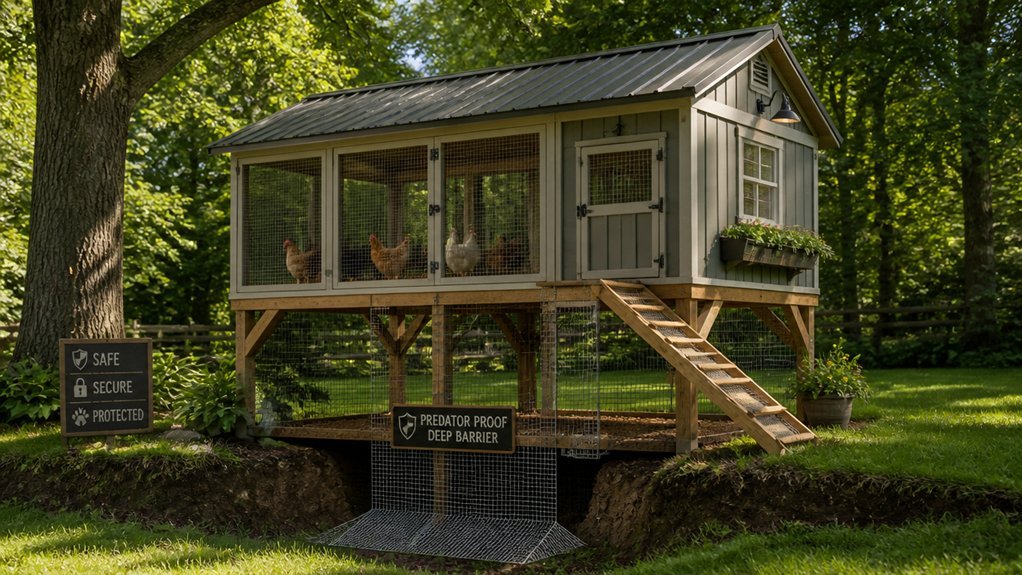
A raised coop can help keep your flock safer by blocking easy predator access from the floor and reducing hiding spots for raccoons, foxes, dogs, and snakes. You’ll also get better airflow, which keeps the coop cooler and drier while still allowing secure vents and hardware cloth. Cleaning is easier, too, since you can reach underneath with less strain. Plus, the higher view helps you spot threats sooner and protect your birds more effectively.
How Raised Coops Keep Predators Out
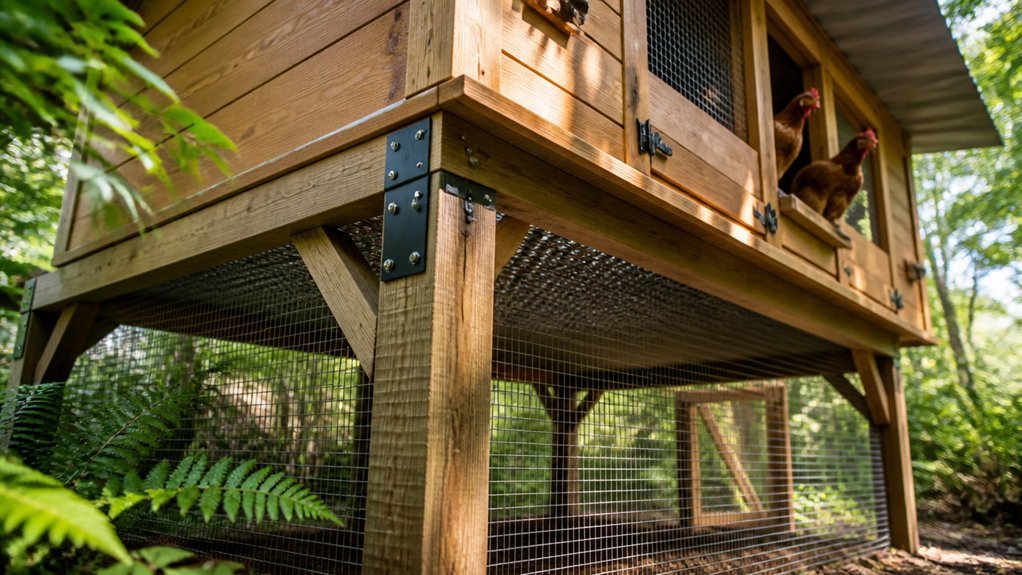
When you raise a coop off the ground, you make it harder for many predators to reach your birds. You also create a physical barrier that limits easy access through the floor, so your flock stays less exposed.
Elevated coops let you seal gaps more effectively, and you can place sturdy wire, tight boards, and secure fasteners where intruders might try to slip in. Because the structure sits above soil, you reduce chances for burrowing animals to enter from below. You can also inspect the underside more easily, so you catch weak spots before they become problems. This setup helps you strengthen vulnerable areas and keep your chickens in a safer, more controlled space, especially when designed with durable materials that resist pecking and weather exposure.
How Raised Coops Deter Ground Predators
Raised coops also help deter ground predators by making access more difficult and less inviting. You raise the floor, so raccoons, foxes, dogs, and snakes can’t easily nose, scratch, or dig their way in. When you elevate the coop, you remove the easy hiding spots predators love and force them to expose themselves longer while they search for entry. That extra effort often makes them give up and move on. You can also place supports on pads or posts that discourage tunneling underneath. Because the structure sits higher, you notice suspicious activity sooner and can react fast. Additionally, using secure fencing around the coop further enhances protection by creating an additional barrier that predators find harder to bypass. Your flock stays safer when predators face barriers that slow them down, frustrate their approach, and reduce the payoff of trying to break in.
Improve Ventilation Without Losing Security
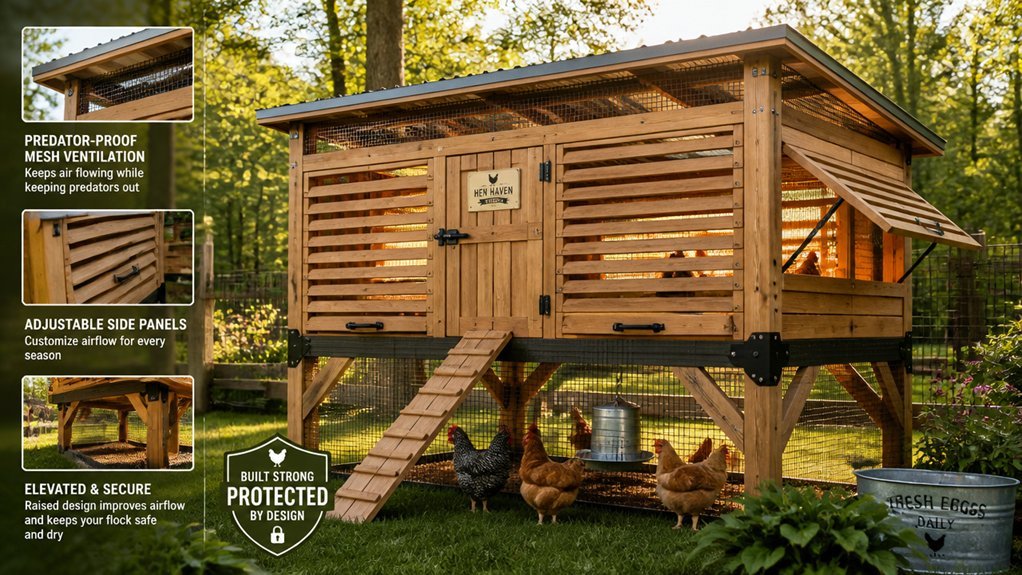
That same elevated design can also improve airflow around your flock. When you raise the coop, breezes can move underneath and around it, helping reduce heat buildup and stale air inside. Using hardware cloth on vents instead of wide wire or open gaps provides a sturdy barrier against predators while allowing airflow. Place openings high enough to catch rising warm air, but keep them covered with tight-fitting mesh and solid framing. You can add adjustable shutters or storm panels to control drafts during cold weather without exposing your chickens to raccoons or snakes. This balance gives your flock fresh air, drier bedding, and better comfort while keeping the structure secure.
Make Coop Cleaning Faster and Safer
By raising the coop, you can clean under and around it without bending as far or disturbing the birds as much. You’ll save time because debris won’t pack tightly against the base, and you can sweep, rake, or hose the area with better access. A raised design also helps you reach corners and check bedding spots more quickly, so you spend less energy on routine chores. Additionally, the improved walk-in height access reduces strain during maintenance.
- Slide tools underneath with less strain.
- Remove droppings before they build up.
- Rinse the ground area more easily.
- Keep the coop floor drier between cleanings.
When cleanup stays simple, you’re more likely to do it often, which keeps the coop fresher and your work safer.
Spot Predator Threats More Easily
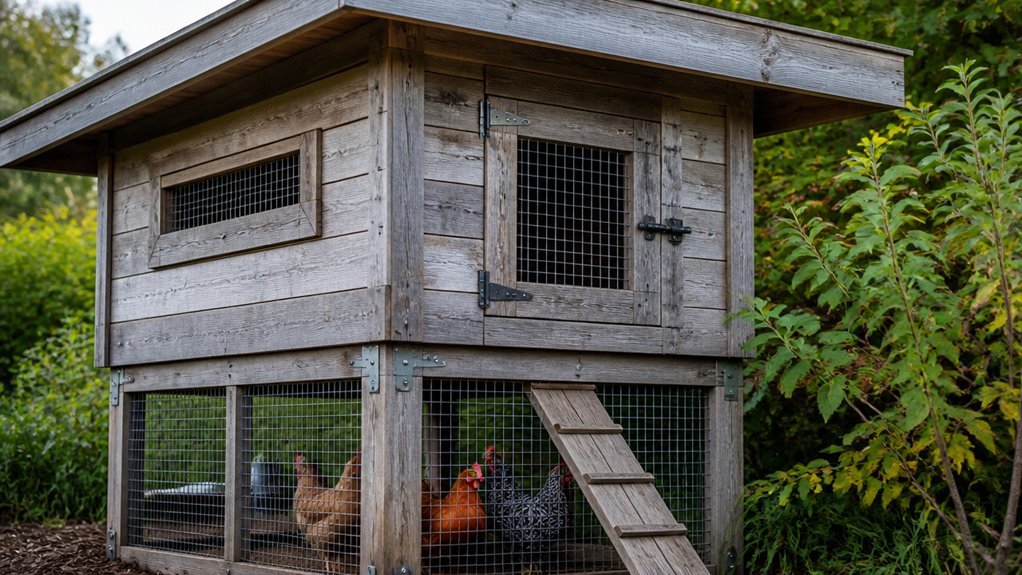
A raised coop also gives you a better view of what’s happening around it, so you can spot predators sooner. From a higher angle, you can scan grass, brush, and fence lines for foxes, raccoons, hawks, or stray dogs before they get close.
You’ll notice shadows, movement, and repeated visits more quickly, which lets you react fast. That extra visibility also helps you place motion lights, cameras, or fencing where they’ll do the most good.
If you keep feed outside the coop, you can see whether it’s attracting unwanted visitors. When you spot a threat early, you can secure birds, shut doors, and discourage predators before they test your flock’s defenses.
Elevated fencing allows for easier inspection of the entire perimeter, helping you identify potential vulnerabilities or breaches in your predator protection system.Frequently Asked Questions
Do Raised Coops Help Protect Chickens From Raccoons at Night?
Yes, they can help, but you shouldn’t rely on height alone. You’ll still need sturdy latches, hardware cloth, and sealed openings, because raccoons can climb, reach, and pry their way inside at night.
Can a Raised Coop Reduce Flooding Damage During Heavy Rain?
Yes, you can reduce flooding damage with a raised coop because it keeps chickens, bedding, and feed above standing water. You’ll also improve drainage, airflow, and cleanup after heavy rain, protecting the structure better.
What Floor Materials Work Best in a Raised Predator-Proof Coop?
You’ll do best with sealed plywood, composite decking, or treated lumber topped with vinyl flooring; they’re durable, easy to clean, and block predators. Avoid gaps, use hardware cloth underneath, and add removable bedding.
How High Should a Coop Be to Discourage Snakes and Rodents?
You should raise your coop 18–24 inches off the ground, which helps keep snakes and rodents from entering easily. Add hardware cloth, seal gaps, and keep feed stored elsewhere to reduce attraction.
Do Raised Coops Make It Easier to Add Automatic Doors?
Yes, you’ll usually find it easier to add automatic doors to a raised coop because you can mount the opener higher and keep wiring drier. You’ll still need solid framing and easy access for maintenance.
In Summary
A raised coop gives your flock a safer, smarter home. You’ll keep ground predators guessing, improve airflow without sacrificing protection, and make daily cleaning quicker and easier. Plus, you’ll spot threats sooner and respond fast before trouble starts. When you choose a raised design, you’re not just building a coop—you’re adding an important layer of security and peace of mind for you and your birds.