You use treats to encourage chicken free-ranging because they make the yard feel safe, rewarding, and fun. Tossing small bits of mealworms, greens, or scratch near the coop gets your birds moving, pecking, and foraging like they would in nature. Treats also build trust, reduce skittishness, and help timid chickens follow bolder ones outside. Keep portions small and consistent, and you’ll turn free-ranging into a routine your flock looks forward to, with more tips ahead.
Why Treats Help Chickens Free-Range
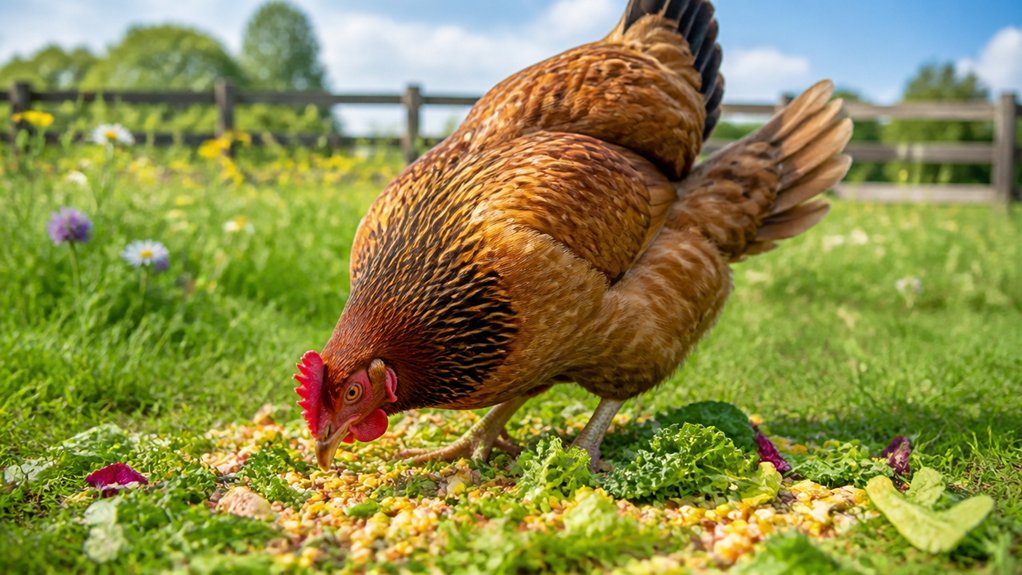
Treats help chickens free-range because they give your flock a reason to leave the coop and explore. You can use food rewards to make the yard feel rewarding instead of risky, especially when birds hesitate to wander far.
When you scatter treats across safe ground, your chickens follow, peck, and move as a group, which builds confidence and reduces coop-bound habits. You also create a positive routine: your flock learns that leaving the coop leads to something good. That association can ease stress, encourage natural foraging, and help timid birds join bolder ones.
Over time, your chickens may range farther on their own because they expect enjoyable discoveries outside. Treats don’t force movement; they motivate it by linking exploration with comfort, food, and trust. Incorporating pecking enrichment like treats can also stimulate natural foraging behaviors, making outdoor exploration more engaging and beneficial for your flock.
Best Treats for Recall Training
For recall training, you want treats that are small, smelly, and irresistible enough to bring chickens running back quickly. Choose high-value options like mealworms, sunflower seeds, chopped raisins, cracked corn, or tiny bits of scrambled egg.
You can also use plain oats or bits of cooked rice when you need a lighter reward. Keep pieces tiny so your flock can eat fast and stay focused on you. Reserve the best treats for practice sessions, then offer them only when you call the birds in. That way, they’ll learn to connect your voice with something worth hurrying for.
Rotate a few favorites to keep interest high, and avoid anything messy enough to slow them down or distract the whole flock. Incorporating natural protein treats like dried mealworms can make your recall training even more effective since chickens go crazy for them.
How Treats Build Trust With Chickens
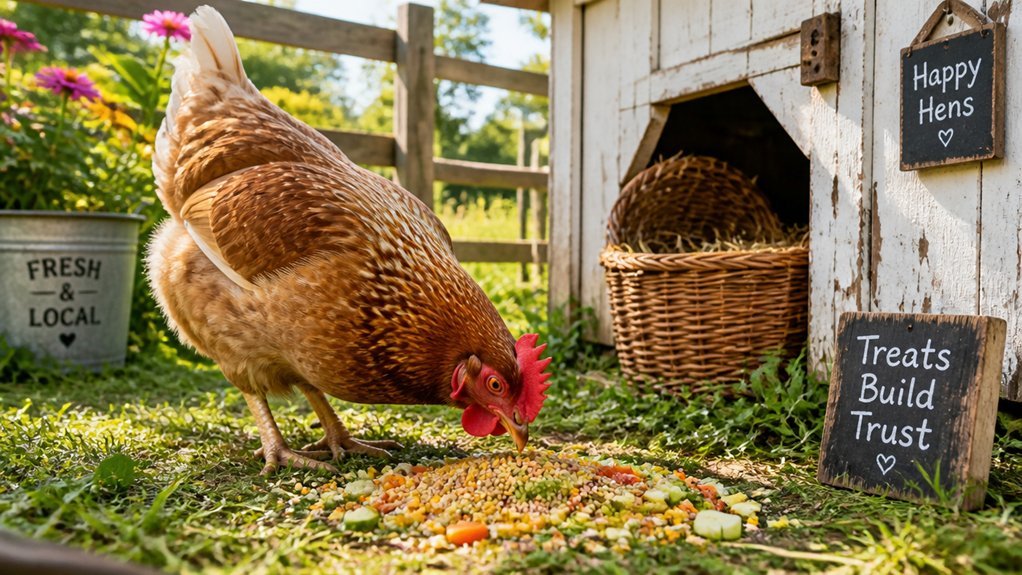
When you offer treats consistently and calmly, your chickens start to see you as a safe, predictable part of their routine. You reinforce that feeling every time you approach slowly, keep your movements steady, and let them take food without pressure. A well-timed treat can also support proper nutrition, reinforcing their health and confidence. Over time, they learn that your presence means something good, not something stressful. That trust matters because confident chickens are more willing to stay nearby, explore, and respond to you in the yard. You can strengthen the bond by using the same signal, the same spot, and a calm voice each time. Your birds will begin to connect you with comfort and reward, which reduces skittishness and builds a better relationship. Trust grows through repetition, patience, and respect for their pace.
How to Call Chickens Back With Treats
A simple call paired with a favorite treat can bring your chickens running back in no time. Pick a short, consistent sound, like a whistle or cluck, and use it only when you want them to return. Hold the treat where they can see it, then repeat the call with the same tone each time. When they approach, reward them quickly so they connect the sound, your presence, and the snack. Use small treats that won’t distract them from the run, and keep portions modest so you don’t overfeed them. Practice at the same time each day, and your flock will start to recognize the routine. To make the process even more effective, incorporate treat feeders into your setup to provide consistent, accessible rewards. Stay calm, because sudden movements can spook them and break the connection you’re building.
Train Chickens to Follow You
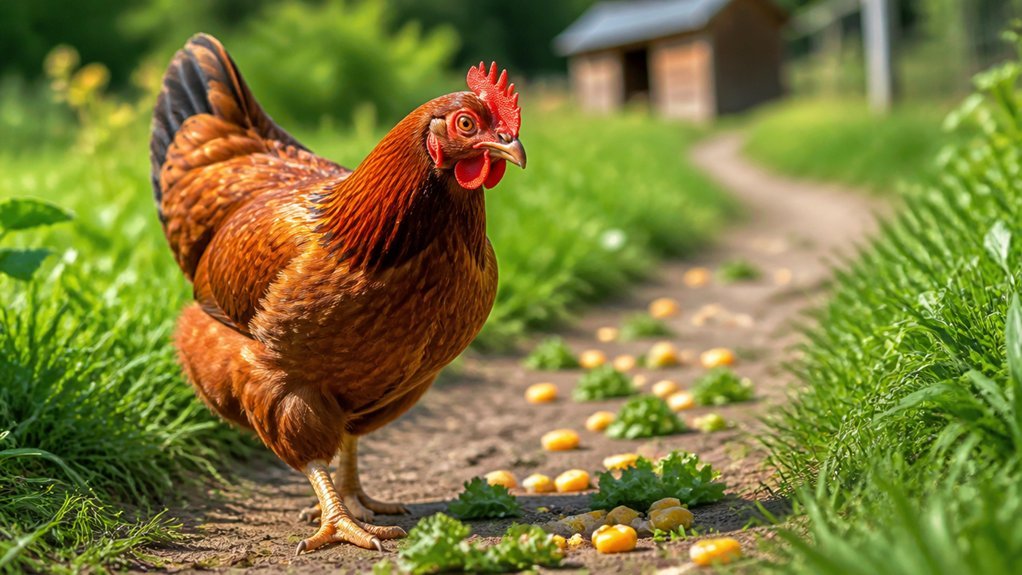
Start by walking a few steps ahead of your flock and offering a treat only after they follow you. Keep your pace slow and your movements calm so they can track you without fear.
Use a small, tasty reward that’s easy to notice, then repeat the same cue each time you move. Soon, your chickens will learn that staying near you brings a benefit. You can practice this in short sessions around the yard, turning slightly or changing direction to keep their attention.
Praise them softly when they come along, and stop before they lose interest. Proper grit size is also essential to ensure their digestion remains healthy as they learn to forage more naturally. Consistency matters, so use the same route and cue words often. With repetition, your flock’ll start trailing behind you more willingly, making free-ranging easier and more manageable for you.
Time Treats for Safe Free-Ranging
Treats work best as a timing tool when you give them right after your chickens return or stay close during free-ranging. You teach your flock that coming when called, lingering nearby, and heading back to the coop leads to something pleasant.
Treats work best when given right after your chickens return or stay close during free-ranging.
Offer the reward immediately, while the behavior is fresh, so your chickens connect the action with the treat. If you wait too long, they won’t link the two.
Use the same timing each time you let them out, and you’ll build a clear routine they can learn fast. You can also praise them as they gather, then hand out treats once they’re secure.
This steady pattern helps your chickens feel confident outside and makes safe free-ranging easier for you to manage every day. Proper sizing and a snug fit for harnesses can also reduce stress and improve training during outings.
How to Avoid Overfeeding Treats
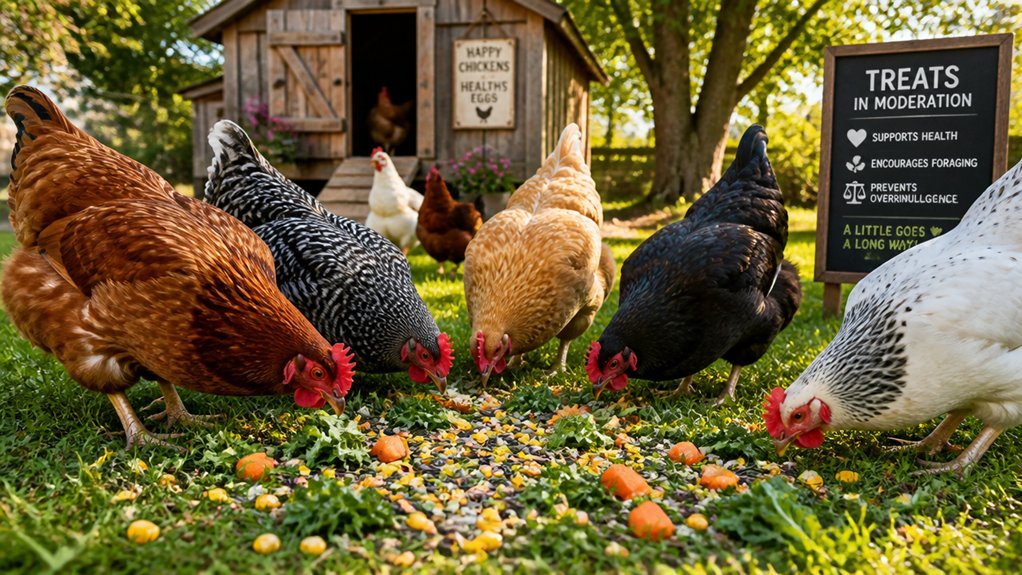
Giving treats at the right moment can help your chickens learn, but too many can quickly cause problems. You should set a daily limit and count treats as part of their total feed, not extra snacks.
Keep portions tiny so you reward behavior without replacing balanced nutrition. If you hand out treats often, your birds may ignore their regular ration and gain weight.
- Offer treats only after a clear training cue.
- Measure servings instead of guessing by hand.
- Stop once your chickens lose interest.
Watch body condition, droppings, and appetite to catch overfeeding early. If you notice soft stools or lazy behavior, cut back at once.
Consistency matters more than quantity, so keep rewards small and predictable.
This approach supports digestive health and ensures your chickens stay active and healthy while free-ranging.
Scatter Treats to Encourage Foraging
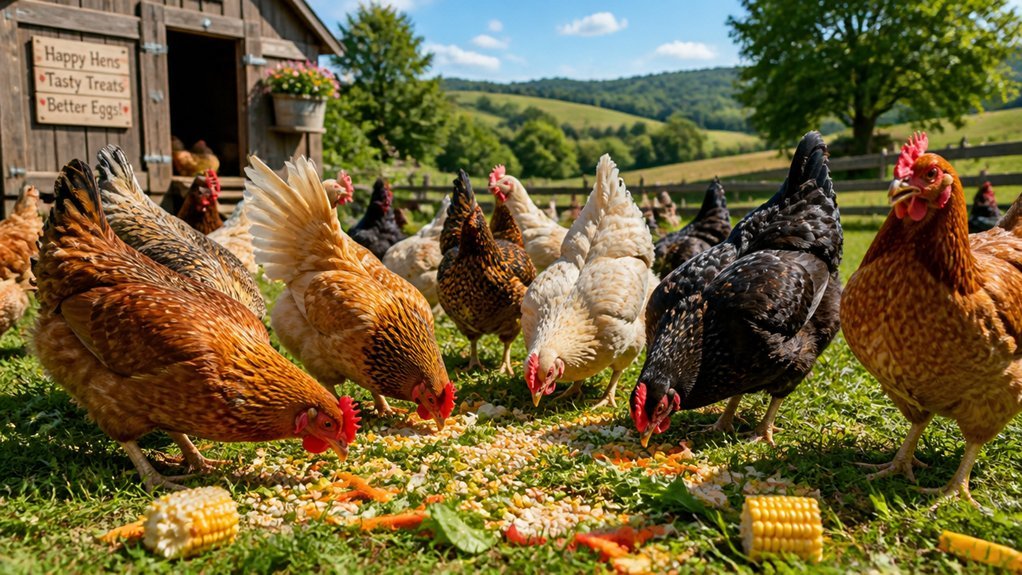
You can scatter small treats around the yard to spark your chickens’ natural foraging instincts. Try laying a loose treat trail outdoors so they keep moving and searching. Moving rewards help them explore more of the space while staying engaged and active. Incorporating varied grains into their treat trail further mimics their natural diet and encourages healthy foraging behavior.
Natural Foraging Instincts
Chickens already have a strong foraging instinct, so scattering a few treats across the yard can turn free-ranging into a natural, rewarding activity. You help your flock act on behaviors they already know: pecking, scratching, and searching. This keeps them engaged, reduces boredom, and makes outdoor time feel purposeful.
- You can drop treats in small amounts to spark curiosity.
- You can spread them far enough to keep birds moving.
- You can choose healthy snacks that support balanced feeding.
- Incorporating digestive support ingredients in their treats can also promote overall health while encouraging activity.
When you let chickens hunt for food, you’re tapping into instinct instead of forcing behavior. That makes free-ranging feel safer, more familiar, and more satisfying for them.
Treat Trails Outdoors
To make free-ranging more enticing, scatter a trail of treats across the yard so your flock has to move, search, and peck as they go. Start with a few bits near the coop, then spread them farther apart so your chickens keep exploring.
Use small portions of scratch, chopped greens, or mealworms to turn the yard into a simple foraging route. You’ll notice they slow down, look around, and stay interested in the space instead of clustering in one spot.
Keep the trail light so they don’t fill up too fast, and vary the path to keep things fresh. This approach helps your birds practice natural searching behavior while making outdoor time feel rewarding and engaging.
By encouraging foraging behavior, you promote healthier digestion and overall well-being in your flock.
Rewards That Move Chickens
Scattering treats works even better when the reward keeps moving, because your flock naturally follows the food and keeps foraging instead of standing still. You can toss small amounts a few feet at a time, and your chickens will scratch, peck, and spread out as they track each bite.
This turns feeding into an active search, which supports healthier behavior and reduces boredom.
- Move the treats gradually to keep their attention.
- Use healthy options like chopped greens, cracked grains, or mealworms.
- Watch spacing so every bird gets a fair chance.
When you guide the trail, you don’t just feed your flock; you encourage exploration, exercise, and confidence. That simple motion makes free-ranging feel rewarding, not random.
Treats That Boost Natural Foraging
You can boost natural foraging by scattering treats in grass, leaf litter, or straw so your chickens have to search and scratch.
You can also hide small rewards in safe spots to turn feeding into a quick game that taps their instincts.
When you reward foraging habits often, your flock learns to explore more and free-range with confidence.
Natural Feed Scattering
Instead of dropping all the feed in one spot, scatter small amounts of scratch grains, cracked corn, or dried mealworms across the yard to spark your chickens’ natural searching behavior. You’ll turn a quick snack into active foraging, and your flock will stay busy longer.
This method helps them peck, scratch, and move around the space they’d naturally explore. Keep portions modest so they don’t ignore their regular feed.
- Spread treats on grass, mulch, or leaf litter.
- Vary the scatter pattern to encourage movement.
- Offer treats after they’ve settled outside.
Hidden Treat Games
Hide a few treats around the yard so your chickens have to work for them. Place small portions under leaves, in grass, beside logs, and near safe shrubs. You’ll mimic natural scratching, pecking, and searching, which keeps birds busy and mentally engaged.
Use scattered grains, chopped greens, or mealworms, but keep the amounts modest so they stay interested. Change the hiding spots often so your flock keeps exploring new areas instead of crowding one place.
This simple game encourages movement, alertness, and curiosity while making the yard feel more like a real feeding ground. Watch your chickens hunt, scratch, and peck with purpose, and you’ll see how treats can turn free-ranging into an active, rewarding routine.
Foraging Habit Rewards
When you reward chickens for foraging behaviors, you reinforce the habits that make free-ranging more natural and productive. You can scatter a few seeds in grass, leaf litter, or compost so they learn to scratch, peck, and search with purpose.
This keeps them engaged and helps them associate your yard with useful, rewarding exploration.
- Toss treats where they must move and investigate.
- Rotate locations so they don’t expect food in one spot.
- Pair rewards with calm release times to build routine.
Over time, your flock will spend more energy hunting insects and plants, which supports better exercise and confidence.
Keep rewards small, though; you want treats to guide behavior, not replace it. Use them to shape strong foraging instincts.
Homemade Chicken Treats for Training
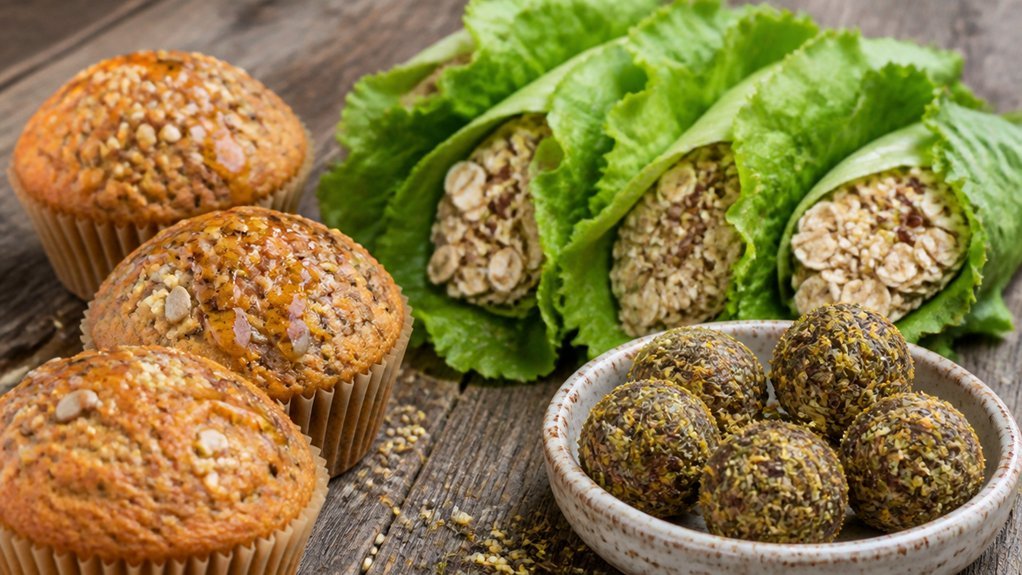
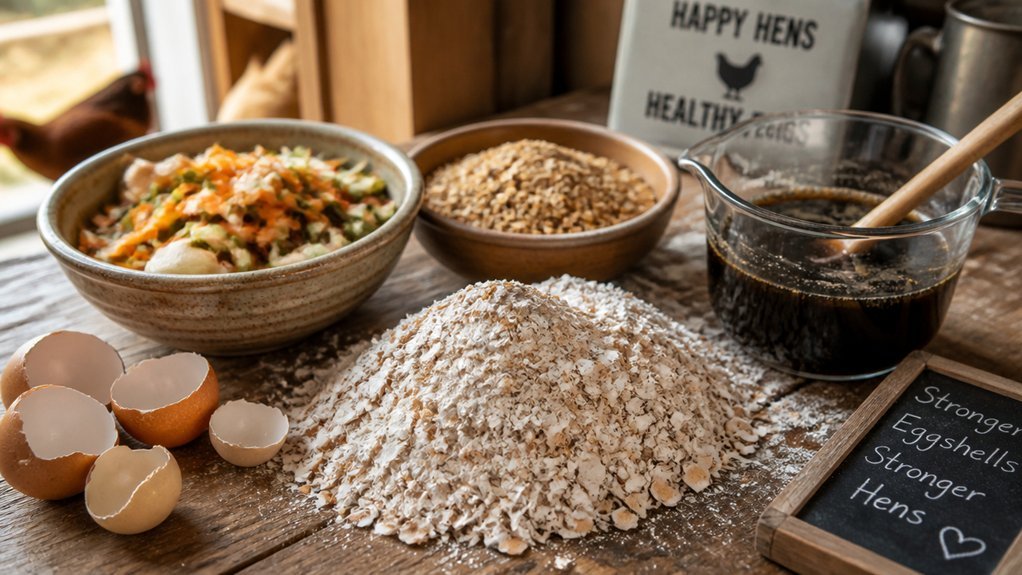
If you want to train your chickens to come out and explore, homemade treats can work especially well because you control exactly what goes into them. You can mix chopped oats, scrambled egg, cooked rice, or mashed pumpkin into small, easy-to-peck bites. Keep portions tiny so you’re rewarding curiosity, not replacing their normal feed.
Offer the treats only when you call them toward the yard or a new area, and repeat the same cue each time. That consistency helps them connect your voice with a positive experience. You can also scatter a few pieces ahead of them to encourage walking and scratching.
When your flock learns that coming forward leads to something tasty, they’ll feel safer moving out and exploring on their own.
Avoid Treats That Cause Picky Eating
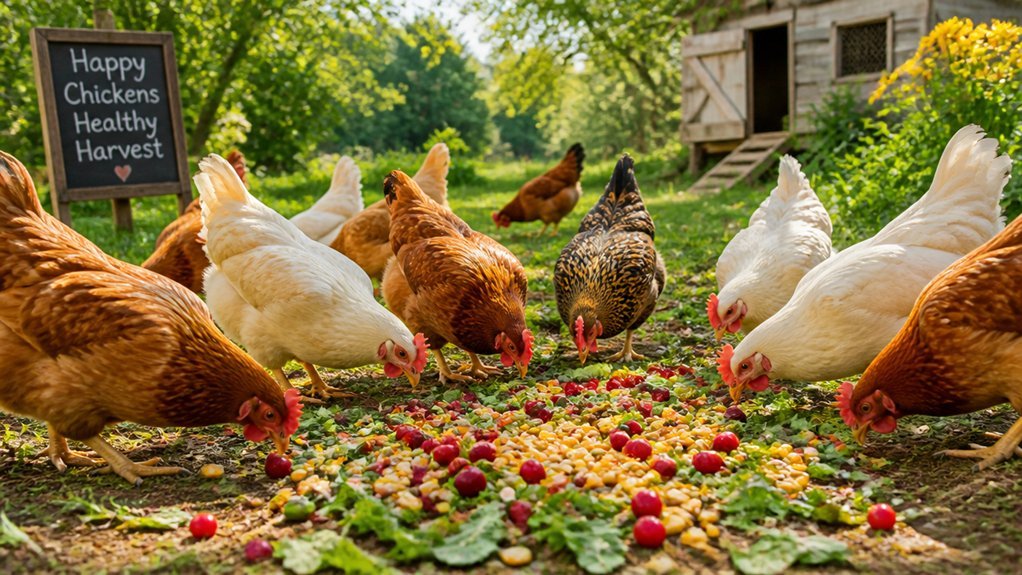
You should offer a balanced variety of treats so your chickens stay interested without fixating on one favorite.
If you rely on the same rich snack too often, they can start refusing healthier foods and develop fussy preferences. Mixing treats keeps training effective and helps prevent picky eating.
Balanced Treat Variety
A balanced treat variety keeps your chickens interested in foraging without turning them into treat-hungry grazers. You can mix small amounts of grains, greens, and protein-rich scraps so they keep exploring the yard and scratching naturally. Rotate options to match the season and your flock’s needs.
- Offer cracked corn sparingly for quick energy.
- Add leafy greens to support active pecking.
- Use mealworms or seeds as occasional rewards.
When you keep portions modest, your birds’ll still hunt bugs, nibble grass, and investigate new spots. That variety reinforces free-ranging habits because treats complement their search behavior instead of replacing it.
You’ll also spread interest across different foods, which helps your flock stay engaged, active, and well-fed while they roam.
Prevent Fussy Preferences
To prevent fussy preferences, avoid offering treats so often that your chickens start ignoring their regular feed or the natural foods they’d normally forage. Keep treats as a small bonus, not the main event, so your flock stays keen to scratch, peck, and explore for real food.
If you hand out too many tasty bits, you’ll train them to wait for snacks instead of foraging. Rotate options like grains, vegetables, and insects in modest amounts, and cut back when they seem less interested in feed. You can also scatter treats farther apart to encourage movement without rewarding pickiness.
When you keep portions controlled, your chickens learn that free-ranging pays off, and they’ll stay healthier, more balanced eaters over time, too.
Fix Chickens That Ignore Treats
If your chickens ignore treats, start by checking whether the food is truly enticing and easy to eat. You can fix the problem by making the reward more visible, smaller, and fresher. Offer items with strong aroma, like chopped greens, mealworms, or cracked corn, and place them where your flock already forages.
Make treats more visible, smaller, and fresher so your chickens find them worth investigating.
- Break treats into bite-sized pieces.
- Scatter them on clean ground.
- Move them slightly as birds approach.
You should also watch for distractions, fear, or overfilled crops that make birds less interested. Approach calmly and keep sessions short so your chickens feel safe.
When you match the treat to their natural curiosity, they’ll learn that exploring pays off and free-ranging becomes more rewarding.
Keep Training Rewards Consistent
Once your chickens start paying attention to treats, keep the reward predictable so they know what to expect. Offer the same treat at the same time each day, and use the same call or signal before you feed them.
When you stay consistent, your flock learns that coming near you leads to something good. That helps them link your presence with free-ranging, not stress.
Don’t switch treats randomly, because mixed rewards can confuse them and slow progress. You can still adjust portions as they learn, but keep the routine steady.
Consistency also makes it easier to notice which birds respond fastest and which need more practice. Over time, your chickens will follow you more readily, and your training sessions will become quicker, calmer, and more effective.
Frequently Asked Questions
Can Treats Make Chickens Aggressive Toward Each Other?
Yes, treats can make your chickens squabble or bully each other if you scatter too little food. You can reduce aggression by spreading treats widely, offering enough for everyone, and supervising feeding closely.
Should Treats Be Used With Chicks or Only Adult Chickens?
You can use treats with both chicks and adult chickens, but you’ll need age-appropriate portions and textures. Start chicks on tiny, soft treats, and offer adults a wider variety while avoiding overfeeding and imbalance.
How Often Should Free-Ranging Treat Training Sessions Happen?
You should run treat-training sessions daily at first, then taper to a few times a week once your chickens respond reliably. Keep sessions short, consistent, and rewarding so they’ll associate free-ranging with treats.
Do Treats Work Better for Some Chicken Breeds?
Yes, you’ll often see some breeds respond faster to treats, especially curious, food-driven birds like Orpingtons or Rocks. You can still train shyer breeds, but you may need more patience, consistency, and tastier rewards.
Can I Use Treats During Winter Free-Ranging?
Yes, you can use treats during winter free-ranging, but keep them sparse and nutrient-rich. You’ll attract chickens outside while avoiding overfeeding. Scatter treats on clear ground, and always provide shelter, water, and grit.
In Summary
Treats make free-ranging easier because they help your chickens connect you with safety, food, and routine. When you use the right rewards, you can build trust, call them back faster, and train them to follow you around the yard. Just keep treats consistent, use them sparingly, and avoid creating picky eaters. With a little practice, your chickens will learn that coming to you always pays off.