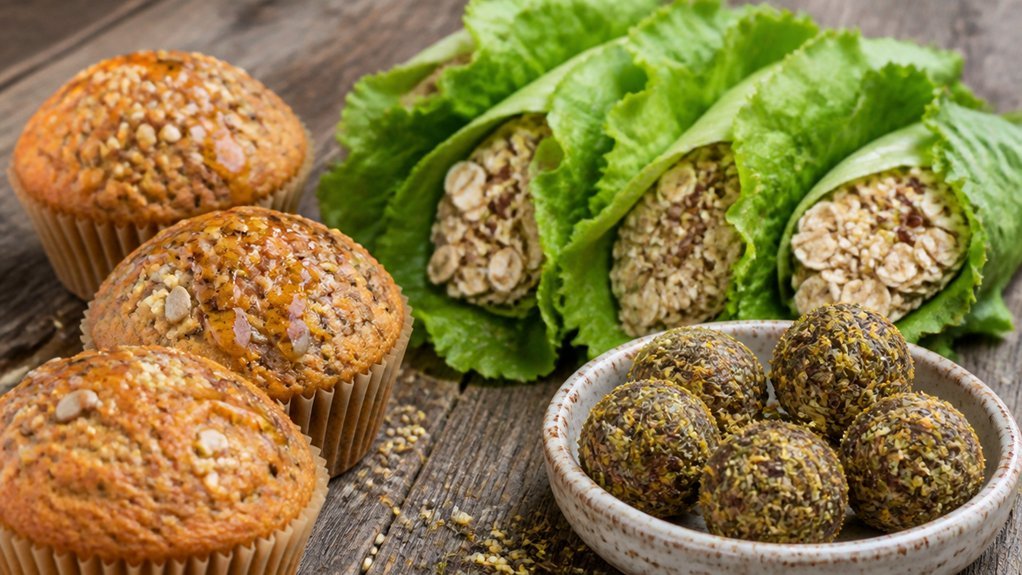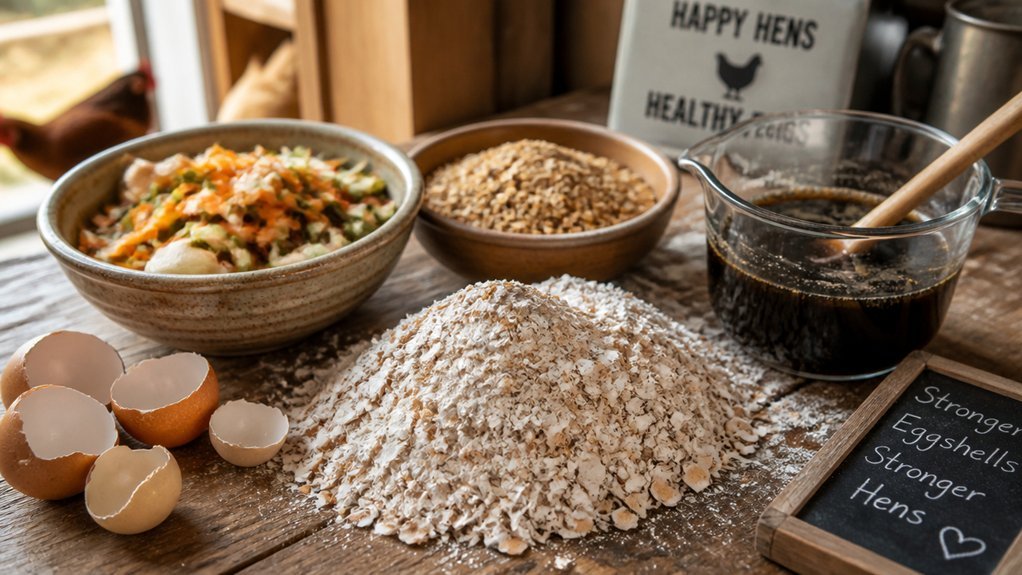
You can make eggshell calcium treats for chickens by rinsing shells well, peeling off the inner membrane, and drying them completely. Bake them on a tray at low heat until they’re crisp and brittle, then cool and crush them into coarse, safe pieces. Serve the shells in a clean, shallow dish as a supplement, not a meal replacement. You can also mix a little into feed, and a few simple tips can make them even better.
Why Eggshell Calcium Helps Chickens
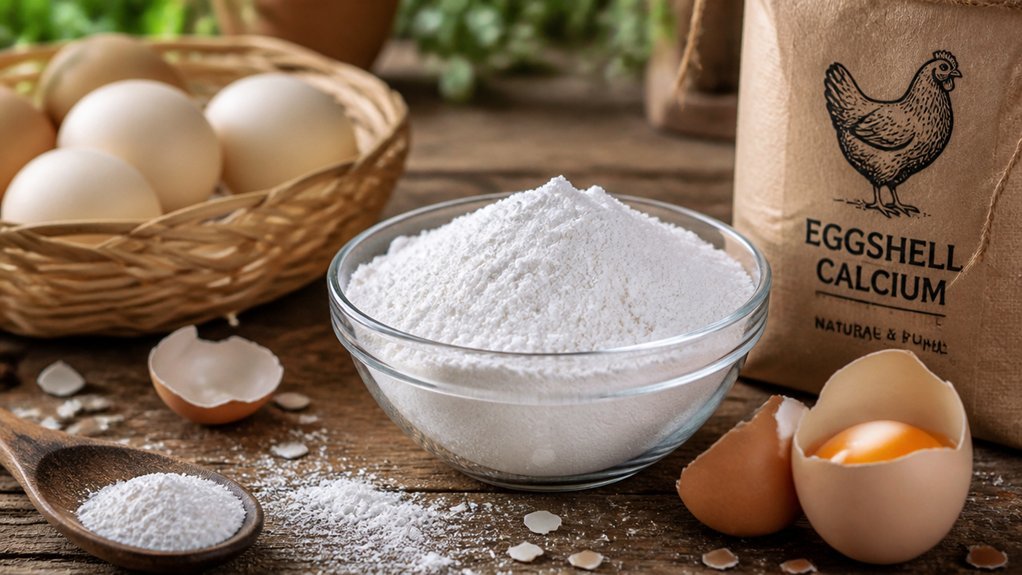
Eggshell calcium helps chickens because it gives them a natural, readily available source of calcium for strong eggshells, healthy bones, and proper muscle function. When you add it to their diet, you support hens during laying and help reduce the strain that egg production puts on their bodies. Calcium also helps your birds stay active and maintain steady growth. If a hen doesn’t get enough calcium, she may produce thin or weak shells, which can break easily and waste nutrients. Using proper particle size optimizes calcium absorption and reduces waste, ensuring your hens receive consistent nourishment.
Collect and Clean Eggshells
Collect your eggshells and rinse them thoroughly under warm water to wash away any residue. Peel off the thin inner membranes so the shells dry cleaner and grind more easily. A natural mineral source can be preserved in the shells, so ensure they are completely dry before grinding. Spread them out and let them air dry completely before you use them.
Rinse Shells Thoroughly
Start by rinsing each eggshell under warm water to remove any leftover egg white or yolk. Hold each shell gently and let the water flow over both sides so you don’t miss any residue.
If bits cling to the inside, rub them lightly with your fingers until the surface feels clean. Use a colander or bowl to keep the shells together while you work, and stir them around so every piece gets washed evenly.
Keep rinsing until the water runs clear and the shells no longer feel slippery. This step helps you prepare clean shells for drying and grinding later.
Once they’re fully rinsed, set them aside on a clean towel or tray so excess water can drain away. Wet shells can develop bacterial growth, so thorough rinsing is essential before drying.
Remove Membranes
Once the shells are rinsed and draining, peel away the thin inner membrane from each piece if you can. Use your fingers or the tip of a clean knife to lift an edge, then pull the membrane off in strips. This step helps you reduce leftover organic material and makes the shells easier to crush later. Incorporating natural mineral benefits, such as volcanic ash or zeolite, can enhance the nutritional value of your homemade treats. If a few stubborn bits stay stuck, don’t scrape hard enough to tear the shell; a little residue won’t ruin the batch. Work over a bowl or tray so you can catch fragments and keep your prep area tidy. Check each shell for cracks, grit, or discoloration, and set aside any pieces that look questionable. When you finish, you’ll have cleaner shells ready for the next step in your eggshell calcium treat process.
Air Dry Completely
Spread the cleaned shell pieces in a single layer on a clean towel, baking sheet, or drying rack so air can circulate around them. Leave them in a dry, well-ventilated spot until they feel brittle and show no dampness. Proper drying helps prevent mold and bacterial growth, keeping the shells fresh and safe for your chickens. You can let them sit overnight, or longer if your kitchen is humid. Don’t stack or cover them, because trapped moisture can slow drying and encourage spoilage. Check a few pieces by touching the inner and outer surfaces; if they still feel cool or flexible, give them more time. Once they’re fully dry, you’re ready for the next step: baking or grinding them into a safe calcium treat for your chickens. Proper drying helps keep the shells compostable and eco-friendly, making them a healthier and more sustainable supplement.
Bake Eggshells Until Crisp
Place the clean eggshells on a baking sheet and oven-dry them thoroughly at a low temperature. Stir them once or twice so they dry evenly and don’t scorch. Ensuring even drying helps maintain the eggshells’ calcium content for optimal nutritional value. When they feel completely crisp and brittle, they’re ready for the next step.
Oven-Dry Shells Thoroughly
To finish drying the cleaned shells, spread them in a single layer on a baking sheet and bake them at a low temperature until they turn completely crisp. You’ll want even heat so every piece loses lingering moisture and becomes easy to crush later.
Keep the shells in one thin layer, and don’t crowd the pan.
- Set your oven low and steady.
- Slide the tray in on the middle rack.
- Let the shells dry fully without rushing the process.
- Using a uniform heat source helps ensure the shells dry evenly and prevents cracking or warping.
When you handle them, they should feel light and break apart easily. This step helps you create a cleaner calcium treat for your flock.
Once the shells are thoroughly oven-dried, remove them carefully and let them cool before the next step.
Check For Crispy Texture
Check the shells as they bake and keep them in the oven until they’re fully crisp and dry. You want every piece to snap easily, not bend or feel leathery. If you rush this step, moisture can linger and spoil the batch. Additionally, ensuring the weatherproofing is intact helps maintain consistent baking conditions.
| Check | What to Feel | Why It Matters |
|---|---|---|
| Color | Pale and dry | Signals even baking |
| Texture | Brittle, not chewy | Confirms moisture is gone |
| Sound | A sharp crack | Shows true crispness |
After the shells cool, pinch one between your fingers. It should crumble cleanly. If it still flexes, return it to the oven for a few more minutes. Once crisp, let them cool completely before grinding. That final check helps you make a safe, shelf-stable calcium treat your chickens can enjoy.
Crush Eggshells Into Safe Pieces
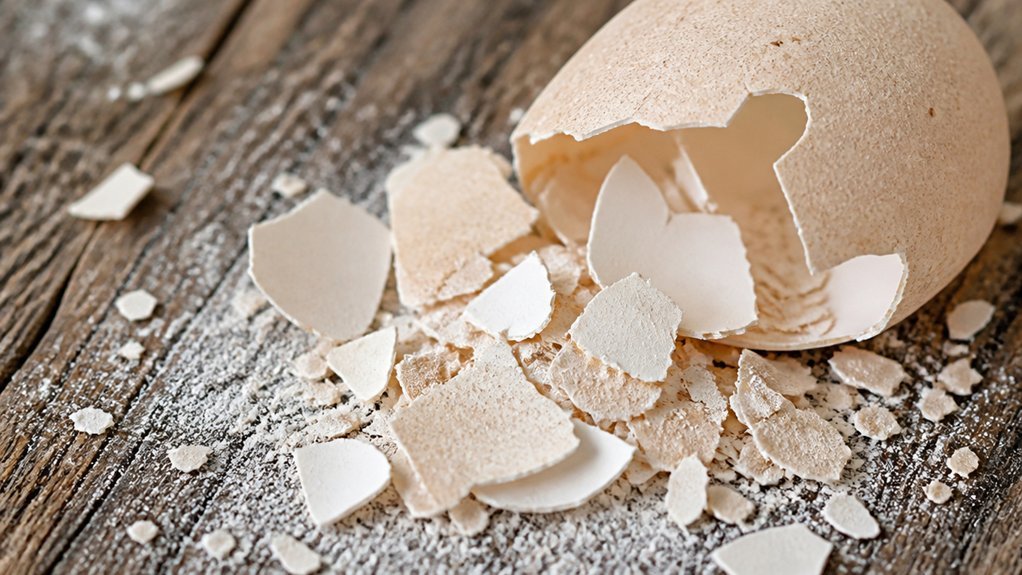
Once the eggshells are completely dry, crush them into small, safe pieces with a mortar and pestle, rolling pin, or food processor. You want a texture that’s easy for chickens to peck, but not so fine that it turns to dust. Aim for irregular bits that still show some shape, since that helps you control the size.
- Break large shells first to make crushing easier.
- Work in small batches so you get a more even result.
- Stop when the pieces look like coarse gravel, not powder.
- Incorporate a breathable design into your storage to keep eggs dry and fresh until use.
If any sharp edges remain, crush them a little more. Handle the shells cleanly, and keep the pieces dry until you’re ready to use them. This simple step helps you make a consistent treat your flock can enjoy safely.
How to Serve Eggshell Calcium Treats
After you’ve crushed the eggshells into safe, irregular bits, you can serve them as a simple calcium boost for your chickens. Offer them in a clean, shallow dish so your birds can peck at the pieces easily. Place the dish where it stays dry and away from droppings, and refresh it daily to keep it appealing. You can set it out as a separate snack during the day, especially when hens need extra support for strong shells. Watch how your flock responds, and remove any leftovers that look damp or dirty. Keep portions modest so the treat stays occasional, not routine. Using dust-free bedding in your coop can help prevent the spread of contaminants and maintain a healthier environment for your hens. If you serve it this way, you’ll give your chickens a tidy, practical calcium source without making feeding messy or complicated.
Mix Eggshells With Feed
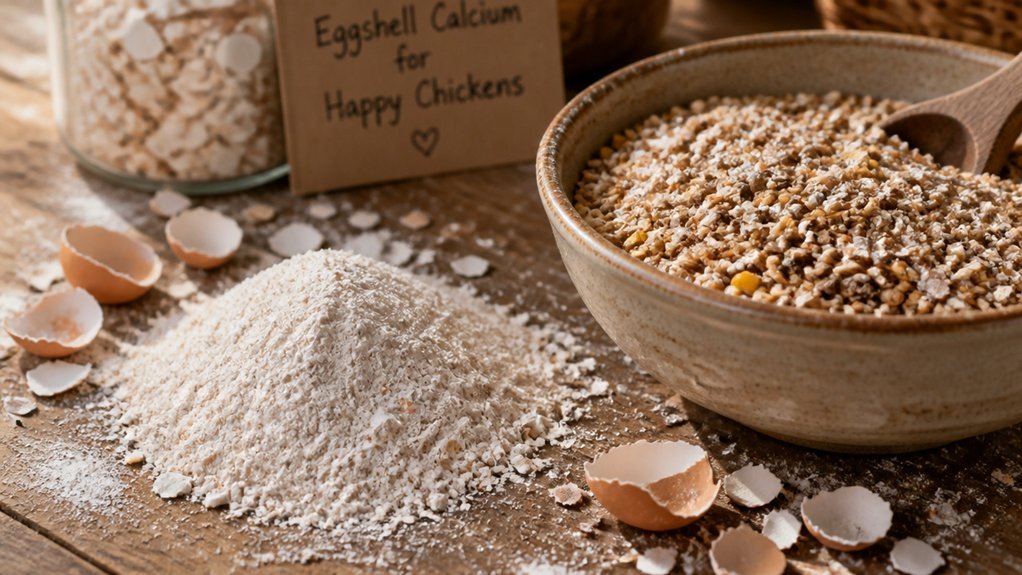
If your hens prefer a more familiar option, you can mix crushed eggshells into their regular feed. This method helps them get calcium without changing their routine too much.
Use fully dried shells, crush them finely, and stir a small amount into the feed so each bite includes some mineral support.
- Dry the shells completely before crushing.
- Grind them until the pieces look small and safe to eat.
- Blend them with just enough feed for one serving.
Start with a light mix so your flock accepts it easily. Watch how they eat, and adjust the amount if they leave shells behind.
Keep the mixture fresh, and store extra crushed shells in a dry container.
Add Herbs or Seeds for Flavor
You can also make the treats more appealing by mixing in a few herbs or seeds. You can sprinkle in chopped parsley, oregano, dill, or basil to add mild flavor and extra nutrients.
If you want a little texture, stir in a small amount of sunflower seeds, sesame seeds, or crushed pumpkin seeds. Keep the mix simple so your hens still taste the calcium-rich eggshells.
Use only fresh, chicken-safe herbs, and avoid anything strong, spicy, or toxic. Start with a light hand and watch how your flock responds, because some birds prefer plain treats.
You can also combine the herbs or seeds with a little feed to help everything stick together. This keeps the treats tasty, familiar, and easy for your chickens to peck.
Store Homemade Chicken Treats Properly
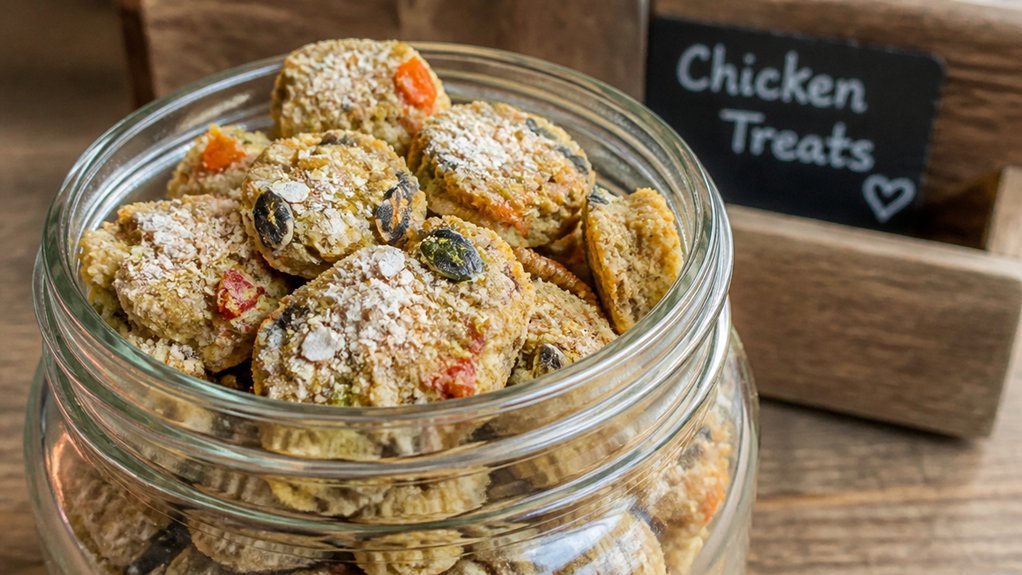
Once the treats are mixed, store them in an airtight container in a cool, dry place so they stay fresh and free from moisture. Keep the lid sealed tightly after each use to protect the texture and flavor.
If you make a large batch, divide it into smaller portions so you only open what you need. Label the container with the date, and use the treats within a few weeks for best quality.
- Choose glass or food-safe plastic containers.
- Keep them away from sunlight, heat, and damp areas.
- Check for any musty smell before feeding.
You can also freeze extra treats in sealed bags for longer storage. When you thaw them, let them return to room temperature before offering them to your flock.
Avoid Common Eggshell Feeding Mistakes
Even wholesome eggshell treats can cause problems when they’re handled the wrong way, so rinse and dry the shells thoroughly before grinding them into a fine powder. Don’t leave big shards in the mix, since sharp pieces can irritate your chickens’ mouths and crops.
You should also avoid feeding eggshells from raw eggs, because leftovers can invite bacteria and attract pests. Limit treats to a small supplement, not a full diet, or you’ll unbalance their nutrition.
Offer the powder in a separate dish so hens can eat it when they need extra calcium. Skip flavored, salted, or seasoned shells, too, because additives don’t belong in your coop.
If your birds already get a complete feed, use eggshell calcium sparingly and watch their shell quality, appetite, and droppings closely.
Frequently Asked Questions
Can Chicks Eat Eggshell Calcium Treats Safely?
Yes, you can offer chicks eggshell calcium treats, but you shouldn’t rely on them. You’ll need to crush and bake the shells, then feed tiny amounts only after they’re eating starter feed well.
How Often Should Chickens Get Eggshell Treats?
You should offer eggshell treats sparingly, about once or twice a week, not daily. You can provide them more often during heavy laying, but always keep other calcium sources available for balance.
Do Eggshell Treats Change Egg Flavor?
No, you won’t usually notice a flavor change from eggshell treats. You’re mainly giving calcium, and your hens can still lay eggs that taste normal, especially if you feed clean, dried shells in moderation.
Can Other Poultry Eat These Treats Too?
Yes, you can offer them to ducks, geese, and turkeys in moderation. You’ll want to crush them finely, and you shouldn’t rely on them as a full calcium source alone.
Should I Use Shells From Raw Eggs?
No, you shouldn’t use raw shells straight away. You’ll need to rinse, dry, and bake them first to kill bacteria. Then you can crush them fine and offer them safely to your birds.
In Summary
You can give your flock a simple, natural calcium boost by turning saved eggshells into healthy treats. Clean, bake, and crush the shells so they’re safe and easy to eat, then serve them plain or mix them with feed, herbs, or seeds. When you store them properly and avoid common mistakes, you help support strong eggshells and happy hens. With this easy habit, you can reduce waste and make the most of your kitchen scraps.