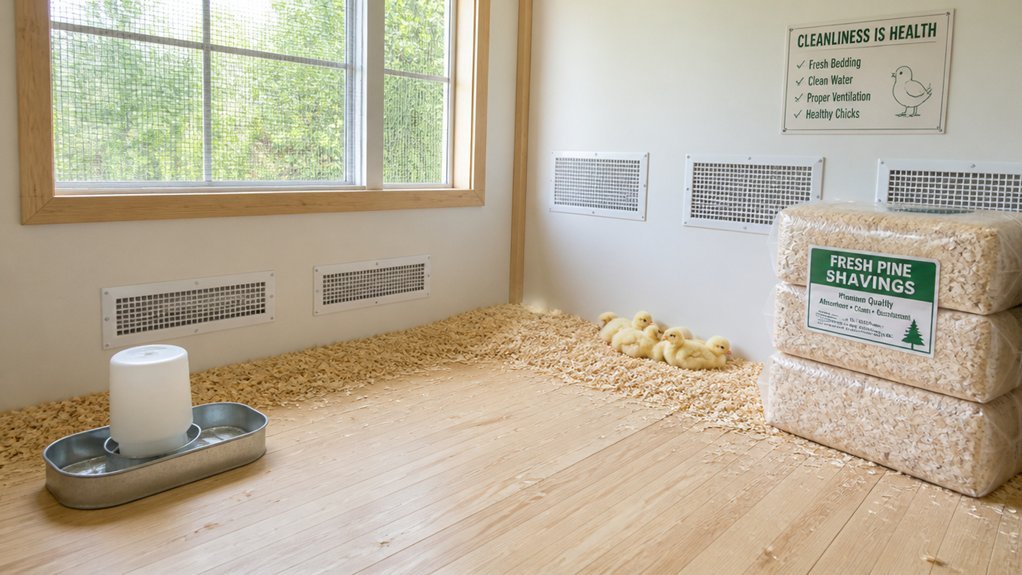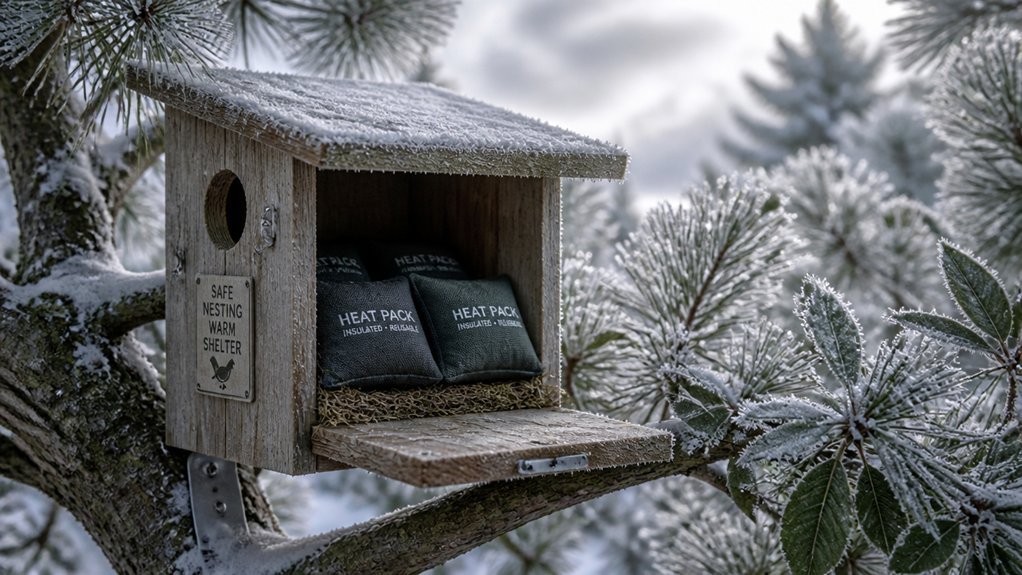
To brood chicks safely in cold climates, you should keep the brooder warm, draft-free, dry, and secure. Use a sturdy container with absorbent bedding, steady heat, and a thermometer at chick level. Place feed and water where chicks can reach them easily, and check them often for huddling, panting, or droopiness. Seal gaps, protect cords, and move chicks to the coop only when they’re dry and alert. There’s more to help you do it right.
How to Set Up a Safe Brooder
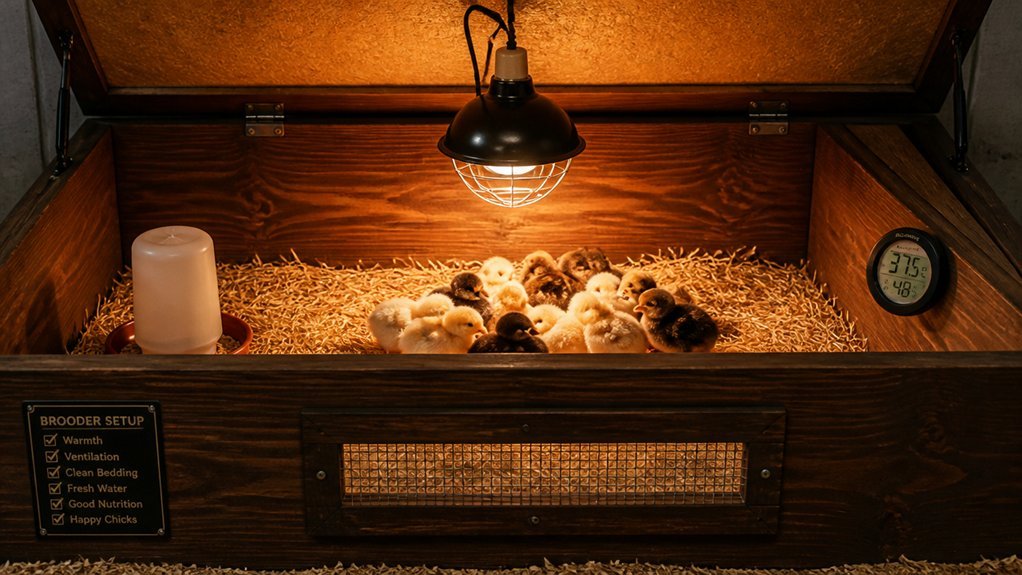
Before you bring chicks inside, set up the brooder in a warm, draft-free spot with steady airflow and no direct cold exposure. Choose a sturdy container with smooth sides so chicks can’t escape or snag a toe. Line the floor with clean, absorbent bedding, and spread it evenly to help keep feet dry and footing secure. Incorporate easy-to-clean materials to maintain hygiene and simplify maintenance. Place a feeder and waterer where chicks can reach them easily without crowding. Use a secure top or cover to deter pets, children, and curious wildlife. Check that cords, bulbs, and equipment stay protected from pecking or tipping. Keep the brooder clean by removing wet bedding and spilled feed daily. Give each chick enough room to move, rest, and eat without stress, and adjust the setup as they grow.
Keeping the Brooder Warm Enough
Keeping the brooder warm enough is one of the most important parts of raising healthy chicks in cold weather. You should monitor the temperature closely and adjust it as the chicks grow. Young chicks need steady warmth, and they’ll tell you when something’s off: huddling means they’re cold, while panting or spreading out far from the heat means they’re too warm. Keep the brooder in a draft-free spot, and check conditions several times a day, especially at night when temperatures drop. Use a reliable thermometer at chick level so you’re not guessing. If the room gets colder, raise the heat slightly; if it’s already warm, reduce it carefully. Consistent warmth helps chicks eat, rest, and develop normally, so don’t leave temperature control to chance.
Bedding and Heat Source Basics
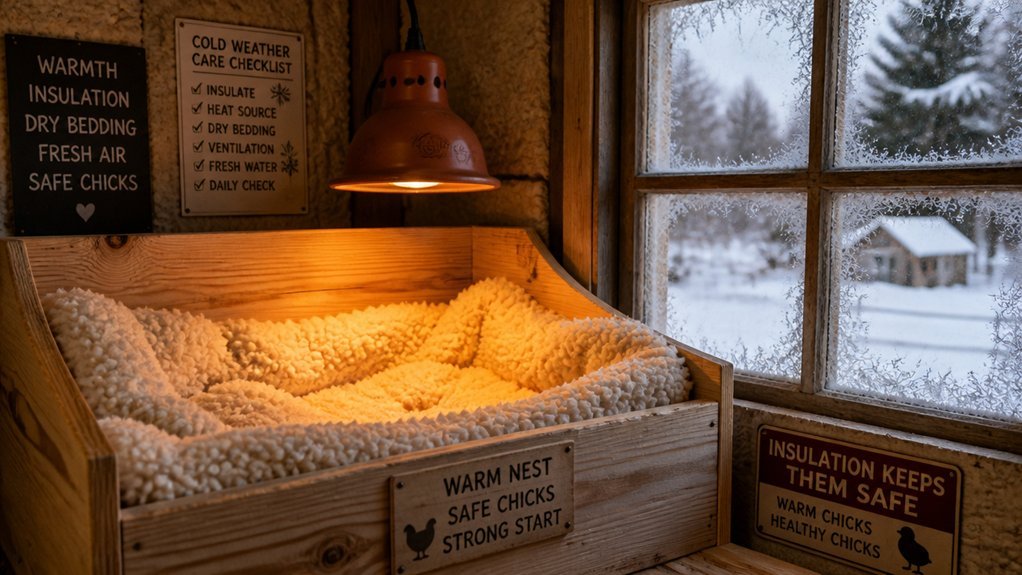
Choose dry bedding that stays clean and helps chicks stay warm without holding excess moisture. Place your heat source safely so it warms the brooder evenly and can’t tip, burn, or crowd the birds. Check temperature levels often so you can adjust the setup before chicks get chilled or overheated. Using low dust bedding can further improve air quality and reduce respiratory risks for vulnerable chicks.
Choosing Dry Bedding
Dry bedding is one of the simplest ways to help chicks stay warm and healthy in cold weather. You should choose material that stays loose, absorbs moisture, and won’t pack down quickly. Pine shavings work well, while chopped straw can suit larger brooders if you keep it clean and dry.
| Bedding type | Best use |
|---|---|
| Pine shavings | Absorbent, easy to manage |
| Straw | Lightweight, for drier setups |
| Paper towels | Short-term traction for chicks |
Check bedding daily and replace damp spots right away. Wet litter chills chicks, raises odor, and invites trouble. Keep the layer deep enough for comfort, but not so thick that it hides messes. When you keep bedding dry, you give your chicks a cleaner, warmer start each day.
Additionally, choosing dust-free bedding helps prevent respiratory issues and keeps your brooder healthier.
Safe Heat Placement
Place the heat source so it warms the chicks without overheating the bedding below it. You’ll keep the lamp or plate high enough to prevent scorching and low enough to create a cozy warm zone.
Secure cords, guards, and fixtures so chicks can’t peck, bump, or topple anything. Keep flammable bedding away from bulbs and hot surfaces, and don’t let litter pile up under the source.
Center the heat over a dry, draft-free area, then leave open space nearby so chicks can move away when they’ve had enough. Use sturdy mounts, not makeshift hooks or shaky stands.
Check that the setup stays clean and stable, and replace damaged parts right away. Good placement lowers fire risk and helps your brooder stay safe and comfortable. The use of thermal protectors in heat sources further enhances safety by preventing overheating.
Monitoring Temperature Levels
When temperatures dip, check both the brooder air and the bedding surface so you know the chicks are getting enough warmth without creating a hot spot. Use a reliable thermometer at chick level, and place another probe on the bedding near the heat source.
Read them several times a day, especially at dawn and after dark, because cold snaps can change conditions fast. If the air feels right but the litter stays chilly, raise the heat slightly or add insulation beneath the brooder.
Incorporate a digital thermometer for quick, accurate readings that help you respond promptly. If the bedding warms too much, spread it out and reduce direct heat. Watch chick behavior too: huddling means they’re cold, while panting or edging away means they’re too warm. Adjust quickly so you keep conditions steady and safe.
Preventing Drafts and Chilling
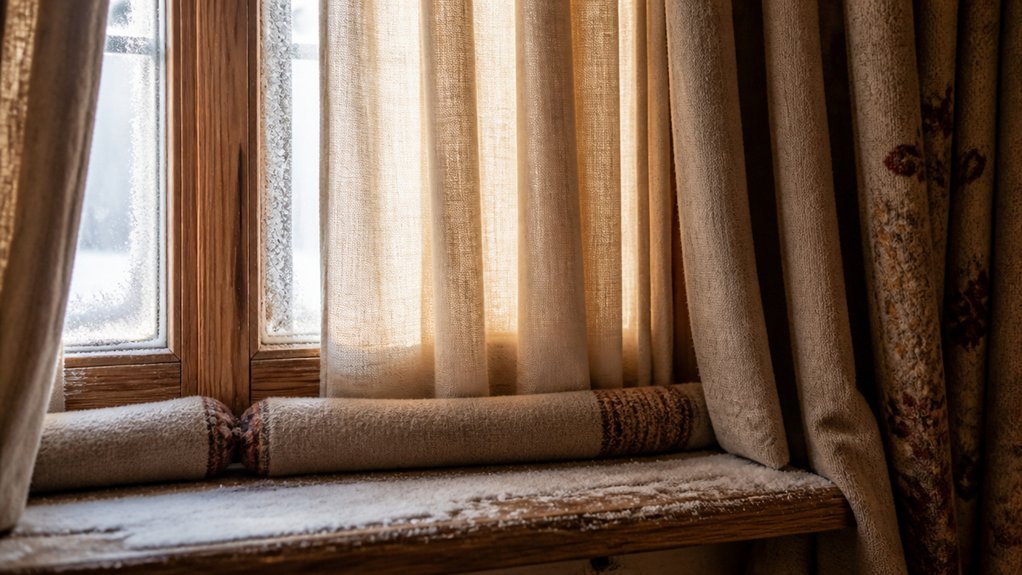
Even a small draft can chill chicks fast, so you need to seal gaps, stop direct airflow, and keep cold air from sweeping across the brooder floor. Check windows, vents, and door edges, then cover leaks with weatherstripping or tape. Keep the brooder away from exterior walls and raised off a cold concrete floor. Use a sturdy barrier, but don’t trap stale air inside. To ensure safe and efficient heating, consider using a heat source with appropriate heating wattage and thermostatic control for consistent warmth.
Feeding Chicks in Cold Weather
In cold weather, you should keep feed warm enough that chicks can eat comfortably and often. You can also boost their calorie intake with a nutrient-dense starter feed to help them stay warm and grow well. Make sure feed stays dry, fresh, and easy for them to reach. Additionally, providing appropriate feed texture like crumbles can encourage better eating habits and reduce waste.
Warm Feed Access
Keeping feed warm helps chicks stay active, eat steadily, and conserve energy in cold weather. You can place feeders inside the brooder area and keep them off the floor to reduce chill. Use small batches so the feed doesn’t sit cold for long. Check it often and replace any damp or chilled feed right away. A well-designed feeder with anti-waste features can also help minimize spillage and keep feed fresher longer.
| Method | Benefit | Tip |
|---|---|---|
| Indoor feeder | Less heat loss | Set it near the heat source |
| Small portions | Stays fresher | Refill several times a day |
| Raised tray | Blocks cold drafts | Keep it clean and dry |
| Covered feeder | Limits cooling | Open only when needed |
| Frequent checks | Maintains access | Watch chick behavior closely |
When you keep feed easy to reach and comfortable to eat, chicks waste less time and energy.
Boosting Calorie Intake
When cold weather raises chicks’ energy needs, you can help them stay warm by offering feed with a bit more calorie density. Choose a quality starter crumble and, if needed, mix in a little extra energy from appropriate poultry supplements or higher-fat ingredients approved for chicks.
You should keep feed fresh, dry, and always available so they don’t burn calories searching for food. Offer small, frequent meals if the brooder gets chilly, since chicks eat better when feed stays easy to reach.
Watch body condition and activity closely; if they seem hunched, sluggish, or crowded at the feeder, increase warmth and reassess intake. Don’t overdo treats or scratch grains, because they can dilute balanced nutrition and slow growth.
Ensuring a consistent and balanced calorie intake is crucial for maintaining energy levels and supporting healthy development in cold conditions.
Watching for Stress and Illness
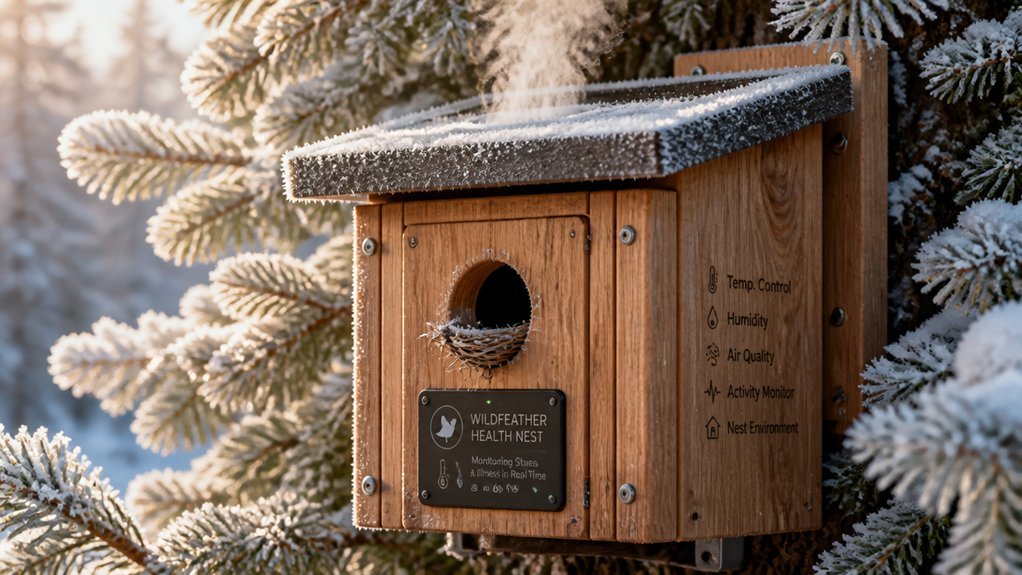
Watch your broody birds closely each day so you can catch trouble early. Look for droopiness, puffed feathers, rapid breathing, watery droppings, or a bird that won’t leave the nest to eat or drink.
Watch broody birds daily for droopiness, puffed feathers, or a hen that won’t leave the nest.
Check her comb, eyes, and nostrils for discharge, swelling, or paleness. Healthy broodies stay alert between naps and respond when you approach.
If you notice weight loss, persistent trembling, or a foul smell from the nest, act fast. Separate the bird if needed, warm her gently, and offer clean water and easy-to-eat feed nearby.
Keep the brooding area dry, draft-free, and tidy so stress doesn’t build. Trust your eyes and your hands; early changes often signal illness before it becomes severe.
Moving Chicks to the Coop Safely
Once the chicks are fully dry, alert, and able to follow the hen well, move them to the coop during the warmest part of the day. Carry them in a secure box or crate, and keep the trip short to avoid chilling. Before you release them, warm the coop, block drafts, and add dry bedding. Watch the hen’s reaction, then let her guide the chicks to feed and water.
| Step | What You Do | Why It Helps |
|---|---|---|
| Prepare | Preheat the coop | Reduces shock |
| Transport | Use a ventilated carrier | Keeps chicks safe |
| Settle | Release them quietly | Lowers stress |
Check temperatures often that night, and add heat only if the chicks crowd, shiver, or peep nonstop.
Frequently Asked Questions
How Do I Choose the Best Brooder Size for Winter?
Choose a brooder that gives each chick about 0.5 to 1 square foot now, then scale up quickly. You’ll avoid crowding, reduce chilling, and keep heat more even throughout winter.
What Humidity Level Is Ideal for Chicks in Cold Weather?
You should keep humidity around 50-60% for chicks in cold weather. You’ll reduce dust, support breathing, and avoid damp bedding. Check it daily, and adjust ventilation or water sources if levels drift.
How Often Should I Clean the Brooder During Freezing Temperatures?
You should clean the brooder daily, and more often if bedding gets damp or soiled. In freezing temperatures, you’ll need to spot-clean frequently, replace wet litter, and keep everything dry to protect chicks.
Can Multiple Chick Ages Share One Brooder Safely?
Yes, you can, but you shouldn’t. You’ll risk bullying, mismatched heat needs, and disease spread. If you must, separate ages with barriers, extra space, and closely monitor weaker chicks daily.
What Emergency Backup Power Should I Prepare for Heat Loss?
You should prepare a battery backup or generator for your brooder heater, plus a temperature alarm. Keep a spare heat source ready, test it monthly, and have extension cords and fuel on hand.
In Summary
By following these safe brooding practices, you’ll give your chicks the warm, secure start they need in cold weather. Keep the brooder cozy, dry, and draft-free, and always check that your heat source and bedding are working properly. Watch your chicks closely for signs of stress, and make adjustments quickly. When they’re ready, move them to the coop safely. With a little care, you’ll help them grow strong and healthy.