Protect chicks during brooding by using a sturdy, draft-free brooder with pine shavings and a secure cover. Give steady heat with a lamp or brooder plate, and watch their behavior so you can adjust it. Offer chick starter feed and fresh water every day, keeping both clean and easy to reach. Check for sharp edges, crowding, and pecking. Watch for huddling, panting, weakness, or pasty vents, and you’ll spot helpful tips as you go.
Set Up a Safe Chick Brooder

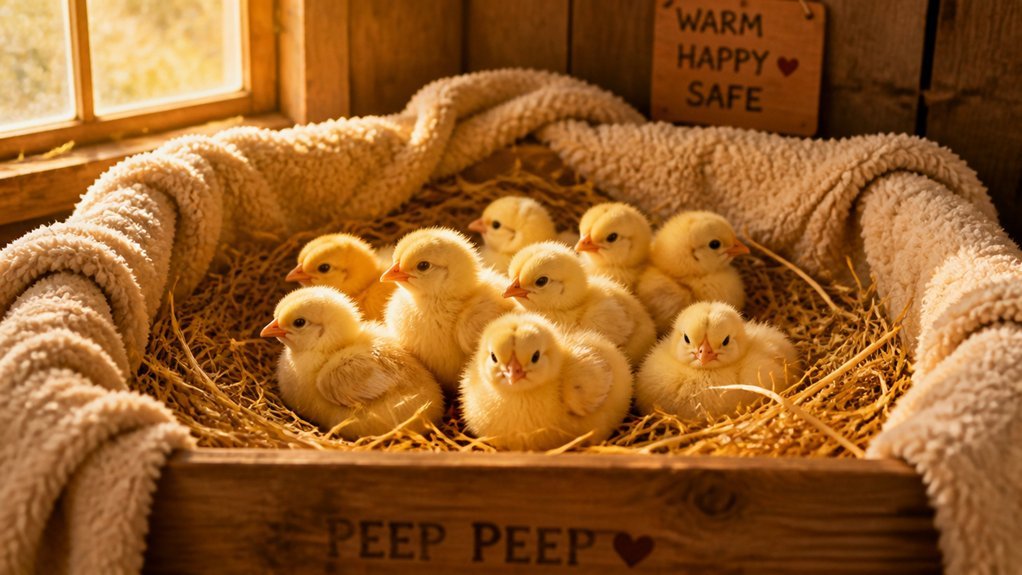
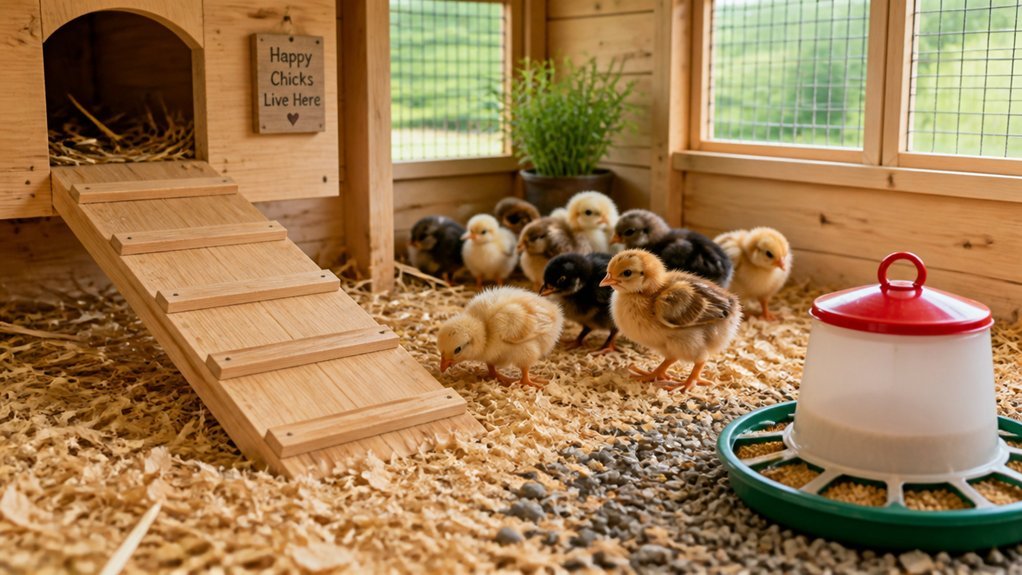
Before you bring chicks home, set up the brooder so it gives them warmth, security, and enough room to grow. Choose a sturdy box, tub, or pen with solid sides that block drafts and keep predators out. Line the floor with pine shavings, not slippery paper, so your chicks can grip and rest comfortably. Considering the size and capacity of the brooder ensures plenty of space for healthy development and reduces stress. Make sure the brooder is spacious enough to prevent crowding, pecking, and stress as they grow. Use a secure top or cover if pets, children, or wild animals could reach in. Place feed and fresh water where chicks can access them easily without tipping containers. Clean the brooder often, remove wet bedding right away, and inspect for sharp edges or gaps. A tidy, well-built brooder helps your chicks stay calm, healthy, and safe.
Provide Proper Heat and Light
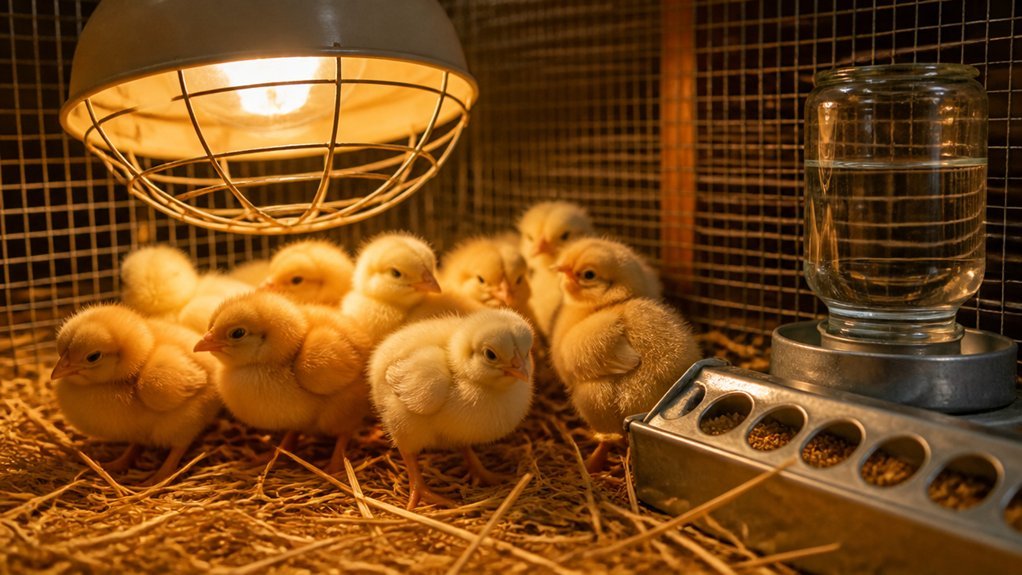
Once the brooder is ready, focus on heat and light, since young chicks can’t regulate their body temperature well. Use a heat lamp, radiant heater, or brooder plate to keep the area warm and steady. Place the heat source securely so chicks can move closer or farther away and choose their comfort zone.
Watch their behavior: if they huddle tightly, they’re too cold; if they spread out and pant, they’re too hot. Keep the brooder lit long enough for them to find food and settle, but don’t leave harsh light on all night.
A dim, consistent light schedule helps them rest and reduces stress. Check temperatures often, and adjust the setup as they grow so they stay healthy and active. Proper heat management and temperature gradients are essential for their growth and wellbeing.
Give Chicks Clean Feed and Water Daily

Keep fresh feed and clean water available every day so your chicks can grow well and stay hydrated. You should use a starter feed made for chicks, because it gives them the protein and nutrients they need for strong growth.
Check feeders often and remove wet, stale, or spilled feed before it molds. Refill waterers with clean, cool water at least once a day, and scrub them regularly to prevent buildup. Keep feeders and waterers easy to reach, but high enough to reduce bedding contamination.
Watch each chick eat and drink so you can spot problems early. If the flock seems slow to approach feed or water, adjust placement or cleanliness right away. Consistent access helps your chicks stay healthy, active, and ready for the next stage.
Using appropriate feeder and waterer options can help minimize waste and prevent contamination, ensuring your chicks stay healthy throughout brooding.
Prevent Chick Injuries and Pecking
Even small injuries can turn serious quickly, so you need to protect chicks from sharp edges, overcrowding, and rough handling. Check brooder walls, feeders, and waterers for protruding wires or rough spots, then smooth or cover them. Using secure, chew-resistant mesh around the brooder can prevent pecking injuries and escapes. Give each chick enough space to move without stepping on one another or crowding into corners. Keep bedding dry and level so feet don’t catch or slip. Handle chicks gently and keep visits calm, because sudden grabs can trigger pecking and panic. – Soft bedding under tiny feet – Rounded feeder rims and water trays – Wide open floor space – Calm hands and slow movements – Separate, sheltered corners for resting
Spot Stress and Illness Early

After you’ve made the brooder safer, watch the chicks closely so you can catch trouble before it spreads. Check that they eat, drink, sleep, and move normally. Healthy chicks stay alert, spread evenly under the heat, and chirp softly.
If you see huddling, panting, droopy wings, pasty vents, or sudden weakness, act fast. Those signs can point to chilling, overheating, dehydration, or infection. Separate any chick that looks off so you can observe it without pressure from the flock.
Verify the temperature, bedding, feed, and water first, because many problems start there. Clean soiled areas right away and refresh water often. Using a reliable brooder thermometer can help you keep the temperature consistent and avoid these issues altogether.
When symptoms keep worsening, contact a poultry vet quickly. Early action can save chicks and protect the rest.
Frequently Asked Questions
How Often Should Brooder Bedding Be Replaced?
Replace it every day or whenever it’s damp, dirty, or smells. You’ll keep chicks healthier by using clean, dry bedding, and you should spot-clean spills between full changes to reduce bacteria and odor.
What Type of Thermometer Works Best for Monitoring Brooder Temperature?
You’ll get the best results with a digital probe thermometer, since you can place it at chick level and read accurate temperatures fast. Choose one with a remote display, so you don’t disturb the brooder.
Can Chicks Be Brooded Outdoors in Mild Weather?
Yes, you can brood chicks outdoors in mild weather if you keep them draft-free, dry, and predator-proof. You’ll still need steady heat, shelter, and close monitoring, since temperatures can drop quickly, especially at night.
How Do You Transition Chicks From Starter Feed to Grower Feed?
You’ll switch chicks gradually by mixing grower feed into starter feed over 5 to 7 days, increasing the ratio daily. Keep fresh water available, and don’t change feeds abruptly, since that can upset digestion.
What Vaccinations Do Brooding Chicks Usually Need?
You’ll usually vaccinate brooding chicks for Marek’s, coccidiosis, Newcastle, infectious bronchitis, and sometimes Gumboro, depending on your area and flock risk. Your vet or hatchery can help tailor the schedule.
In Summary
By setting up a safe brooder, giving chicks the right heat and light, and keeping fresh feed and water available, you’ll help them grow strong from day one. You’ll also reduce injuries and pecking by keeping the space calm and well managed. Keep an eye out for signs of stress or illness, so you can act fast when needed. With a little daily care, you’ll give your chicks the best start possible.