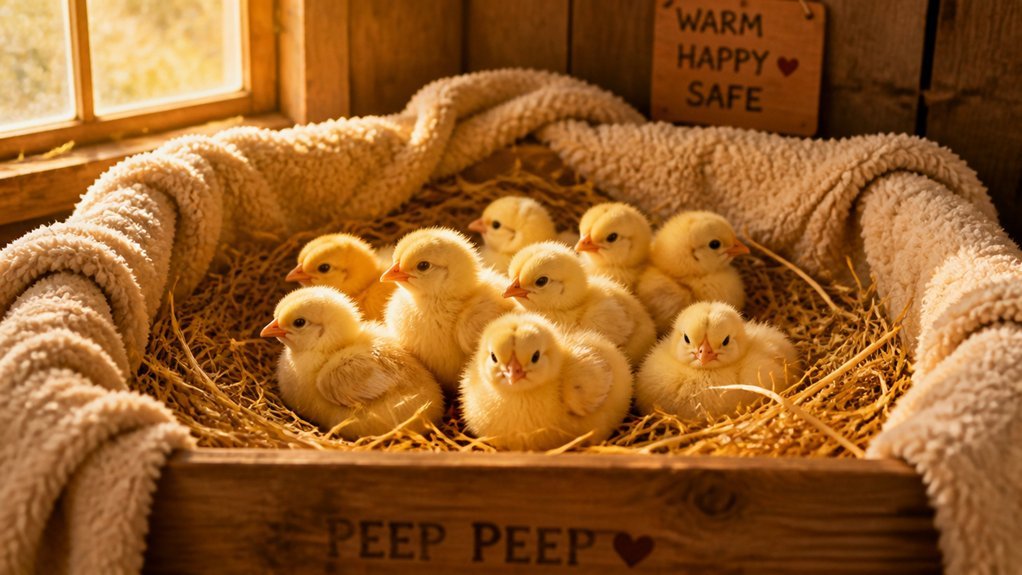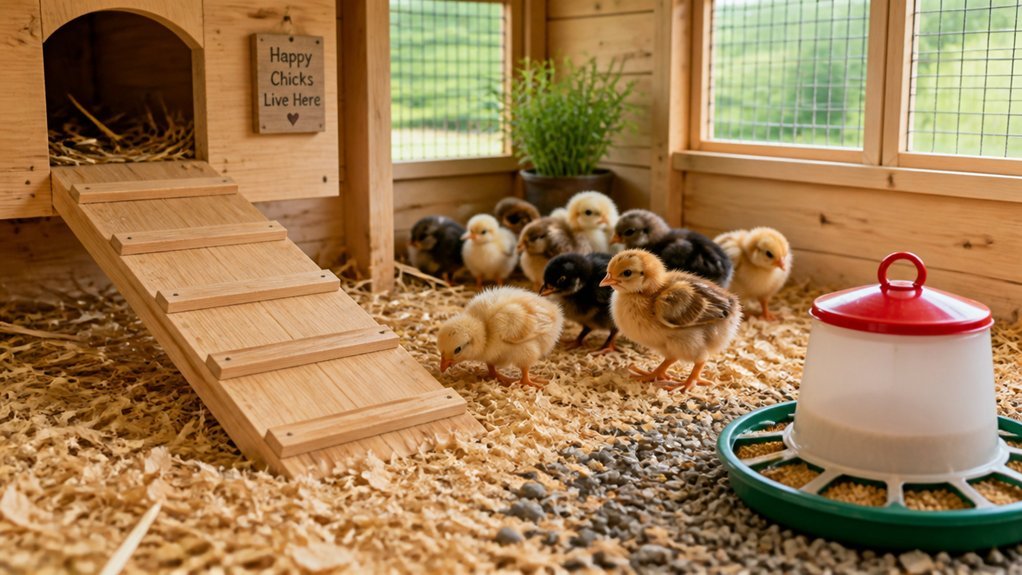

You can expect most chicks to need about 4 to 6 weeks of brooding, but breed matters. Leghorns and Rhode Island Reds often need around 4 to 6 weeks, while Orpingtons and other heavy breeds may need 6 to 8 weeks. Bantams usually need only 3 to 5 weeks. Watch for feathering, steady eating, and normal behavior, since these tell you when to ease off heat. Keep going, and you’ll see how each breed differs.
How Long Chicks Need Brooding

How long you brood chicks depends mostly on their age, breed, and how quickly they can regulate their own body heat. You usually keep newly hatched chicks under heat for about five to six weeks, then taper support as they feather out.
By three weeks, many chicks need less warmth during the day, but they still benefit from protection at night. When they reach six weeks, most can live comfortably without brooding if the weather stays mild.
You should watch their behavior closely: if they huddle and chirp loudly, they’re cold; if they spread out and pant, they’re too warm. Adjust gradually so you don’t shock them.
Additionally, choosing a suitable brooder design that offers safety features, proper airflow, and easy cleaning can significantly support their development and comfort during brooding.
Always give them dry bedding, clean water, and enough space to move away from the heat if needed.
What Affects Brooding Time
Brooding time isn’t the same for every flock, and several factors can shorten or extend it. You’ll see differences when temperature, feed access, and chick behavior line up well or poorly. Warm, steady heat helps chicks feather out faster, while cold drafts slow growth. Clean water and a balanced starter feed also support quick progress. Watch their activity, since alert chicks usually outgrow the brooder sooner. Proper heat output control is essential for maintaining optimal conditions, preventing both overheating and chilling.
| Factor | Effect | What you do |
|---|---|---|
| Heat | Speeds comfort | Keep it steady |
| Feed | Supports growth | Offer starter feed |
| Behavior | Shows readiness | Observe daily |
You should also check brooder space, because crowding can stress chicks and delay development. If they stay calm, dry, and evenly feathered, you’re usually on track to move them on.
Brooding Time by Breed

Brooding time can vary a lot from one breed to another, so you’ll notice clear breed-specific differences as you compare the seven chickens. You’ll also see that factors like egg size, genetics, and incubation conditions can shift how long brooding lasts. Knowing these breed patterns helps you set better expectations and manage each hatch more effectively. Additionally, the brooder playpens used can impact chick development by providing proper ventilation, safety, and space, further influencing brooding duration.
Breed-Specific Brooding Times
While all chicks need warmth, not every breed follows the same brooding schedule. You’ll usually keep light, heat, and protection in place for about 4 to 6 weeks for standard breeds like Leghorns and Rhode Island Reds.
Heavier breeds, such as Orpingtons and Brahmas, often need a longer brooding period, closer to 6 to 8 weeks, because they feather more slowly and stay dependent longer. Bantams often mature faster and may need slightly less time, around 3 to 5 weeks.
You should watch each breed’s feathering, activity, and ability to regulate body temperature rather than rely on age alone. When you match your brooding time to breed traits, you give chicks a smoother, healthier start and reduce stress during the changeover to the coop. Proper brooders, like the adjustable heating plates, can help maintain optimal temperatures throughout this critical period.
Factors Affecting Brooding Length
Even within the same breed, brooding time can shift based on feather growth, body size, season, and how quickly the chicks start regulating their own heat. You should watch each chick, not just the breed label, because individual development changes when you can lower supplemental heat.
Cooler weather often keeps chicks dependent on a heat lamp longer, while mild conditions help them adapt sooner. Faster feathering and larger bodies usually mean quicker brooding reduction.
- Dense feathering can shorten brooding needs.
- Small or slow-growing chicks usually need extra heat.
- Stable room temperatures help chicks self-regulate sooner.
- Utilizing appropriate bedding choices can also influence how quickly chicks thrive without supplemental heat, promoting better comfort and hygiene.
You’ll also want to avoid sudden temperature drops, since stress can stall growth and extend brooding. Adjust gradually, and let behavior guide your timing.
Rhode Island Red Brooding Time
Rhode Island Reds usually need about 21 days of brooding before their chicks hatch, though a few may take an extra day or two. You should keep your broody hen or incubator steady throughout that period, because consistent warmth and humidity help embryos develop on schedule. Using a reliable incubator with precise temperature control and humidity monitoring features can improve hatch success. Check eggs daily without overhandling them, and remove any that stop developing. You’ll also want to give the hen a quiet, low-stress nesting area so she stays committed to sitting. If she leaves the nest too often, you can reduce disturbances and improve cover. Near the end of the cycle, listen for peeping and watch for pipping. When the chicks begin hatching, let them emerge at their own pace so you don’t interrupt the process or weaken the hatch.
Orpington, Australorp, and Plymouth Rock Timing
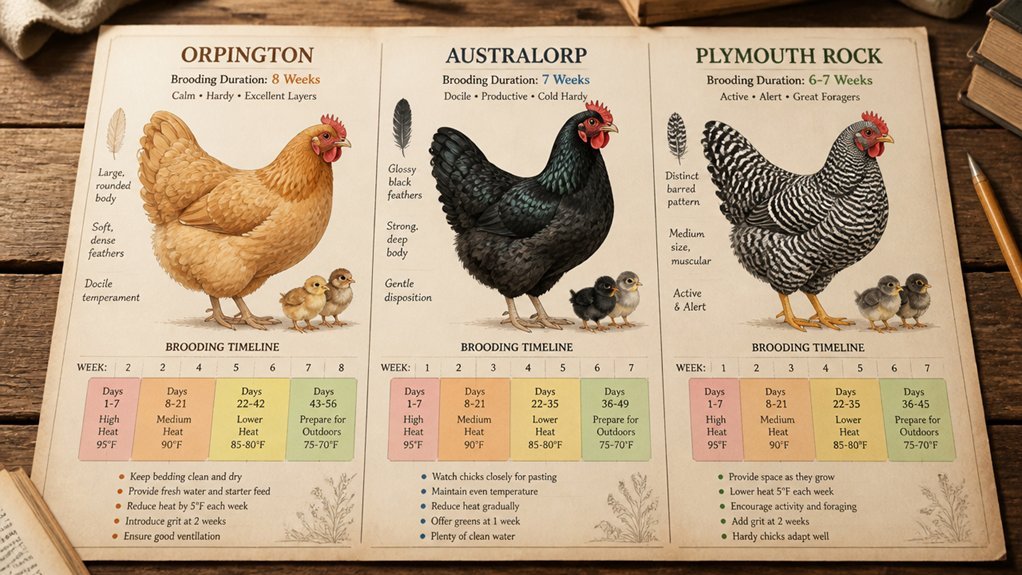
Orpingtons, Australorps, and Plymouth Rocks also follow the standard 21-day brooding schedule, with only minor variation if conditions run a little cool or warm. You’ll usually see pipping around day 20 or 21 when you keep heat steady and humidity consistent.
- Maintain 99.5°F in a still-air incubator.
- Turn eggs regularly until lockdown begins.
- Watch for external pipping before opening the incubator.
- Consistent temperature and humidity levels are crucial for proper embryo development and successful hatching.
Because these breeds are reliable layers, their embryos often progress predictably when you manage temperature and moisture well. If your setup drifts, hatch timing can shift by a day, but you shouldn’t expect major delays.
Focus on stable conditions, minimal disturbance, and quick checks. That approach gives you the best chance of a clean, on-time hatch with strong chicks.
Wyandotte and Sussex Brooding Time
When you brood Wyandotte chicks, you’ll usually see a steady pace that fits a moderate brooding length. Sussex chicks often follow a similar schedule, though you may notice slight differences in how quickly they feather out. By tracking both breeds closely, you can plan warmer support for the right amount of time. Using a reliable brooder thermometer helps ensure that temperatures remain within the optimal range of about 90°F to 95°F for newly hatched chicks.
Wyandotte Brooding Length
Wyandotte broody hens usually sit for about 21 days, which is the standard incubation period for most chicken eggs, and Sussex hens follow the same general timeline.
You’ll want to keep your Wyandotte’s nest quiet, dry, and safe so she can settle in and stay consistent. During this period, she’ll leave only briefly to eat, drink, and stretch.
You can support her with:
- fresh water nearby
- easy access to feed
- clean bedding in the nest
You should check eggs gently and avoid disturbing her more than needed. If she stays committed, her brooding length should remain steady through hatch time. Watch for restlessness or frequent nest breaks, since that can signal trouble. Proper nutrition and a stress-free environment help ensure a successful hatch for healthy shell formation.
Sussex Brooding Length
Sussex hens usually brood for about 21 days, just like Wyandottes, since that matches the typical chicken incubation period. You can expect them to sit steadily if you give them a quiet, dry nest and limit disturbances. Check the hen daily for food, water, and body condition, but don’t keep lifting her off the eggs. Sussex birds often stay calm and consistent, so you may see fewer interruptions than with less broody breeds. If she leaves the nest for long stretches, candle the eggs and note any temperature swings. Keep the coop safe from mites and drafts, because both can reduce hatch success. Proper coop protection with secure latches and predator-proof fencing is essential during brooding to ensure a safe environment for the sitting hen and her eggs. After day 18, stop turning the eggs and let her finish the hatch naturally.
When to Move Chicks Outside

Knowing exactly when to move chicks outside can make the changeover safer and less stressful for both you and your flock. You should wait until your chicks are fully feathered, eating well, and able to handle nighttime temperatures near 50°F without extra heat.
Wait until chicks are fully feathered, eating well, and comfortable in nights near 50°F before moving them outside.
Start with short visits in a secure run, then extend their time outdoors as they adjust. Watch for signs they’re too cold, like huddling, loud peeping, or fluffed feathers. If weather turns wet or windy, bring them back in.
- Fully feathered body
- Stable appetite and energy
- Mild, dry weather
Once they’re comfortable outside, remove heat gradually, not all at once. Keep fresh water, shade, and predator protection ready every day.
Frequently Asked Questions
What Bedding Is Safest for Brooding Chicks?
Use clean, dry pine shavings; they’re safest for your chicks. You’ll avoid mold and improve footing. Skip cedar, newspaper, and slippery bedding, since they can harm breathing, traction, and overall chick health.
How Often Should Brooder Temperature Be Checked?
You should check it at least twice daily, and more often during the first week. You’ll catch drops, overheating, or equipment issues quickly, keeping chicks comfortable and safe throughout brooding.
Can Chicks Be Brooded With Ducklings?
Yes, you can brood chicks with ducklings if you keep them warm, dry, and monitored closely. You’ll need enough space, separate feeding later, and careful supervision because ducklings grow faster and make wetter messes.
What Signs Show Chicks Need More Heat?
You’ll see chicks huddling tightly, peeping loudly, and avoiding the brooder’s edges. They may sleep together under the heat source, move slowly, or stop eating. If so, raise the heat a bit.
Do Brooding Needs Differ for Meat and Egg Breeds?
Yes, you’ll usually brood meat and egg breeds similarly at first, but meat birds grow faster and often need less time under heat, while egg breeds may stay brooded longer and benefit from slower, steadier development.
In Summary
Brooding chicks takes patience, but you’ll know they’re ready when they’re fully feathered, active, and comfortable without extra heat. Your breed matters, too, since some chicks mature faster than others. Keep an eye on their behavior, not just their age, and wait until nighttime temperatures are safe before you move them outside. If you follow their cues and give them time, you’ll set them up for a healthy, easy changeover.