
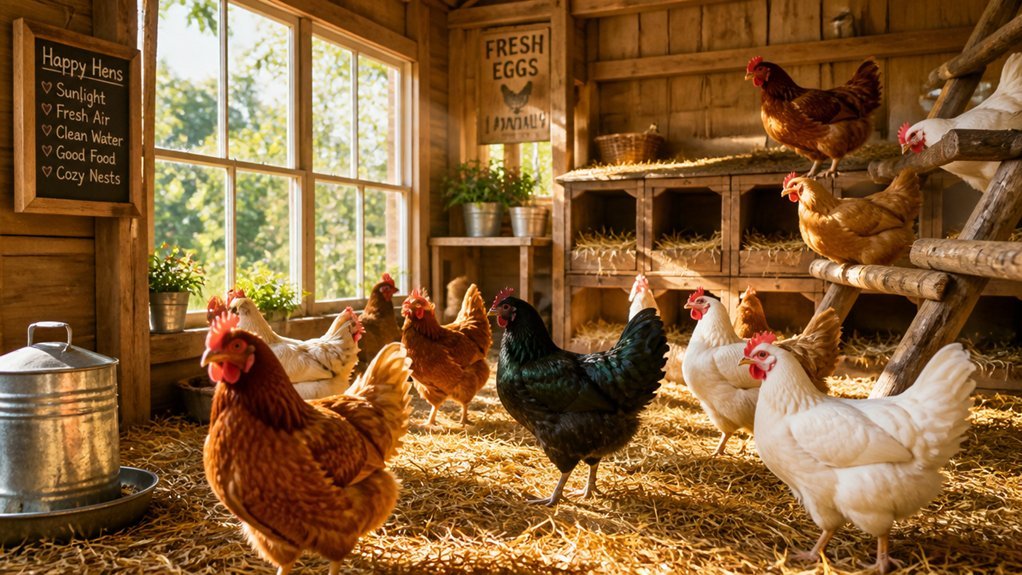
Natural light is important in your chicken coop because it helps your flock stay healthy, active, and calm. It supports their daily rhythm, encourages normal behavior, and can improve egg laying by keeping their body clocks steady. Bright light also makes it easier for you to spot damp bedding, injuries, or other problems early. With the right windows and shade, you can give chickens sunlight without overheating them, and there’s more to take into account.
Why Natural Light Matters in Chicken Coops
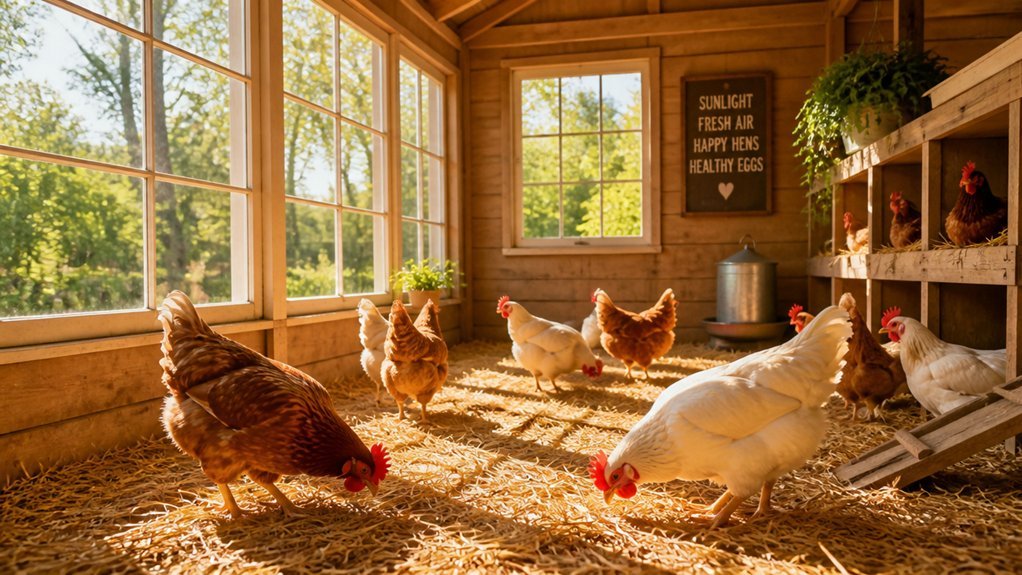
Natural light matters in chicken coops because it helps keep your flock healthy, active, and productive. You give chickens a cue for daily rhythms, so they move, rest, and eat more naturally. Sunlight also supports overall well-being by encouraging normal behavior, reducing boredom, and helping birds stay alert. When your coop has bright, natural illumination, you can spot problems sooner, from damp bedding to an injured hen. That visibility helps you maintain a cleaner, safer space with less effort. Additionally, proper ventilation and airflow, which can be enhanced by natural light, contribute to a healthier environment by reducing moisture and ammonia buildup. Natural light can also make the coop feel less cramped and stressful, which supports calmer birds. By letting daylight into the coop, you create a better environment that works with your chickens’ instincts instead of against them.
How Much Natural Light Chickens Need
How much natural light chickens need depends on their age, season, and purpose in your flock. You should aim for a bright coop during the day, with at least several hours of direct or indirect sunlight reaching the interior.
Chicks need gentler light, while older birds do best with a steady day-night rhythm that matches the outdoors.
In winter, you may need to maximize daylight with clean windows or clear panels so the coop stays naturally lit longer. In summer, shade matters too, so your flock can rest during hot afternoons.
Using multi-spectrum lighting can help mimic natural sunlight, supporting healthy development and consistent egg production throughout the year.
Don’t rely on darkness all day or harsh glare all day; both can stress birds. Instead, balance light, airflow, and shelter so your chickens stay comfortable, active, and well-adjusted year-round.
How Natural Light Helps Egg Laying
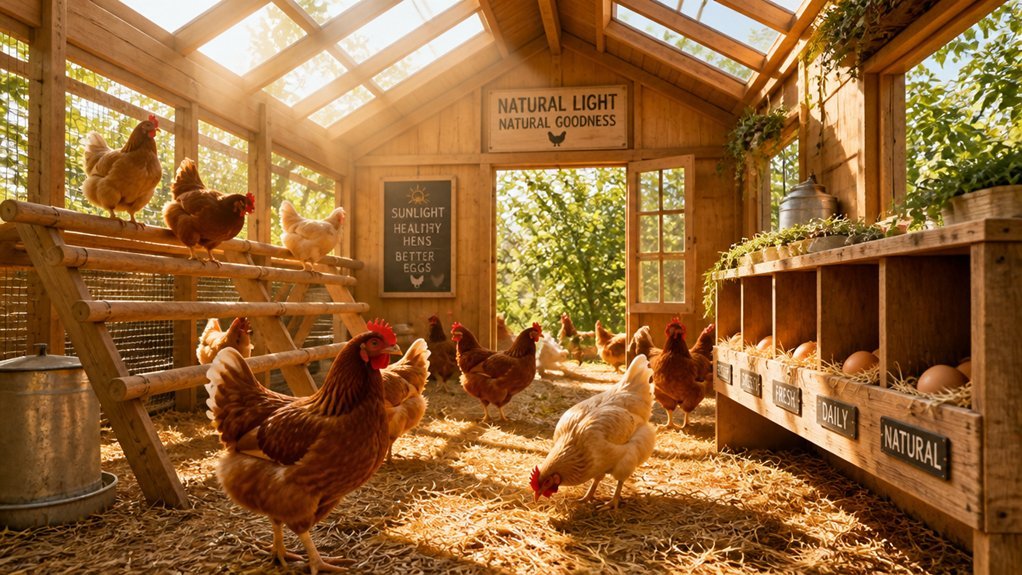
When hens get steady daylight, their bodies respond by keeping their reproductive cycle more consistent, which can support regular egg laying. You help this process when you give them enough morning light, because it signals their systems to stay on a reliable rhythm. Incorporating natural light into the coop also helps maintain proper ergonomics, making it easier for chickens to access their nesting areas and for you to clean and manage the space efficiently. Natural light also supports calcium use and appetite, so hens can build strong shells and maintain energy for production. If you keep the coop bright without overheating it, you can reduce stress on their bodies and encourage steadier output. Windows, skylights, and safe outdoor access all help you make that happen. You’ll see the best results when light reaches the coop early and naturally, rather than relying only on artificial lighting to meet their needs throughout the season.
How Light Affects Chicken Behavior
Light doesn’t just affect egg production—it also shapes how your chickens move, rest, and interact.
When your coop gets natural light, your flock stays more active during the day, scratching, pecking, and exploring with better rhythm. You’ll often notice calmer behavior too, because chickens can see one another clearly and establish their social order without as much stress.
Good lighting also helps regulate their daily routine, so they know when to wake, feed, and settle down. In dim spaces, chickens may crowd, hesitate, or become uneasy, which can lead to tension in the flock. Proper airflow and ventilation are also essential for maintaining healthy environments, preventing heat stress and uncomfortable odors that could disrupt their natural behavior.
How to Add Natural Light Without Overheating
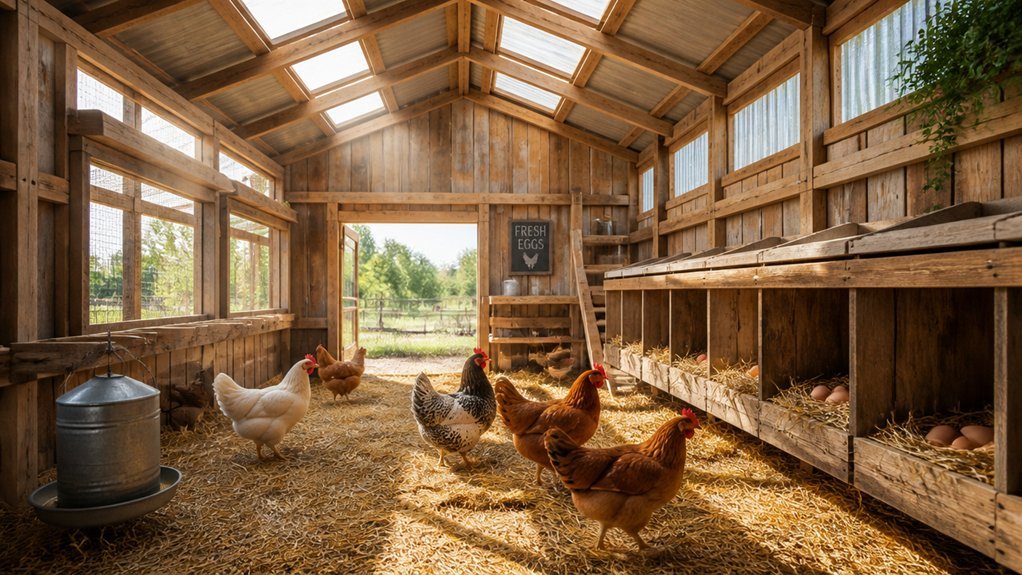
To bring in sunlight without turning the coop into an oven, focus on placement, shade, and ventilation. Put windows or clear panels on the east or south side so you catch morning light and avoid harsh afternoon heat.
Place windows on the east or south side to capture morning light and reduce afternoon heat.
Use screened openings, ridge vents, and high windows to let hot air escape while fresh air moves through. Add awnings, overhangs, or deciduous trees outside to block peak sun in summer.
If you use translucent roofing, choose small sections and pair them with insulation so the coop stays cooler. Keep the interior airy, and don’t overcrowd the space.
You can also hang light-colored curtains or shade cloth when temperatures climb. This way, your flock gets bright, healthy light without suffering heat stress, while weatherproof durability ensures the coop remains protected from the elements.
Frequently Asked Questions
Can Chickens Get Enough Light From Cloudy Days?
Yes, they can get some light on cloudy days, but you shouldn’t rely on them alone. You need consistent daylight or supplemental lighting so your chickens stay active, lay eggs well, and maintain healthy rhythms.
Do Chicks Need Different Light Than Adult Hens?
Yes, you’ll give chicks gentler, warmer light than adult hens, since they need more heat and less intensity. You’ll still provide a regular day-night cycle, but you’ll adjust brightness and duration as they grow.
What Window Materials Are Safest for Coop Light?
You should use tempered glass, polycarbonate, or acrylic for coop windows because they’re durable, shatter-resistant, and easy to clean. Avoid brittle glass, and make sure you seal edges well to prevent drafts, leaks, and injuries.
Does Natural Light Affect Chicken Molting Timing?
Yes, natural light can affect molting timing. You’ll usually see hens molt as daylight shortens, because changing light cues their hormones. If you manage coop lighting consistently, you can help reduce unexpected timing shifts.
Can Too Much Sunlight Fade Coop Bedding?
Yes, too much sunlight can fade your coop bedding over time, especially lighter materials. You’ll notice bleaching and drying, which can weaken fibers and make bedding look older faster. Rotating or shading it helps.
In Summary
Natural light matters in your chicken coop because it helps your flock stay healthy, active, and productive. When you give your chickens enough daylight, you support steady egg laying and better daily rhythms. Just make sure you balance light with shade so the coop doesn’t overheat. By adding natural light the right way, you’ll create a safer, more comfortable space where your chickens can thrive year-round and feel their best.



