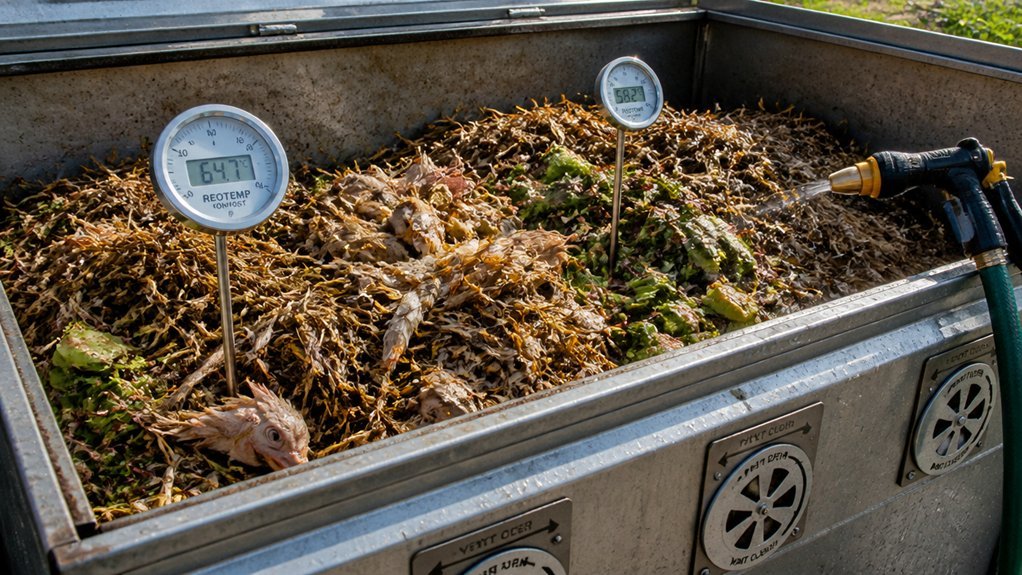
You control chicken waste compost temperature by balancing carbon, moisture, air, and pile size. Keep the pile in the hot range of 130°F to 150°F, or about 131°F to 170°F, for fast breakdown and pathogen kill. Add dry bedding, straw, or leaves if it runs too hot, and turn it to release heat and mix the pile. If it’s too cool, add nitrogen, moisture, and mass. A few simple checks can tell you even more.
Why Chicken Compost Heats Up Fast
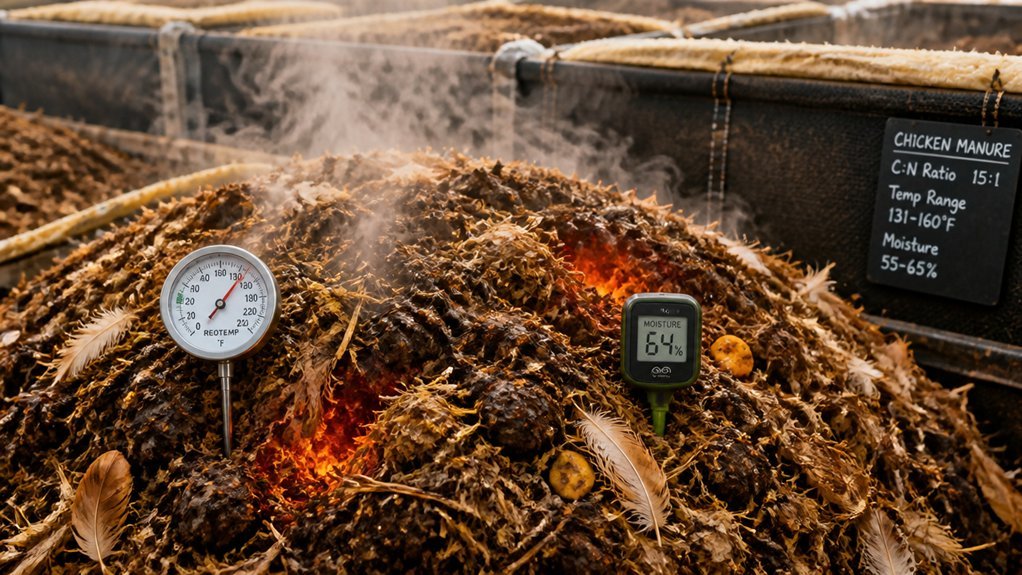
Chicken compost heats up fast because it packs a lot of nitrogen into a small space, and microbes go to work on it quickly. When you mix chicken waste with bedding or carbon-rich material, you give bacteria easy food and enough moisture to multiply.
That rapid growth releases heat as a byproduct, so the pile can warm much faster than many other compost mixes. You also deal with fine particles that expose more surface area, which speeds decomposition.
If you keep the pile too large or packed too tightly, it can trap heat and raise temperatures even more. Because chicken manure often contains urine and undigested feed, it fuels intense microbial activity right away, making temperature rise a predictable part of the process. Proper ventilation and moisture control are essential to prevent anaerobic pockets and keep the compost active at optimal temperatures.
Ideal Temperature Range for Chicken Compost
Ideally, you want your chicken compost to stay in the hot-composting range of about 130°F to 150°F, where microbes break down material quickly and pathogens are reduced. At these temperatures, you get faster decomposition, stronger odor control, and better sanitation than in cooler piles.
If the heap drops below 130°F, breakdown slows and weed seeds or harmful organisms can survive. If it climbs above 160°F, beneficial microbes can suffer, and the pile may dry out or stall. You should aim for steady heat, not spikes, because a balanced pile composts more evenly.
Use enough carbon-rich bedding, keep moisture like a wrung-out sponge, and turn the mix when needed so oxygen can support active microbial work and help maintain the ideal range.
Check Compost Temperature the Right Way
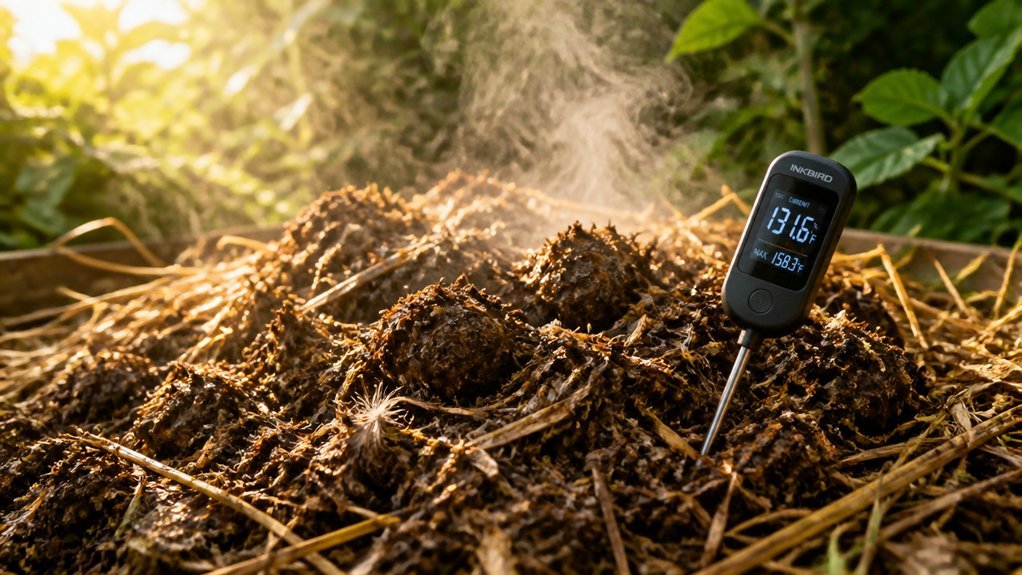
To know whether your compost is really in the right heat zone, use a long compost thermometer and probe the pile’s center, where temperatures run highest. Insert it deep enough to reach the core, then wait for the reading to stabilize before you record it.
Check several spots in the pile, because heat can vary from the edges to the middle. Take readings at the same time each day so you can track patterns accurately.
If you turn the pile, retest soon after to see how the temperature shifts. Clean the thermometer after each use to avoid spreading contamination.
Keep notes on date, location, and reading, so you can spot trends and catch problems early without guessing.
Monitoring airflow and moisture levels, such as ensuring proper venting air circulation, is also crucial for maintaining optimal compost temperatures and healthy microbial activity.
Maintain Safe Compost Temperatures
You need to keep your chicken waste compost in the thermophilic range so heat kills harmful pathogens and speeds decomposition. Check the pile often and watch for steady heat without letting it get too hot. If the temperature drops or spikes, adjust your materials and turning schedule right away. Using a pest control approach like diatomaceous earth can help manage mite and lice populations, ensuring the compost remains healthy and safe.
Target Thermophilic Range
Keeping chicken waste compost in the thermophilic range helps break pathogens down quickly while reducing odors and fly problems. You should aim for about 131°F to 170°F, with 140°F to 160°F offering a practical sweet spot for active decomposition.
In this zone, microbes work fast enough to heat the pile without stressing the process. If your compost stays too cool, harmful organisms can linger and the material slows down. If it runs too hot, beneficial microbes can struggle and the pile can dry out. Using a temperature monitor can help you maintain optimal conditions and prevent temperature fluctuations.
Balance nitrogen-rich chicken waste with enough carbon material, then turn and mix the pile to keep conditions even. Good moisture and airflow help you hold the target range and keep the composting process safe, efficient, and effective throughout.
Monitor Pile Heat
Once your chicken waste compost is in the thermophilic range, check the pile temperature regularly with a compost thermometer. Insert the probe into the center and several spots around the pile, since heat often varies from core to edges. Keep the temperature between 131°F and 160°F to kill pathogens while protecting beneficial microbes. If the pile climbs above 160°F, turn it to release excess heat and add dry carbon material if needed. If it drops below 131°F too soon, mix in fresh nitrogen-rich material or moisture to restart microbial activity. Utilize appropriate disinfectants to prevent the spread of harmful microbes and maintain a healthy compost system. Record readings daily, especially after turning or wetting the pile. Careful monitoring helps you maintain safe compost temperatures, prevent odors, and keep the decomposition process efficient and consistent throughout the cycle.
Adjust Carbon to Control Compost Heat
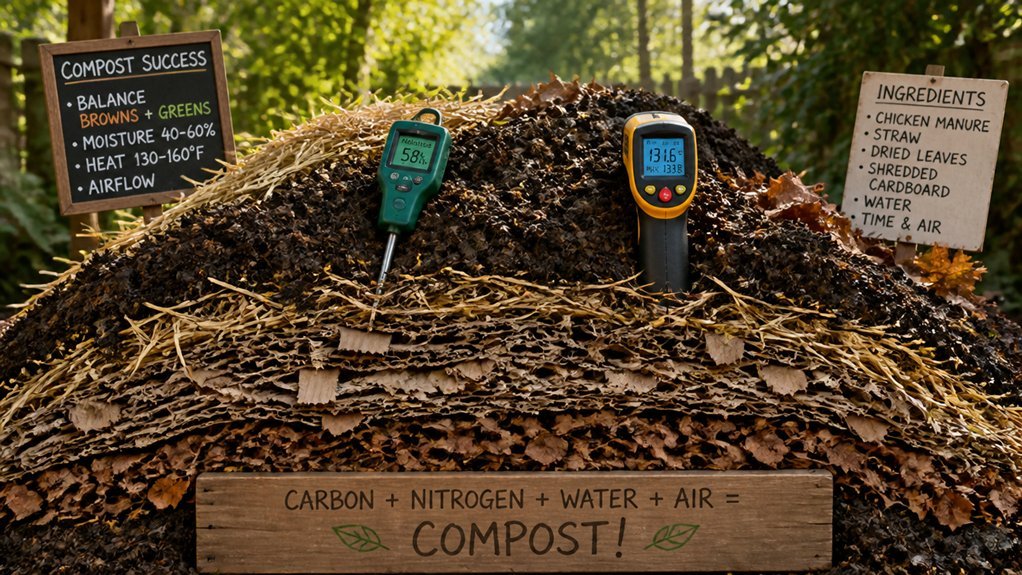
If your chicken waste compost is heating up too fast, add more carbon-rich materials to slow it down and balance the pile. You can mix in dry leaves, straw, shredded paper, or wood chips to dilute the nitrogen load from chicken manure.
Material Purity is important when selecting these amendments to avoid introducing synthetic chemicals or contaminants. This extra carbon helps microbes work at a steadier pace, so heat builds less aggressively. Turn the pile after adding the material so you spread it evenly and avoid hot pockets. Keep the carbon pieces small enough to blend well, but not so fine that they mat down.
Aim for a balanced mix that feels fluffy and aerated. When you adjust carbon this way, you give your compost a better energy balance and keep the temperature in a safer range for effective decomposition.
Add Water Without Cooling the Pile
You can add water in small amounts to keep the pile moist without dropping its temperature. Check the moisture balance as you go, so the compost feels damp but not soggy. Using absorbency and moisture management techniques, like evenly distributing water, helps maintain consistent heat levels in the compost pile. If the pile needs more water, use warm water to help protect the heat you’ve already built.
Moisture Balance Techniques
Keeping moisture in a chicken waste compost pile is a balancing act, because too much water can sap heat while too little slows decomposition. You should check the pile by grabbing a handful and squeezing it; it should feel like a wrung-out sponge, damp but not dripping.
If it seems dry, add water in small amounts while turning the pile so moisture spreads evenly. Target dry outer zones and dusty bedding, since they steal moisture fast. You can also layer dry carbon materials with wetter chicken waste to help the pile hold water without going soggy. Incorporating organic, natural ingredients like straw or shredded paper can improve moisture retention and promote healthy composting.
Cover the pile with a breathable tarp or finished compost blanket to slow evaporation. Recheck moisture after each turn, and adjust gradually so you keep microbial activity strong and temperature steady.
Warm Water Application
When a chicken waste compost pile needs moisture, use warm water instead of cold so you don’t knock back microbial heat. You should sprinkle it evenly as you turn the pile, not dump it in one spot.
Aim for dampness like a wrung-out sponge, so microbes stay active without turning the mix soggy. If you’re correcting a dry pile during cool weather, use water that feels comfortably warm to the touch, not hot. That helps preserve internal temperature and keeps decomposition moving.
Check moisture a few inches deep after watering, since the surface can fool you. If the pile cools after application, add more dry carbon material and turn it to restore airflow and heat. Incorporating pest-resistant materials can also help prevent intrusive pests that may disrupt the composting process.
Turn Chicken Compost to Manage Hot Spots
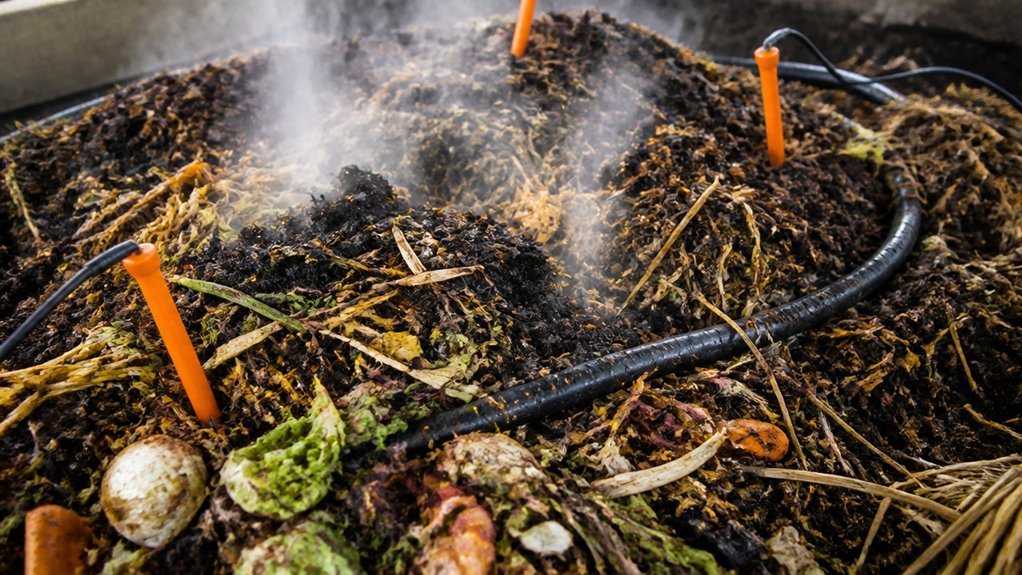
If your chicken compost heats unevenly, turn the pile to break up hot spots and spread the heat more evenly. Use a pitchfork or compost turner to move material from the outer edges into the center, where microbes work hardest. This helps keep the whole pile active and prevents pockets from overheating.
- Mix dry and wet sections together
- Bring cooler outer material inward
- Loosen compacted clumps for airflow
- Check temperature after turning
Turn every few days when heat builds fast, especially in large piles. Aim for a uniform texture and steady warmth throughout the heap.
If you notice steam or sharp odor in one area, turn that section first. Regular turning keeps decomposition balanced and supports safer, more even composting.
Incorporating proper drainage and air circulation helps prevent excess heat buildup and creates a healthier compost environment.
Fix Compost That’s Too Cold
A chicken compost pile that stays too cool usually needs more nitrogen, moisture, or airflow to get microbes back to work. Add more fresh chicken manure, green grass clippings, or another nitrogen-rich material, then mix it evenly through the pile.
Check moisture by squeezing a handful; it should feel like a wrung-out sponge, not dry or soggy. If the pile is dense or compacted, turn it to open air channels and help heat spread. You can also increase pile size if it’s too small, since larger piles hold warmth better.
Covering the pile with straw or finished compost can reduce heat loss. Keep monitoring the temperature, because a balanced mix should rise steadily and stay active enough to finish decomposition well.
Fix Compost That’s Too Hot
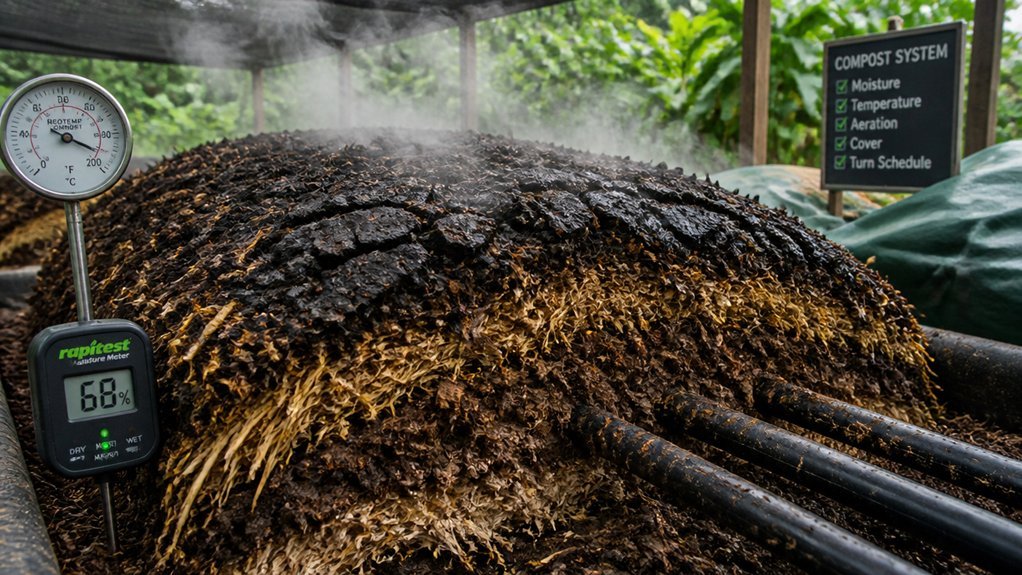
Too much heat means your chicken compost pile is working too fast, and you need to cool it down before it cooks off beneficial microbes. Turn the pile to release trapped heat and spread moisture evenly.
If the center feels scorching, mix in dry carbon materials like straw, shredded leaves, or cardboard to balance the nitrogen. You can also shrink the pile slightly so it doesn’t hold as much heat.
- Add dry bedding
- Turn more often
- Water lightly
- Reduce pile size
Check airflow too, since dense, compact compost traps warmth and slows cooling. Avoid soaking it, because excess water can push the pile anaerobic and make odors worse.
Keep the pile loose, balanced, and monitored, and you’ll bring the temperature back into a safer composting range.
Know When Chicken Compost Is Ready
How do you know when chicken compost is finished? You’ll see dark, crumbly material that smells earthy, not like manure or ammonia. The pile should cool to near air temperature and stay there, even after turning.
No fresh bedding, feathers, or recognizable scraps should remain. When you grab a handful, it should feel moist but not soggy, and it shouldn’t heat up again in the center.
If you use a thermometer, the compost should no longer rise above ambient temperature for several days. Let it cure longer if any sour odor lingers or the texture still looks raw.
Before using it in the garden, screen out large pieces and test a small amount on plants to make sure it’s stable and safe.
Frequently Asked Questions
How Often Should I Monitor Compost Temperature During Winter?
You should monitor it daily in winter, since cold weather can slow decomposition fast. Check the pile every morning, adjust insulation, and turn it only when needed to keep temperatures active and safe.
Can I Use a Kitchen Thermometer for Chicken Compost?
Yes, you can use a kitchen thermometer for chicken compost, but you’ll need a long probe to reach the center. You should check different spots, clean it well, and avoid using it for food afterward.
Does Pile Size Affect How Quickly Chicken Compost Heats?
Yes—bigger piles heat faster because you trap more insulation and moisture. You’ll get better microbial activity, but too small won’t stay hot. Aim for at least 3 feet wide and tall for steady composting.
Should I Compost Chicken Waste in a Bin or Open Pile?
Use a bin if you want better heat retention, less odor, and fewer pests; choose an open pile if you need easier turning and faster cooling. You’ll usually manage temperature better in a bin.
Can I Add Bedding Materials to Slow Compost Heating?
Yes, you can add bedding materials to slow heating. You’ll cool the mix, improve airflow, and balance moisture. Use straw, sawdust, or leaves, and turn it regularly so decomposition stays steady, not scorching.
In Summary
Keeping chicken compost at the right temperature helps it break down safely and efficiently. By checking it regularly, balancing carbon-rich materials, and turning the pile when needed, you can keep heat under control and avoid problems with odors or uneven decomposition. If the pile is too cool, add more nitrogen or moisture; if it’s too hot, increase airflow and turn it. When the pile stays stable, your compost is ready to use.