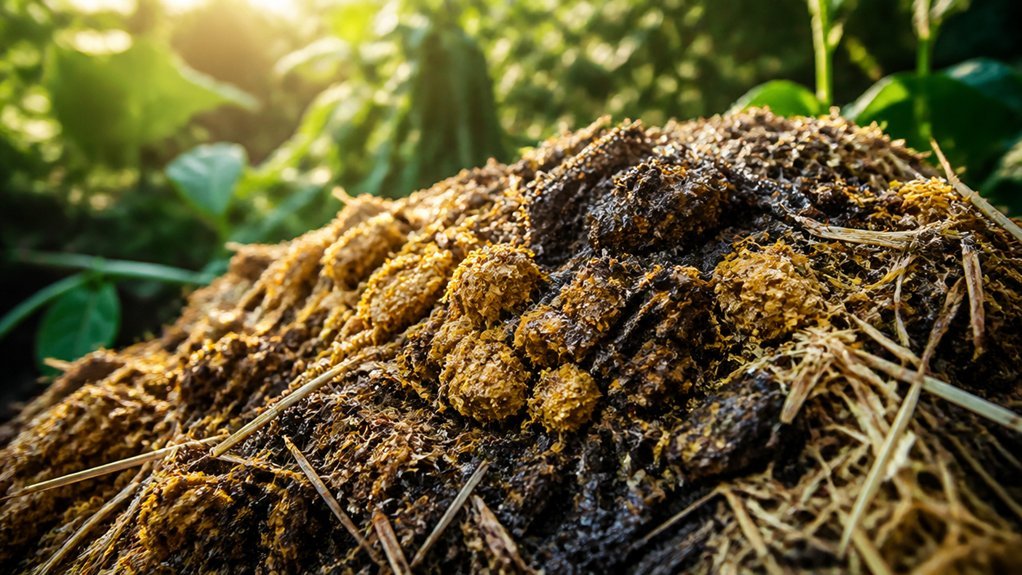
Chicken manure usually takes 6 months to 1 year to compost, but you can speed it up with the right conditions. Mix it with plenty of carbon-rich browns like straw, dry leaves, or paper, and aim for a 25-30:1 carbon-to-nitrogen ratio. Build a large, airy pile, keep it moist like a wrung-out sponge, and turn it often. When it’s dark, crumbly, and earthy, it’s ready, and there’s more to know about using it safely.
How Long to Compost Chicken Manure?

Composting chicken manure usually takes about 6 months to 1 year, depending on the method, temperature, moisture, and how often you turn the pile.
Composting chicken manure usually takes 6 months to 1 year, depending on conditions and pile management.
You can shorten the wait by mixing the manure with carbon-rich materials and keeping the compost well managed.
Fresh manure isn’t ready for direct use because it can burn plants and carry harmful pathogens. When the pile finishes, you’ll notice a dark, crumbly texture and an earthy smell instead of a sharp odor.
You should let it cure until it looks stable and broken down throughout. If you rush the process, you risk damaging your soil and crops. Proper ventilation & airflow features are essential to maintain aerobic conditions and prevent odors during composting. Finished compost gives you a safer, nutrient-rich amendment for your garden beds, vegetables, and fruit trees.
What Affects Composting Time
Several factors can speed up or slow down how quickly chicken manure turns into usable compost. You’ll see faster results when you keep the pile warm, moist, and well aerated, because microbes work best in those conditions.
If you turn the pile regularly, you add oxygen and help break down the manure more evenly. Pile size matters too: a larger heap holds heat better than a small one. Weather also plays a role, since cold or very wet conditions can stall activity.
Fresh manure composts slower if it sits compacted, while loose material decomposes more efficiently. You should also watch for strong odors, which often signal poor airflow or excess moisture. Using a dual chamber compost tumbler can facilitate continuous aeration and improve composting speed.
When you manage these basics well, you can shorten composting time and produce safer, richer compost faster.
Best Carbon-to-Nitrogen Ratio
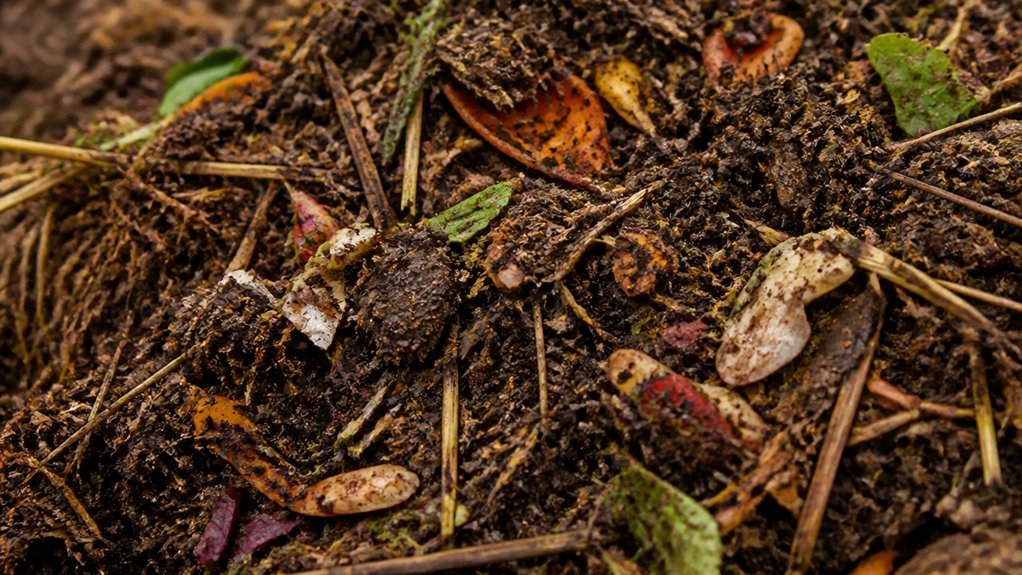
A well-balanced carbon-to-nitrogen ratio can make chicken manure compost faster and with less odor. You should aim for roughly 25 to 30 parts carbon to 1 part nitrogen. Chicken manure is rich in nitrogen, so you’ll need plenty of carbon-rich materials like dry leaves, straw, shredded paper, or sawdust to offset it. If you add too much manure, the pile can turn slimy and smell strong. If you add too much carbon, decomposition slows down. Using organic, additive-free DE can help absorb excess moisture and control odors during composting. Mix your ingredients well so microbes can break them down efficiently. You can adjust the blend as you go by adding more browns or greens based on how the pile looks and smells. A balanced mix helps you get finished compost sooner and keeps the process cleaner and more manageable.
How to Build a Hot Manure Pile
To build a hot manure pile, start by layering chicken manure with enough carbon-rich browns to keep the mix loose, aerated, and balanced. You can use straw, dry leaves, shredded paper, or wood chips as your browns.
Aim for alternating layers about 2 to 4 inches thick, then repeat until the pile is at least 3 feet high and wide. Mix the materials well so the manure doesn’t clump in one spot. A larger pile holds heat better, helping microbes work fast and break down waste efficiently.
Cover the top with browns to reduce odors and keep the pile tidy. If you build it on bare soil, you’ll also help beneficial organisms move in and speed decomposition.
Using a compost pail with proper odor control features can help manage scraps during the process and prevent pests from attracting to the pile.
Moisture and Airflow Tips

Keep the pile moist like a wrung-out sponge, but never soggy, because too much water slows airflow and can cause bad odors.
Turn the heap every few days to pull oxygen into the center and keep microbes working fast. If the pile feels dry, add water in small amounts as you mix, rather than soaking one spot.
If rain is common, cover the pile with a tarp that still lets some air move underneath. Blend in coarse browns like straw, wood chips, or dry leaves to create pockets that help air circulate.
Avoid compacting the pile with heavy layers or foot traffic. You’ll compost chicken manure faster when moisture stays balanced and air can reach every part of the pile. Using low-dust bedding materials can also help improve airflow and reduce odors during composting.
Signs Chicken Manure Is Cured
Once you’ve kept the pile moist and airy, you can start checking whether the chicken manure is fully cured. You’ll know it’s ready when it looks and smells like rich, dark soil instead of manure.
The pile should feel crumbly, not slimy or sticky, and you shouldn’t see obvious straw, bedding, or fresh droppings.
- Smell: It should have an earthy scent, not a sharp ammonia odor.
- Texture: You should be able to crumble it easily in your hand.
- Appearance: The material should be dark, uniform, and mostly broken down.
If you still notice heat in the center, give it more time. A fully cured pile stays cool, breaks apart easily, and no longer resembles the waste you started with. Additionally, proper composting conditions—including the right balance of moisture, oxygen, and temperature—are crucial to ensure the manure is safely and effectively composted.
How to Use Finished Compost Safely

How should you use finished chicken manure compost safely? You should wear gloves, keep the compost dry, and wash your hands after handling it. Mix it into garden soil before planting, or top-dress established beds lightly. Don’t place it directly against stems, crowns, or tender roots. Use it on ornamentals, trees, shrubs, and vegetables that won’t be eaten raw soon. If you’re feeding leafy greens or root crops, apply it well before harvest and water it in thoroughly.
Avoid using unfinished material, since it can burn plants and carry pathogens. Store leftover compost in a covered bin or tarp so rain doesn’t leach nutrients. Label the pile clearly, and keep tools clean. When you apply finished compost carefully, you boost soil fertility without risking your crops or health. Additionally, choosing low-dust hemp bedding helps maintain a cleaner environment in your coop, reducing dust and contaminants that could affect your compost quality.
Frequently Asked Questions
Can Chicken Manure Compost Be Used in Raised Beds?
Yes, you can use chicken manure compost in raised beds once it’s fully composted and cooled. You’ll avoid burning plants, add nutrients, and improve soil structure. Mix it in well before planting.
Is Chicken Manure Safe for All Vegetable Crops?
No, you shouldn’t treat chicken manure as safe for all vegetable crops. You can use well-composted manure on many plants, but you should avoid direct contact with leafy greens and root crops before harvest.
How Do I Store Chicken Manure Before Composting?
You should store it in a covered, dry bin or pile, away from rain and runoff. Mix in carbon-rich bedding, keep it contained, and turn it occasionally so it doesn’t smell or attract pests.
Can I Compost Chicken Manure With Bedding Alone?
Yes, you can, but you’ll need enough carbon-rich bedding to balance the manure’s nitrogen. Mix it well, keep it moist, and turn it regularly so you avoid odors and speed decomposition safely.
What Container Works Best for Small-Scale Manure Composting?
You’ll do best with a lidded plastic bin or small tumbling composter; they hold heat, limit odors, and fit backyard volumes. Add bedding, keep it aerated, and you’ll compost manure safely and efficiently.
In Summary
Now you know how long it takes to compost chicken manure and what speeds the process up. If you keep the pile balanced, moist, and well aerated, you’ll turn raw manure into safe, nutrient-rich compost faster. Just remember to wait until it’s fully cured before you use it in your garden. That way, you’ll protect your plants, avoid burning roots, and make the most of your chicken manure.