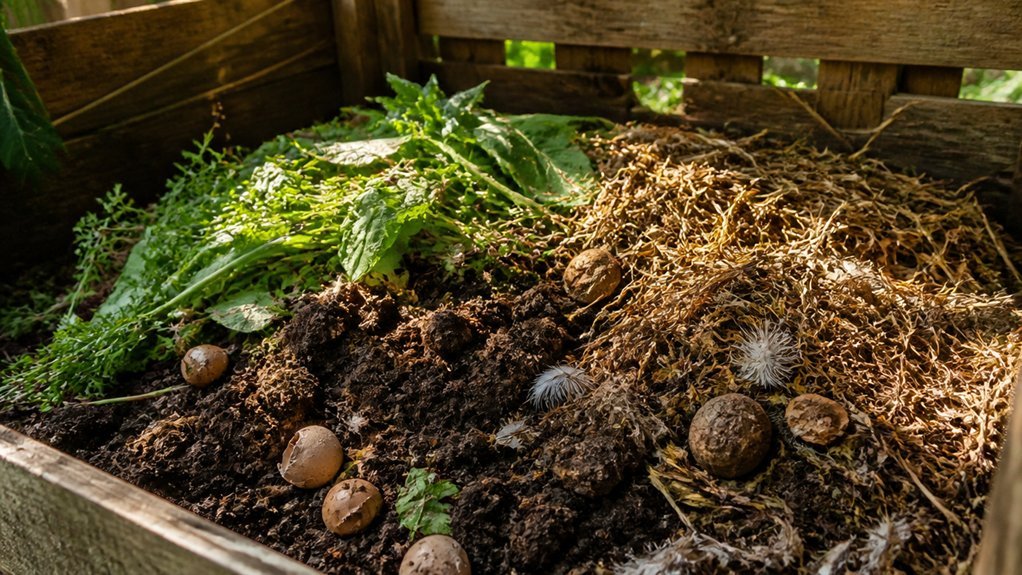
Compost chicken waste by mixing it with plenty of dry, high-carbon material like straw, leaves, or shredded cardboard, then bury fresh manure deep inside the pile. Keep the mix damp like a wrung-out sponge, airy, and well-turned so it heats up and breaks down safely. Avoid adding it straight to plants, since raw manure can carry bacteria and smell bad. If you keep going, you’ll see how to build and manage the pile for best results.
Can You Compost Chicken Waste?

Yes, you can compost chicken waste, but you need to handle it carefully because it’s rich in nitrogen and can carry harmful bacteria. You should treat it as a powerful compost ingredient, not a casual add-in. Proper ventilation and managing airflow are crucial to prevent unpleasant odors and ensure safe decomposition compost management practices. If you compost it correctly, you can turn it into valuable organic matter that helps feed your garden soil. You also need to remember that chicken waste may contain pathogens and excess ammonia, so it can cause problems if you ignore balance and timing. Use it only when you’re committed to proper composting practices because raw waste left unmanaged can create odors and health risks. When you handle it with care, you can safely recycle this material and reduce household waste while improving your compost’s nutrient value.
How to Build a Safe Chicken Waste Compost Pile
To build a safe chicken waste compost pile, you need to balance nitrogen-rich greens with carbon-rich browns. Layer the materials so the chicken waste stays surrounded by dry browns, which helps control odor and support safe breakdown. When you keep this mix steady, you’ll create a healthier compost pile that works more efficiently. Incorporating adjustable air vents can also help regulate moisture and oxygen levels, crucial for proper composting.
Balancing Greens And Browns
To build a safe chicken waste compost pile, you need the right balance of nitrogen-rich greens and carbon-rich browns. Chicken manure is very rich in nitrogen, so you can’t use it alone without creating a soggy, smelly pile.
Add plenty of browns such as dry leaves, straw, shredded paper, or wood shavings to absorb moisture and supply carbon. Aim for roughly three parts browns to one part chicken waste, then adjust based on how wet your materials feel.
If the pile seems greasy or ammonia-like, add more browns. If it looks dry and breaks apart, add more greens or a little water. When you keep the mix even, you help microbes work efficiently and reduce odors, pests, and nutrient loss while protecting your compost quality. Incorporating natural odor control methods, such as probiotics, can further aid in managing odors and maintaining a healthy compost environment.
Layering For Safe Compost
Start your pile by alternating thin layers of chicken waste with thicker layers of browns, which helps keep the compost balanced and prevents wet pockets from forming. Keep each waste layer no more than a few inches deep, then cover it completely with straw, shredded leaves, or sawdust. This keeps odors down and reduces fly access. Add water only if the pile feels dry, because chicken waste already brings plenty of moisture. Aim for a mix like this:
| Layer | Material | Purpose |
|---|---|---|
| 1 | Browns | Absorb moisture |
| 2 | Chicken waste | Add nitrogen |
| 3 | Browns | Cover and balance |
Finish with a brown cap on top. As you build, keep the pile airy and compact enough to heat safely. Incorporating proper odor control techniques, such as well-sealed lids or aeration, will also help prevent unpleasant smells and pest issues.
Which Carbon Materials Work Best for Chicken Waste Compost?

You’ll get the best results by mixing chicken waste with dry carbon materials like straw, wood shavings, shredded leaves, or chopped cardboard.
Aim for an ideal carbon-to-nitrogen ratio so the pile heats up well and breaks down faster without smelling bad.
If you use bedding material from the coop, choose options that add bulk, absorb moisture, and balance the nitrogen in the manure.
Using dust-free bedding helps reduce airborne particles and creates a healthier composting environment.
Best Carbon Additions
The best carbon additions for chicken waste compost are dry, high-carbon materials that soak up excess moisture and balance the pile’s nitrogen. You can use shredded leaves, straw, hay, pine needles, sawdust, wood chips, and untreated cardboard.
Shredded leaves and straw usually work best because they’re easy to mix, break down steadily, and help airflow move through the pile. Sawdust and wood shavings absorb moisture well, but use them sparingly so they don’t compact. Cardboard adds structure and helps trap odors when you tear it into small pieces.
Spread these materials in layers around the chicken waste, then turn the pile often so everything blends evenly. Fresh bedding from coops can also count as carbon if it’s mostly dry and fibrous.
Ideal Carbon-to-Nitrogen Ratio
Because chicken waste is extremely nitrogen-rich, you want to balance it with about 25:1 to 30:1 carbon-to-nitrogen ratio for efficient composting. You can hit that range by adding dry, carbon-heavy materials in layers as you build the pile.
Shredded leaves, straw, dry grass clippings, pine needles, and untreated paper all help soak up excess moisture and dilute nitrogen. If your mix smells sharp or looks wet and slimy, add more carbon. If it seems dry and slow, you’ve added too much, so lightly moisten it and turn it.
Aim for a texture that feels like a wrung-out sponge. When you keep the ratio close, microbes work faster, odors drop, and you’ll get safer, richer compost sooner. Using the right application tools and maintaining proper moisture levels further supports efficient composting and minimizes odors.
Bedding Material Choices
Shredded leaves, straw, and pine needles usually make the best bedding for chicken waste because they add lots of carbon, help control moisture, and break down at a steady pace. You’ll get a healthier compost pile when you mix these with droppings, since they trap odors and keep airflow moving.
Avoid glossy paper, treated wood shavings, and grass clippings in big wet clumps; they can slow composting or create slime. Choose materials that feel dry, airy, and easy to turn.
- Leaves: they’re soft, rich, and easy to find.
- Straw: it boosts structure and keeps the pile fluffy.
- Pine needles: they resist matting and help balance moisture.
- Using low-dust hemp bedding can contribute to a cleaner, healthier composting environment by reducing airborne particles and enhancing moisture absorption.
When you layer them well, you’ll protect your pile and turn mess into rich compost.
How to Keep Chicken Compost Hot and Balanced
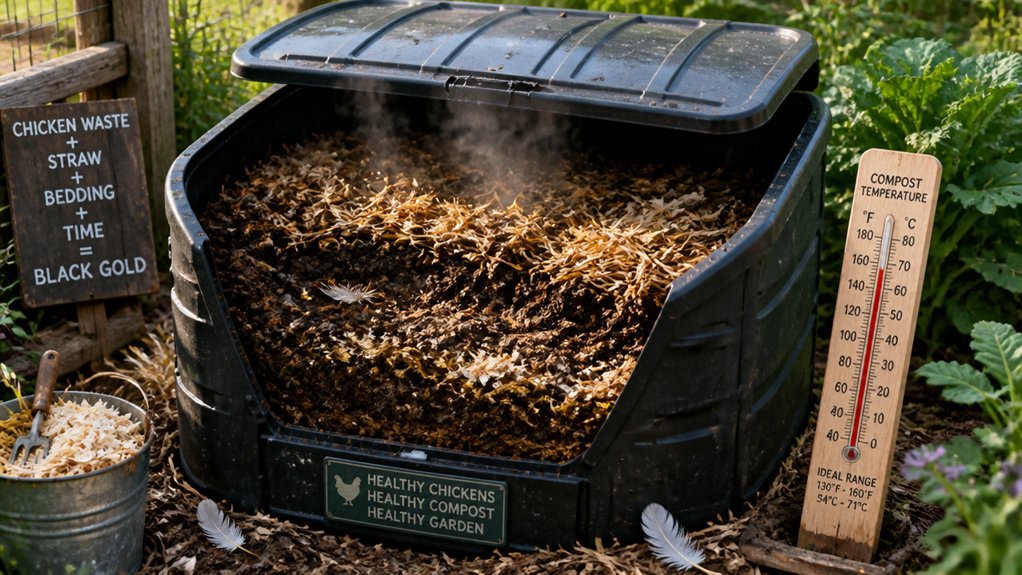
To keep chicken compost hot and balanced, you need the right mix of nitrogen-rich waste and carbon-rich bedding, plus enough moisture and air. You should aim for a pile that feels like a wrung-out sponge: damp, but not soggy.
If it smells sharp, add more dry bedding like straw, shavings, or shredded leaves. If it looks dry and breaks apart, sprinkle water as you turn it.
Mix the pile regularly so oxygen reaches the center and heat spreads evenly. Keep fresh manure buried inside the pile instead of leaving it exposed.
You can also add chopped plant material to boost structure and help airflow. Watch the pile closely, and adjust small problems quickly.
Proper block ingredients and mixture help maintain consistent heat and airflow in your compost. When you manage moisture, carbon, and aeration together, your compost stays active and efficient.
How Long Does Chicken Waste Take to Compost?
Once your chicken compost is hot and balanced, the next question is how long it’ll take to finish. In most cases, you’ll wait about 6 to 12 months, but your pile can move faster or slower depending on moisture, airflow, particle size, and how often you turn it.
If you keep everything in range, you’ll feel the difference in weeks, not seasons.
One way to promote quicker composting is by optimizing drainage and aeration, which are crucial for maintaining the right microbial activity and preventing odor buildup.
- Fast setup: Fine materials and steady turning can shorten the wait.
- Average pace: A well-managed pile usually needs several months.
- Slow conditions: Dry, compact, or cold piles can stretch the timeline.
You’ll know patience is paying off when the pile settles and loses that sharp, raw edge. Keep monitoring it, and don’t rush the process.
When Chicken Waste Compost Is Ready to Use
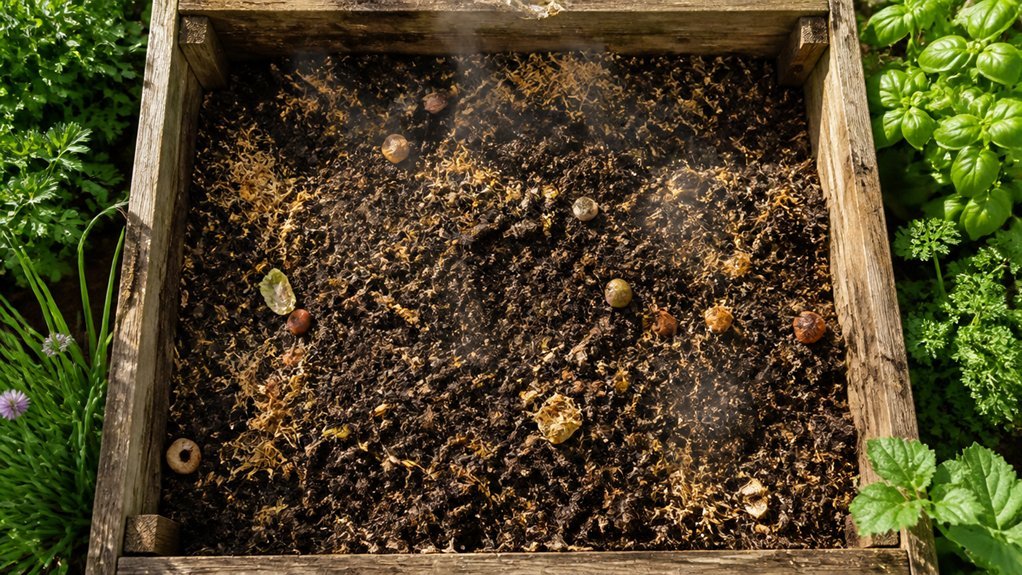
How do you know chicken waste compost is ready to use? You’ll see dark, crumbly material that smells earthy, not sharp or ammonia-like. The original bedding and manure should be unrecognizable, and the pile should feel cool, not warm.
A well-cured compost will also be free of visible excess moisture and should not be slimy to the touch. If you still notice wet clumps, strong odors, or visible feathers, give it more time. Turn the pile and keep it moist but not soggy so decomposition finishes evenly.
Before you spread it in your garden, sift it if needed and test a small area first. Finished compost from chicken waste adds nitrogen and improves soil structure, but you should never use unfinished material on plants. Let it mature fully, then mix it into beds or use it as a top dressing around established plants.
Frequently Asked Questions
Can Composted Chicken Waste Be Used Around Vegetable Gardens?
Yes, you can use composted chicken waste around vegetable gardens if it’s fully finished and odorless. You’ll want to mix it into soil, not pile it on plants, to avoid burning roots or spreading pathogens.
Does Chicken Waste Compost Attract Rodents or Flies?
Yes, it can if you leave it exposed or too wet. You’ll reduce pests by covering waste with carbon-rich material, keeping the pile hot, and turning it regularly so odors don’t build up.
Can I Compost Chicken Waste From a Small Backyard Flock?
Yes, you can compost chicken waste from a small backyard flock, if you mix it with carbon-rich bedding, keep it hot, and turn it regularly. You’ll reduce odors, kill pathogens, and create nutrient-rich compost safely.
Is Chicken Waste Compost Safe for Houseplants?
Yes, if you fully compost it first, you can use chicken waste compost safely on houseplants, but don’t apply it fresh. Use only finished, crumbly compost, and mix it sparingly into potting soil.
Should I Wear Gloves When Handling Chicken Waste Compost?
Yes, you should wear gloves when handling chicken waste compost, because you’ll protect your skin from germs and irritation. Wash your hands afterward, and avoid touching your face while you’re working with it.
In Summary
Chicken waste can make excellent compost if you manage it carefully. You’ll want to balance it with plenty of carbon-rich materials, keep the pile hot, and turn it regularly so it breaks down safely. Be patient, because chicken waste takes time to finish composting. Once it’s dark, crumbly, and no longer smells, you can use it to enrich your soil and support healthier plants in your garden.