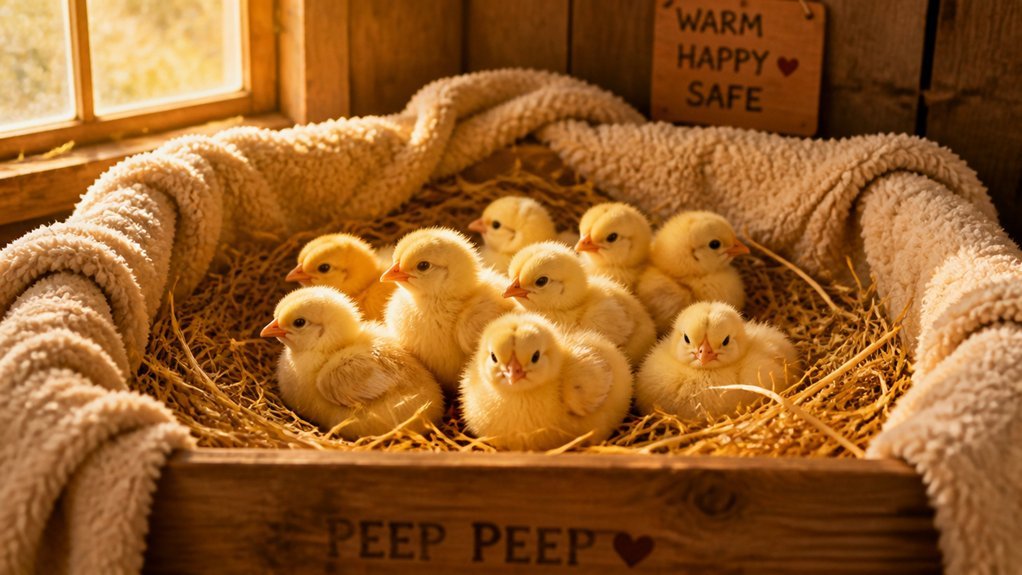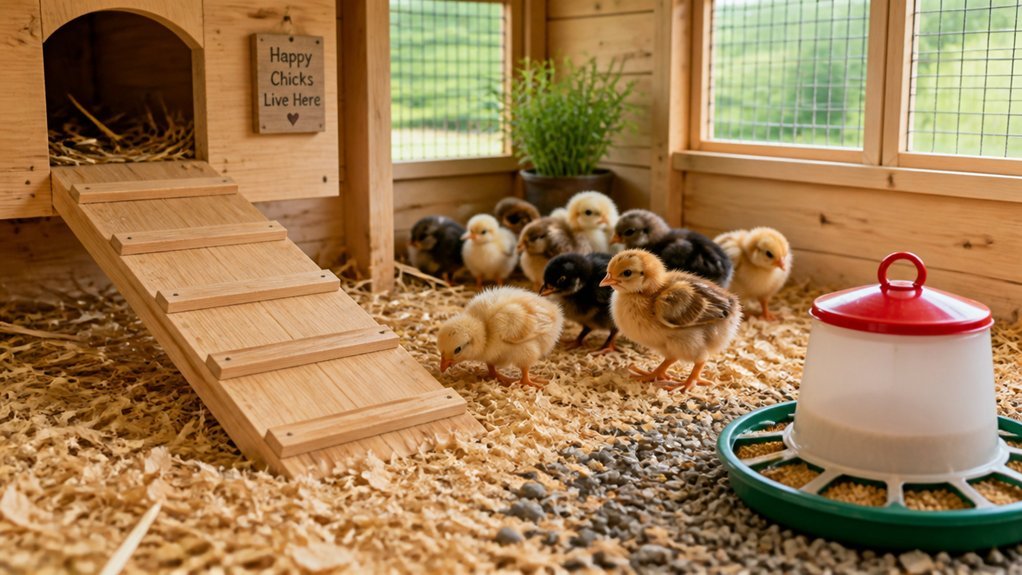

You should use soft, warm, dim lighting to help reduce aggression in chickens. Red light is usually the best choice because it can calm pecking, chasing, and crowding more effectively than blue light. Keep the coop evenly lit, avoid harsh glare and flickering bulbs, and use a consistent day-night schedule. Moderate light levels help birds feel secure without feeling exposed, and a few simple lighting tweaks can make a big difference if you want calmer hens.
What Lighting Reduces Chicken Aggression?
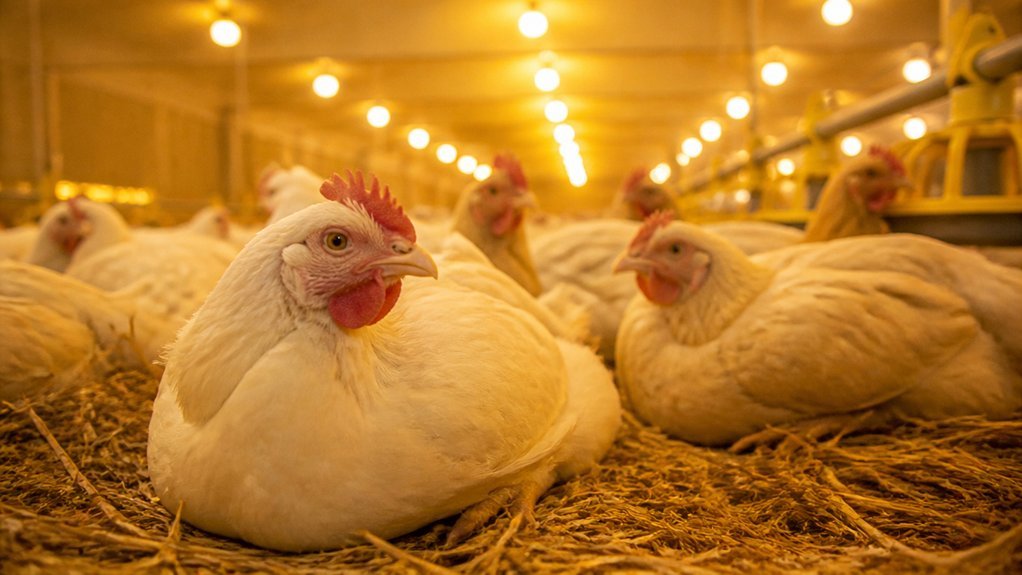
Soft, warm lighting usually reduces chicken aggression best. You should aim for dim, even illumination that lets birds see comfortably without feeling exposed.
Lower light levels can calm pecking, chasing, and crowding because chickens relax when the coop feels less stressful. You can use soft white bulbs or filtered natural light to create that effect. Keep the space bright enough for feeding and movement, but avoid harsh glare and sudden changes.
If you manage brightness consistently, your flock will often settle faster and squabble less. You should also watch their behavior after changes, since each group responds a bit differently. When you adjust lighting gradually, you help birds adapt, stay calmer, and maintain better flock harmony throughout the day.
Using appropriate light spectrum can further enhance flock calmness and reduce aggression.
Which Is Better: Red or Blue Light?
If you’re choosing between red and blue light, red is usually the better option for reducing chicken aggression. You can use it to calm flock activity and make birds less likely to peck, chase, or crowd each other. Blue light can also soften behavior, but it’s less commonly preferred when your main goal is lowering aggression. Additionally, predator deterrent lights that utilize red flashing LEDs can create a calming environment for poultry.
| Light color | Main effect | Best use |
|---|---|---|
| Red | Calms birds | Aggression control |
| Blue | Soothes activity | Mild behavior control |
| Either | Changes flock mood | Short-term adjustment |
You should pick red when you want a simple, practical solution. It works well because chickens respond to it with less stimulation, helping you create a quieter, more stable coop atmosphere.
Choose the Right Light Intensity
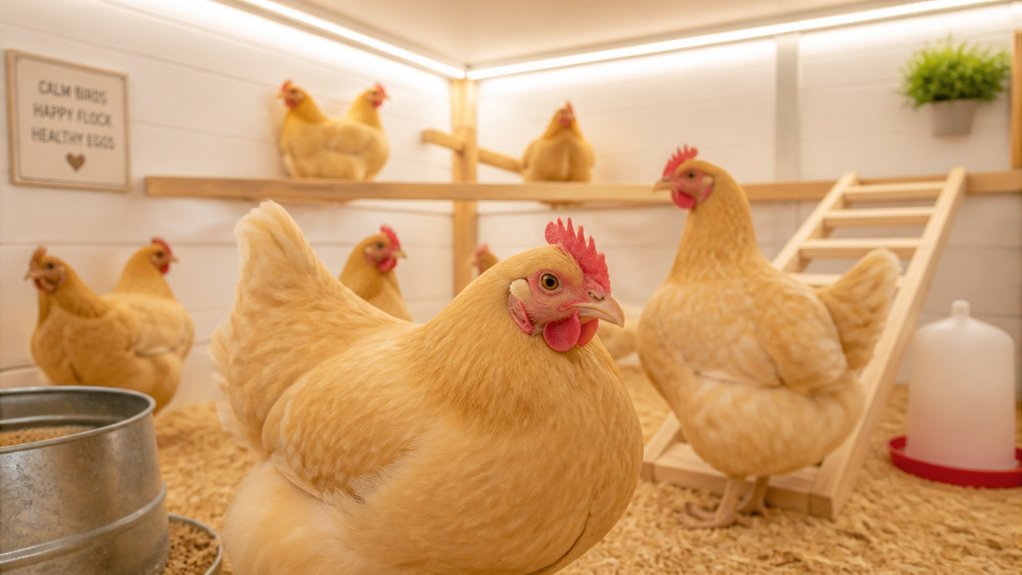
You should aim for a moderate light level that keeps chickens calm and comfortable without making the space too dark. Dimmer lighting can help lower stress and reduce aggressive pecking, while still letting birds eat, move, and rest normally. Proper lighting also supports natural behaviors and prevents heat stress caused by excessive brightness. Avoid overly bright lights, since they can trigger nervous behavior and make flock tension worse.
Optimal Light Intensity
Getting the light intensity right can make a real difference in how calmly chickens behave. You should aim for a level that lets birds see feed, water, and each other clearly without flooding the coop with harsh brightness.
When you choose a steady, moderate intensity, you help reduce startling shadows and visual stress that can trigger pecking. Use uniform lighting across the house so some birds don’t compete for better-lit spots. Check corners, feeders, and drinkers for dark patches, because uneven light can raise tension.
Proper lighting can also support night vision and improve overall security during nighttime hours, reducing stress and aggression. You can also adjust intensity with flock age, housing design, and natural daylight. Watch your birds closely; if they seem restless, crowded, or overly reactive, the light may be too strong or too uneven for comfort.
Dimmer Lighting Benefits
Dimmer lighting can often calm a flock by lowering visual pressure and making the coop feel less harsh. You’ll usually notice chickens move more smoothly when the light isn’t glaring, because softer illumination reduces overstimulation and lets birds settle into steady routines. A well-placed, adjustable flat-panel coop heater can also help maintain a comfortable environment, further promoting calmness. When you choose a lower-intensity setting, you can encourage quieter feeding, less pecking, and fewer tense interactions around perches and nests. It also helps birds rest more easily, which supports a calmer mood through the day. You should still keep the coop bright enough for safe movement and normal behavior, but a gentler light level can make your flock feel less defensive. By adjusting intensity carefully, you give your chickens a more relaxed environment that supports harmony.
Avoid Excess Brightness
Too much brightness can do the opposite of what you want, making chickens more alert, restless, and quick to peck. You should keep the coop light soft enough that birds can relax, preen, and move without feeling exposed.
If you use LED bulbs, choose lower wattage or dimmable fixtures so you can fine-tune the intensity. Watch how your flock reacts: if they crowd corners, squint, or peck more, the light’s probably too harsh. Aim for even coverage instead of glaring hotspots, and avoid placing lamps directly over feeding or roosting areas.
A calmer level of light helps reduce competition, lowers stress, and supports steadier behavior throughout the day. Additionally, choosing heat lamps with safety features or adjustable reflectors can help manage light distribution effectively. Test settings gradually, then adjust until your hens seem settled, calm, and less reactive overall.
Set a Calm Day-Night Schedule

A steady day-night rhythm helps chickens feel secure, so keep their lights on a consistent schedule rather than making sudden changes. You should turn lights on and off at the same times every day, because predictable shifts lower stress and help birds settle faster.
Give them enough daylight to eat, drink, and move calmly, then let darkness signal rest. If you need to adjust the schedule, do it gradually over several days so your flock can adapt without agitation. Use a timer to maintain consistency, and watch how your birds respond after each change.
When chickens know what to expect, they’re less likely to peck, crowd, or startle easily. A calm routine supports better sleep, steadier behavior, and a more peaceful coop.
Maintaining proper electrolyte balance during hot weather can also help reduce stress and aggression in your flock.
Lighting Mistakes That Stress Chickens
Even well-intended lighting changes can make chickens more nervous if you switch from bright to dark too fast, leave the coop lit all night, or create harsh glare and shadows that startle them. You can also stress your flock by using flickering bulbs, uneven lighting, or lights that shine directly into roosting areas. Chickens need a steady, gentle environment to settle down and feel safe. Additionally, avoiding sharp lighting contrasts helps prevent agitation and supports natural rest cycles.
- Use dim, even bulbs instead of harsh spotlights.
- Avoid sudden on-off changes that break their routine.
- Check for shadows that hide predators or movement.
- Replace buzzing or flickering lights quickly.
If you notice pecking, pacing, or restless nights, adjust the setup before tension spreads. Consistent light helps your birds rest, feed, and interact more calmly.
Improve Coop Ventilation Too

Good airflow helps remove ammonia, moisture, and heat, which can irritate birds and trigger pecking. If your coop smells strong or feels damp, fix that before adjusting lights. Open windows, ridge vents, or screened openings can help, but you’ll still need weather protection. Incorporating weatherproof materials like asphalt or waterproof roofing can further enhance the coop’s ability to stay dry and well-ventilated. In winter, don’t seal the coop tight; just block direct wind. When your chickens breathe easier and stay drier, they’re calmer, healthier, and less likely to bully flock mates.
Frequently Asked Questions
How Does Lighting Affect Pecking Order Behavior?
Lighting can calm or intensify pecking order behavior: you’ll see more aggression under bright, harsh light, while dimmer, red-tinged lighting often reduces confrontations, helping chickens settle dominance disputes with less stress and fewer pecks.
Can Chicks and Adult Hens Need Different Lighting?
Yes, you should give chicks brighter, warmer light for growth, then switch adult hens to softer, dimmer light to calm pecking. You’ll support development and reduce stress by matching light to age.
Does Flickering Light Increase Chicken Stress?
Yes, flickering light can increase stress in chickens because you’re creating visual instability that disrupts their behavior. You should use steady, non-flickering lighting, since hens feel calmer and eat better under consistent illumination.
How Many Hours of Light Do Laying Hens Need?
You’ll usually give laying hens 14 to 16 hours of light daily to support egg production. Add artificial light gradually, keep it steady, and don’t exceed 16 hours, or you can stress them.
Should Automatic Timers Be Used for Coop Lights?
Yes, you should use automatic timers for coop lights. They keep your hens on a consistent schedule, reduce stress, and prevent overexposure. You’ll manage light reliably, and your flock’s routine stays steady.
In Summary
In your coop, the right lighting can make a big difference in how calmly your chickens behave. Soft, low-intensity light and a steady day-night cycle can help reduce pecking and stress. Red light may calm birds more than bright white or blue light, but balance matters most. Avoid harsh changes, and don’t forget good ventilation too. When you create a quiet, comfortable environment, your flock is more likely to stay relaxed and get along.