If you want chickens that give you both steady eggs and useful table birds, start with Rhode Island Reds, Plymouth Rocks, Sussex, Australorps, Orpingtons, or Wyandottes. You’ll get calm, hardy birds that forage well, handle mixed weather, and keep laying brown eggs through much of the year. Rhode Island Reds and Australorps are top egg producers, while Plymouth Rocks and Sussex bring dependable meat and temperament. Keep going to see which breed fits your flock best.
What Makes a Good Dual-Purpose Breed?

A good dual-purpose breed gives you a practical balance of meat and eggs without demanding too much in return. You want birds that grow at a steady pace, reach a useful table size, and still lay enough eggs to keep your flock productive. Proper nutrition and balanced feed play a crucial role in achieving optimal growth, egg production, and shell strength. Strong health matters too, because hardy chickens handle weather shifts, forage well, and need fewer interventions. Calm temperament can make daily care easier, especially if you manage a mixed flock. Feed efficiency counts, since you don’t want birds that eat heavily without giving back. Size, laying consistency, and adaptability all help you get more value from each bird. When you choose wisely, you’ll keep your coop useful, manageable, and rewarding year-round for a practical, sustainable homestead overall.
Best Dual-Purpose Chicken Breeds
When you’re choosing the best dual-purpose chicken breeds, you’ll want birds that lay plenty of eggs and still put on solid meat.
Some breeds shine as top egg layers, while others stand out as the best meat birds. The right choice depends on whether you want more eggs, more meat, or a strong balance of both.
Understanding breed selection basics can help you match the right breed to your specific needs and environment.
Top Egg Layers
If you want a dual-purpose breed that puts plenty of eggs in the basket, start with the proven high performers. You’ll get steady production from breeds like Rhode Island Reds, Plymouth Rocks, Sussex, and Australorps.
These birds keep your egg cartons fuller through spring and summer, and many stay reliable in cooler weather too.
- Rhode Island Reds: hardy, calm, and productive
- Plymouth Rocks: dependable layers with easygoing temperaments
- Sussex: active foragers that keep laying well
- Australorps: famous for consistent, high egg output
When you choose one of these breeds, you’re building a flock that rewards you with fewer empty nest boxes and a better daily return. Breeds with steady egg production are ideal for a reliable backyard flock, especially if you prioritize both meat and eggs. If eggs matter most to you, these birds deserve a spot on your shortlist.
Best Meat Birds
For a dual-purpose flock that also gives you a solid table bird, focus on breeds that grow well, dress out nicely, and still keep a respectable laying schedule. You’ll want birds like Plymouth Rocks, Sussex, Orpingtons, and Wyandottes because they add weight without losing too much egg output. They mature at a steady pace, build broad breasts, and give you dependable carcasses for the freezer. If you want faster growth, Cornish Cross beat them, but they don’t fit a true dual-purpose plan. Choose heavier hens and sturdy roosters with calm temperaments, good feed conversion, and clean feathers for easier processing. When you raise them on quality feed, pasture, and space, you’ll get meaty birds that still earn their keep in the coop. Ensuring proper handling and weatherproofing of your flock can also help maintain their health and productivity throughout the year.
Rhode Island Reds for Meat and Eggs
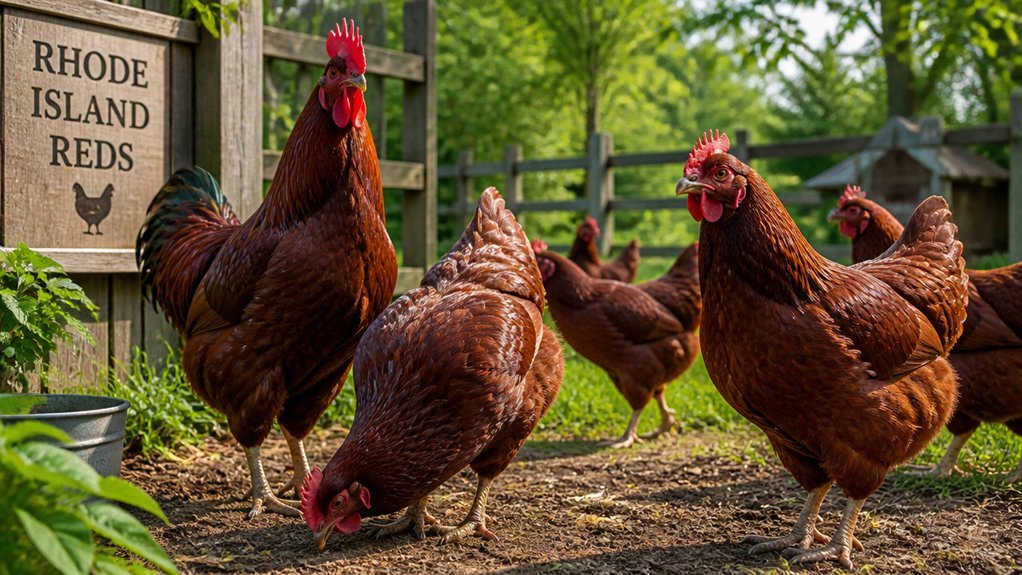
Rhode Island Reds give you solid meat quality with a firm, flavorful bird that works well for the table. You’ll also get a steady egg production rate, with hens laying reliably through much of the year. Their hardiness makes your flock easier to manage, since they handle changing conditions with ease. Additionally, they respond well to a balanced, protein-rich diet that supports muscle growth and sustained laying nutrient-dense feed.
Meat Quality Traits
When you raise Rhode Island Reds for both the table and the laying flock, you get a bird known for dependable, well-rounded meat quality rather than extreme size. You’ll notice a firm, fine-grained texture that cooks evenly and holds moisture well.
Their flavor leans rich and chickeny, so you can roast, braise, or grill them without losing character.
- A balanced breast-to-thigh ratio
- Dark meat with satisfying depth
- Skin that crisps nicely when roasted
- Carcasses that dress out cleanly
Because you’re selecting a dual-purpose bird, you won’t get the bulk of a meat specialist, but you do get solid yield and consistent table appeal. If you want practical homegrown poultry, Rhode Island Reds deliver honest meat that fits everyday meals well. Additionally, their adaptability to various processing cone designs ensures humane handling and efficient processing during butchering.
Egg Production Rate
How many eggs can you expect from Rhode Island Reds? If you keep them well fed and manage them consistently, you’ll usually get about 200 to 300 brown eggs per hen each year. Many hens start laying around 5 to 6 months old, then maintain a steady rhythm through much of the year. You can expect best output when you provide balanced feed, clean water, and enough daylight to support laying. Their production doesn’t match specialized layer breeds, but it’s strong for a dual-purpose bird, which makes them practical for backyard flocks. If you want both meat and a reliable egg basket, Rhode Island Reds give you dependable results without demanding complicated care or special equipment. Proper nutrition and hydration, including electrolyte balance, also play a vital role in maintaining their egg-laying performance.
Flock Hardiness Benefits
Because they’re sturdy birds, Rhode Island Reds handle a wide range of conditions and keep performing even when the weather changes. You’ll value how this toughness helps your flock stay productive through cold snaps, damp springs, and hot afternoons.
Their resilience means fewer setbacks, less stress, and steadier growth for meat and egg goals.
- Fewer weather-related health issues
- Strong foragers that adapt quickly
- Calm, dependable birds in mixed flocks
- Consistent output with less fuss
When you choose Rhode Island Reds, you’re building a flock that can tolerate imperfect housing, uneven seasons, and everyday farm challenges. Their ability to withstand freezing winters ensures they remain healthy and productive year-round.
That hardiness gives you more reliable results, whether you’re raising birds for the table, the coop, or both.
Plymouth Rocks for Backyard Flocks

Plymouth Rocks are a smart choice for backyard flocks if you want a calm, reliable bird that does more than one job well. You’ll value their friendly nature, which makes daily care easier and less stressful. They adapt well to different climates, so you can raise them in many regions without fuss. Their sturdy bodies, broad breasts, and steady laying rhythm give you a practical mix of eggs and meat from one flock. Their barred plumage adds charm, while their easygoing temperament helps them fit in with mixed-age birds. Additionally, their easy-to-clean coop habits make daily maintenance simpler, supporting their reputation as a low-maintenance breed. If you want a low-drama breed that rewards consistent care, Plymouth Rocks deliver dependable results. They don’t need complicated management, so you can focus on feeding, shelter, and simple observation.
Sussex Chickens for Fast Growth
Sussex chickens grow quickly and give you a strong return in a short time, making them a practical dual-purpose choice for your flock. You’ll value how they mature fast, fill out nicely, and still keep laying well, so you can raise birds that work for both meat and eggs.
Their calm nature helps you manage them easily, and they’re usually active foragers, which can trim feed costs. Choosing the right roosting bars can support their comfort and safety during overnight rest, ensuring they stay healthy and stress-free.
- Watch young birds gain size fast
- Expect steady egg production
- Raise them in backyard runs
- Enjoy a friendly, manageable flock
If you want a breed that gives you solid growth without sacrificing laying ability, Sussex chickens fit that goal well.
Orpingtons for Cold-Hardy Flocks
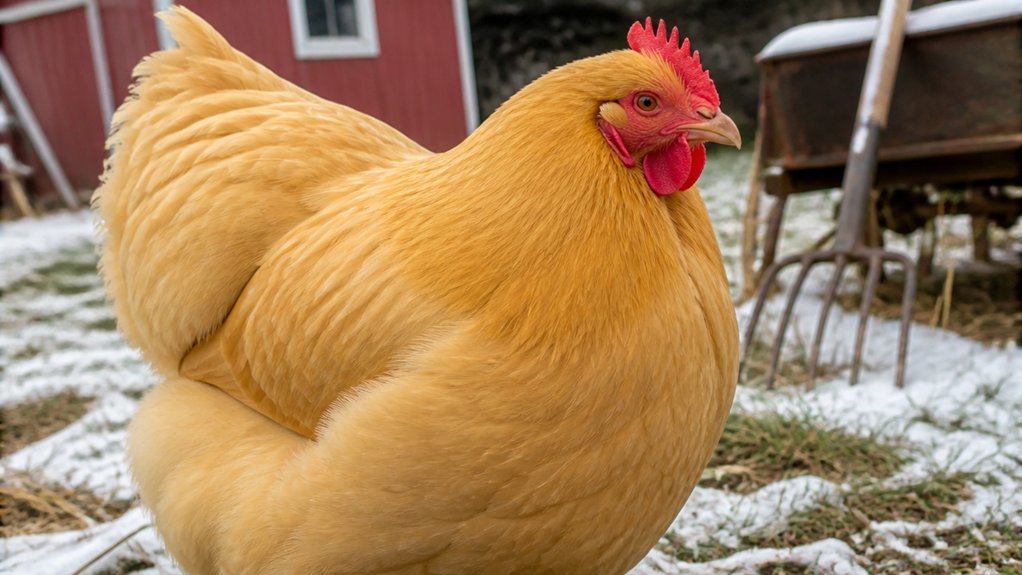
Orpingtons are a great choice if you need a dual-purpose breed that handles cold weather well. You’ll value their broad bodies, dense feathering, and calm temperament when winter hits.
They keep growing at a steady pace, so you can raise them for flavorful meat without much fuss. Their size also gives you a respectable table bird, while hens provide a dependable supply of large brown eggs.
In a cold-hardy flock, Orpingtons do best when you give them dry bedding, drafts protection, and enough space to move without crowding. They’re docile, so they fit well with mixed flocks and backyard setups.
If you want birds that stay comfortable, productive, and easy to manage through chilly months, Orpingtons deserve a spot on your list.
Australorps for High Egg Production
If egg numbers matter most in your flock, Australorps are hard to beat. You’ll value their calm nature, which makes daily care easier and keeps your coop peaceful. These birds lay reliably, even when weather or routine changes slow other hens.
Australorps are dependable layers with a calm nature, making egg-focused flocks easier to manage.
Give them a balanced layer feed, clean water, and secure housing, and they’ll reward you with steady production.
- Glossy black feathers that shine green in sunlight
- Gentle hens that handle backyard life well
- Large brown eggs filling your basket often
- Strong, efficient birds that fit family flocks
Because they stay productive without demanding fussy care, you can focus on collecting eggs instead of managing drama.
If you want a dependable layer, Australorps deserve a spot in your flock.
Wyandottes for Meat and Eggs

Wyandottes grow into sturdy, medium-to-large birds that give you solid body weight without demanding extra fuss.
You’ll get a steady supply of brown eggs, making them a dependable layer for your flock. Their broad breasts and meaty build also give you a useful bird for the table.
Wyandotte Size And Growth
Though not the fastest-growing birds in the coop, Wyandottes mature into sturdy, medium-heavy chickens that offer a practical balance of meat and egg production.
You’ll notice their broad bodies, full breasts, and compact frames give them a solid, well-rounded look. Hens usually reach about 6 to 7 pounds, while roosters often tip 8 to 9 pounds. Their growth is steady, not rushed, so you can plan for a longer raise before processing.
- Expect a deep, rounded body
- Watch for even feathering as they develop
- Give them space to build muscle
- Handle their weight with sturdy perches
If you want birds that feel substantial in the hand and fill out nicely, Wyandottes fit that goal without demanding extreme feed or constant management.
Egg Laying Qualities
For a dual-purpose flock, Wyandottes give you a dependable stream of brown eggs along with respectable table-bird potential. You can expect steady production once pullets mature, and they’ll keep laying through much of the year. Their eggs are usually medium to large, with sturdy shells that handle collection well. If you want a breed that stays useful without demanding constant attention, Wyandottes fit nicely.
| Trait | What you’ll notice | Why it helps |
|---|---|---|
| Egg color | Brown | Easy to sort |
| Egg size | Medium to large | Good kitchen use |
| Laying rate | Consistent | Reliable supply |
| Seasonal hardiness | Strong | Better winter output |
| Temperament | Calm | Easier flock management |
With balanced care, you’ll get dependable eggs and a flock that feels practical.
Meat Traits And Uses
When you raise Wyandottes for the table, you’ll notice they grow into sturdy, broad-bodied birds that dress out well without becoming overly heavy or slow. You can expect respectable breast and thigh meat, plus a balanced frame that fits a family roast. Their skin and feathers also pluck cleanly, which makes processing simpler for you.
Because they mature at a moderate pace, you don’t wait forever for a good meal bird.
- Plump enough for hearty dinners
- Reliable carcass size for home use
- Tender meat when harvested young
- Good flavor that suits roasting or stewing
If you want one breed that feeds your flock and your table, Wyandottes give you practical, dependable meat without sacrificing egg production.
Easter Eggers for Colorful Eggs
Easter Eggers are mixed-breed birds that earn their name by laying a rainbow of egg colors, from blue and green to olive, pink, and tan. When you want variety in the basket, they’re a fun pick that still gives you decent table birds. You won’t get a fixed standard, but you’ll get surprises.
| Trait | Benefit |
|---|---|
| Egg color | Adds visual variety |
| Temperament | Often friendly and calm |
| Body size | Useful for the table |
| Mixed heritage | Brings unique traits |
You can raise them for eggs, meat, or both, and they fit well into many backyard flocks. Their appeal comes from charm, color, and dependable production, so you’ll enjoy collecting eggs that look as good as they taste.
Choose Breeds for Your Climate
Colorful eggs are a bonus, but your flock will thrive only if the breed suits your weather. You need birds that handle your summers, winters, wind, and rain without constant help.
In hot regions, look for chickens with large combs and lighter feathering. In cold areas, choose hardy breeds with tight feathers and strong feet. If your climate swings hard between seasons, pick adaptable birds that stay calm and healthy.
- A snowy yard with sturdy, fluffy hens
- A shaded coop beside a dry, dusty run
- A damp, windy pasture with resilient birds
- A mild backyard where breeds keep pace
When you match breed to climate, you reduce stress, cut losses, and make daily care simpler. Your flock settles in faster and rewards you more reliably.
Compare Growth Rate and Egg Count
Once you’ve matched a breed to your climate, compare how fast it grows and how many eggs it lays, because those two traits shape both your payoff and your patience.
A faster-growing bird reaches table size sooner, so you’ll see meat benefits earlier and spend less time feeding it. A higher egg count means more steady breakfast production over the year, which helps if you want the flock to earn its keep.
You don’t need the absolute top number in either category; you need balance. Some breeds gain weight quickly but lay fewer eggs, while others lay well yet mature more slowly. Check annual egg totals, average age at processing, and typical feed use.
Choose the breed whose numbers fit your goals, your budget, and your timeline.
Pick Birds for Temperament
Numbers matter, but temperament can make or break your flock. You want birds that stay calm when you open the coop, handle handling without panic, and fit in with your routine. Gentle breeds often eat well, forage steadily, and cause fewer squabbles, which keeps stress low and growth on track.
- Calm hens settle quickly after dusk.
- Friendly roosters alert without constant aggression.
- Easygoing birds crowd less at feeders.
- Steady birds recover faster from minor disruptions.
Watch how chicks react to people, noise, and space. Choose birds that seem curious, not frantic, because a balanced disposition makes daily care simpler and your flock more pleasant.
When you pick for temperament, you’re investing in birds you’ll enjoy raising every day.
Put Together the Right Backyard Flock
To build a productive backyard flock, mix birds that match your goals, space, and daily routine. Start with a few reliable layers, then add heavier birds if you want more meat yield. You’ll get better results when you balance calm hens, active foragers, and breed traits that fit your climate.
| Flock Need | Smart Choice |
|---|---|
| Eggs | Australorp, Rhode Island Red |
| Meat | Plymouth Rock, Orpington |
| Balance | Sussex, Delaware |
Keep ratios practical, too. You don’t need a huge flock to start; six to ten birds often works well. Give each bird enough coop room, secure runs, and access to feed and water. Watch how they interact, then adjust your flock before problems grow.
Frequently Asked Questions
How Much Space Does Each Dual-Purpose Chicken Need?
You’ll want at least 4 square feet per bird inside the coop and 8 to 10 square feet in the run. More space keeps your chickens healthier, calmer, and cleaner overall.
What Should I Feed Dual-Purpose Chicks for Best Growth?
You should feed your dual-purpose chicks a high-protein chick starter, around 20–24%, with clean water always available. Offer grit only if they eat treats, and avoid medicated feed unless you need it.
When Should Dual-Purpose Chickens Start Laying Eggs?
You’ll usually see dual-purpose chickens start laying around 18 to 24 weeks old, depending on breed, feed, and daylight. If you keep them healthy, you’ll often get eggs sooner and more consistently.
How Do I Process Dual-Purpose Chickens for Meat?
You humanely dispatch the bird, bleed it out, scald, pluck, eviscerate, rinse, chill, then butcher it. You’ll need sharp knives, clean water, and sanitation; if you’re unsure, follow local regulations or get experienced help.
How Long Do Dual-Purpose Hens Stay Productive?
You’ll usually get solid egg production from dual-purpose hens for about 2 to 3 years, though they can lay longer with good care. After that, you’ll notice fewer eggs and slower production.
In Summary
Choosing the right dual-purpose chicken breed helps you get both steady egg production and flavorful meat from your flock. You’ll want to match your birds to your climate, space, and goals, whether you prefer Rhode Island Reds, Plymouth Rocks, or Sussex chickens. Focus on growth rate, egg count, and temperament so your flock fits your backyard and routine. When you pick well, you’ll enjoy a productive, low-stress coop year-round.