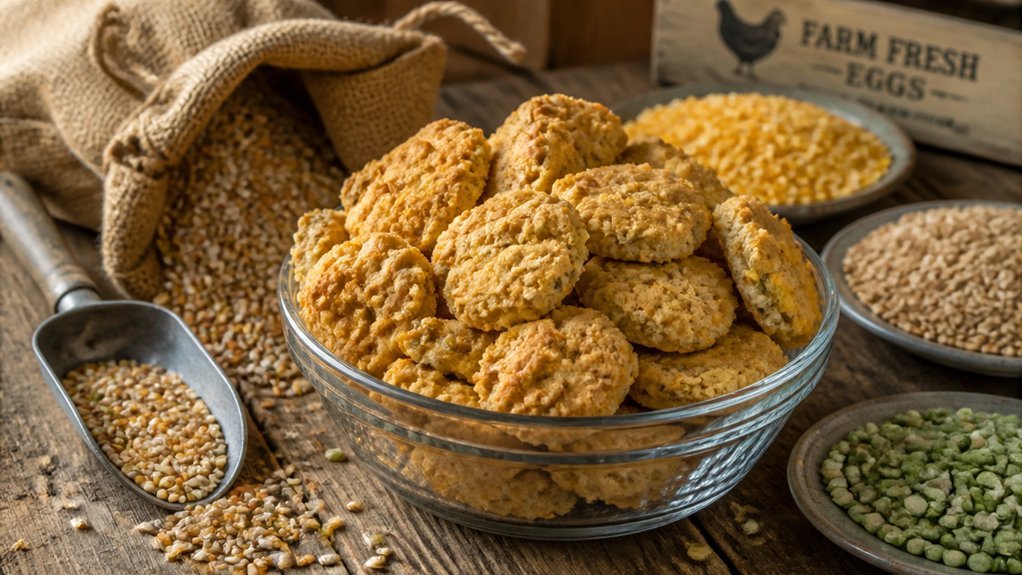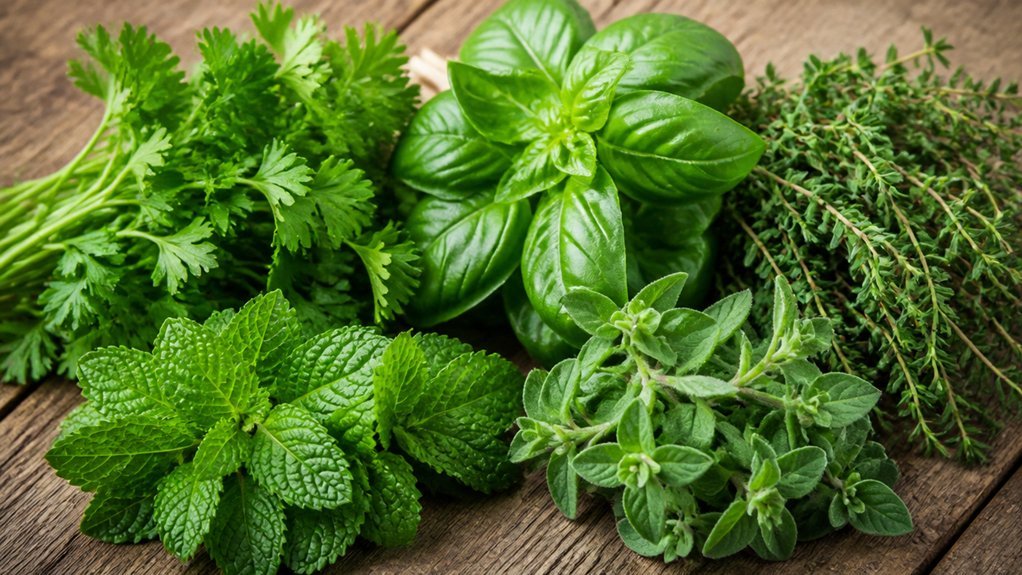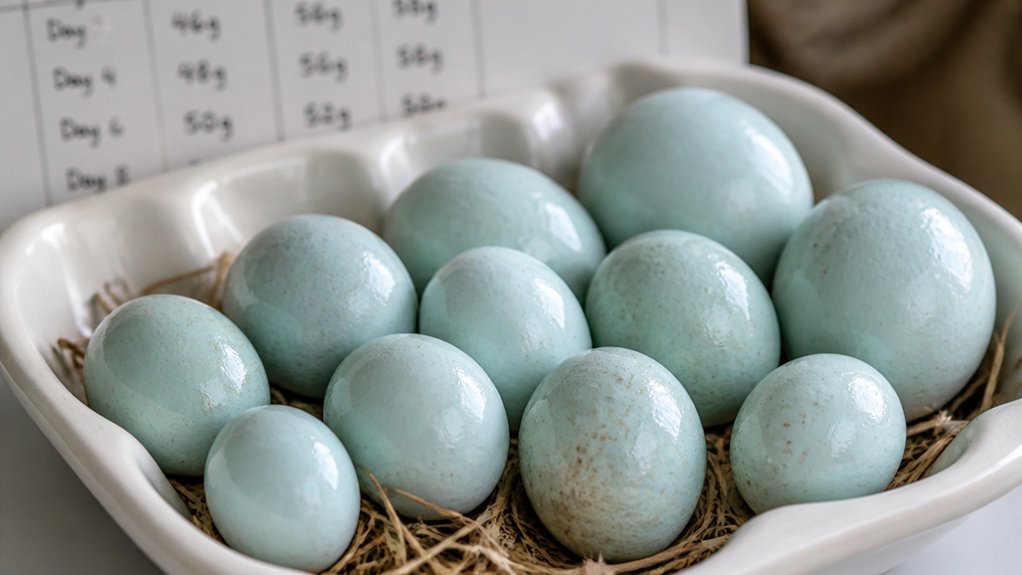
Your hens’ feeding schedule can change egg size because timing affects how steadily they get protein, energy, calcium, and water while the egg is forming. When you feed them consistently, they digest nutrients better and support fuller yolk and albumen development. Long gaps, irregular meals, or empty feeders can shrink eggs or weaken shells. Regular feedings, fresh water, and a balanced ration help hens lay bigger, better eggs, and there’s more to fine-tune if you want even better results.
How Feeding Affects Egg Size
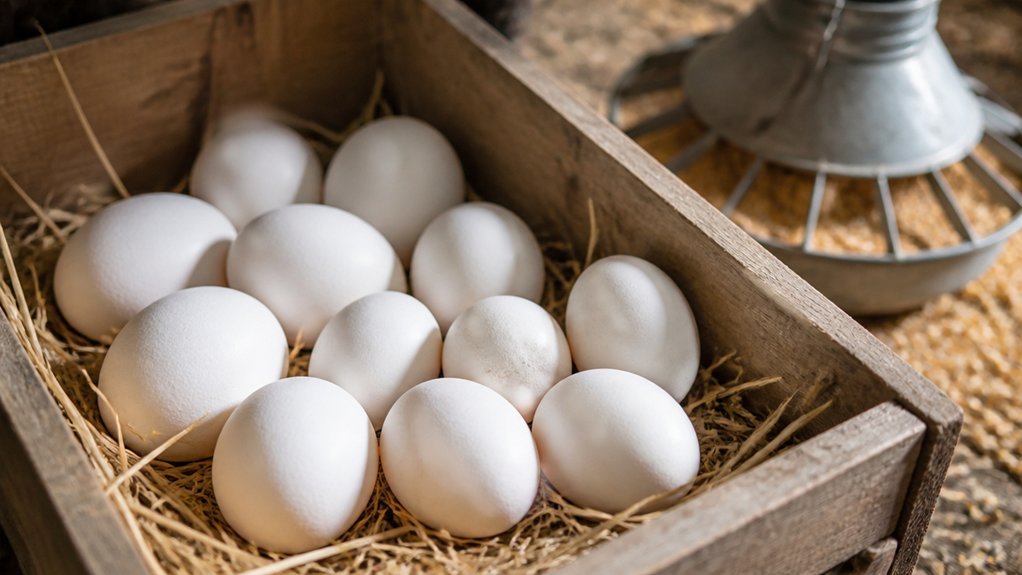
What your birds eat can directly affect the size of the eggs they lay. You can improve egg size by giving them a balanced ration with enough protein, energy, vitamins, and minerals.
Protein supports albumen and yolk formation, while calcium and phosphorus help build strong shells. If you underfeed them, they may lack the nutrients needed to produce larger eggs. If you overfeed them, excess body fat can hurt production and egg quality.
You should also choose feeds made for laying hens, since these formulas match their needs better than general poultry feed. Fresh water matters too, because dehydration can limit nutrient use.
Maintaining a consistent calcium intake is crucial for optimal shell development, especially during heat stress or post-molt periods. When you keep their diet consistent and complete, you give your birds the best chance to lay eggs with better size and quality overall.
Why Meal Timing Matters
Feeding the right nutrients is only part of the equation; when you feed your hens matters too. When you offer feed at consistent times, you help your flock use nutrients more efficiently.
Hens rely on a steady routine, and predictable meals support smoother digestion and better nutrient uptake. If you change timing often, you can disrupt how energy and protein are available when eggs form. That can affect egg size because your hens may not get what they need at the right moment.
Meal Gaps and Egg Formation
When you leave longer gaps between meals, you can change how smoothly egg formation unfolds. You’ll see that nutrient timing affects how quickly the hen can build each yolk, and steady intake helps support a regular yolk development rhythm. Additionally, consistent access to clean water is crucial to prevent dehydration and ensure optimal egg production.
Meal Gap Length
The length of time between meals can shape how your hens form eggs, because longer gaps often mean the bird has more time to fully build each egg before the next one starts.
When you space feedings farther apart, you may let the ovary and shell gland work without frequent interruptions, which can support a steadier egg-building rhythm. If meals come too close together, you can crowd that process and reduce the window for a larger yolk and albumen to develop.
You don’t need extreme delays; you just need a consistent pattern that matches your flock’s natural cycle. Watching how your hens respond is key, since their laying pattern can shift with schedule changes. A stable gap often gives you more predictable egg size. Additionally, maintaining proper feeding schedules and ensuring the hens have enough time to digest can further influence the size and quality of eggs they produce.
Nutrient Timing Effects
If you time meals to match a hen’s natural egg-forming cycle, you can influence how smoothly nutrients are available for yolk, albumen, and shell development. When gaps stretch too long, her body may face a patchy supply, and egg formation can feel less efficient. Incorporating consistent feed scheduling helps maintain steady nutrient flow throughout the day. Short, steady intervals help her digestive tract keep releasing energy and building blocks right when tissues need them.
- A feed bowl filling at dawn
- Calm hens pecking in rhythm
- Nutrients moving like a steady stream
- A shell building layer by layer
- An egg finishing with balanced resources
You don’t need perfect clocks, just a consistent schedule. That regularity supports smoother formation and can help stabilize egg size from one laying cycle to the next.
Yolk Development Rhythm
As the yolk forms, your hen needs a steady flow of nutrients, not long empty stretches between meals. When you leave long gaps, her body can’t keep building yolk at a smooth pace, and that interruption can affect final egg size.
A consistent feeding rhythm helps her absorb protein, fat, vitamins, and minerals when she needs them most. If you feed at irregular times, she may draw on body reserves and produce less uniform eggs.
Additionally, maintaining regular feeding times can help support her nutritional balance, ensuring optimal yolk development and overall egg quality.
You’ll get better results when meals match her daily production cycle, because the ovary and shell gland work on a schedule. Keep feed available at predictable times, and you support steady yolk growth, stronger egg formation, and more consistent egg size over time.
Is Frequent Feeding Better Than Once-Daily Feeding?
Feeding more often doesn’t automatically mean bigger eggs, and for most laying hens, consistency matters more than meal frequency. A balanced diet with the right grain variety and nutritional profile supports steady laying and healthy egg size. When you split feed into smaller portions, you may calm hunger and keep hens pecking steadily, but you won’t magically enlarge every shell. What matters most is that you keep feed available at predictable times, so your flock settles into a stable rhythm.
- A morning pan filled like a sunrise
- Hens moving in a steady line
- Scratch and pellets disappearing evenly
- Waterers glinting beside the feeders
- Nest boxes waiting in quiet rows
If you only feed once daily, hens can still perform well if the ration is balanced and the timing stays reliable. Your goal is steady intake, not constant snacking.
How Protein Affects Egg Size
Protein plays a direct role in egg size because hens need enough amino acids to build both the albumen and the yolk. When you give your flock a balanced ration with adequate crude protein, you help them produce fuller eggs more consistently. Too little protein can limit shell contents, so you may see smaller eggs even when feed intake looks normal. You don’t need excess protein, either; extra amounts won’t always increase size and can waste feed. Maintaining probiotic microbial balance in their gut can also support optimal nutrient absorption, further influencing egg quality. If you adjust feeding times, keep protein steady across the day so hens can use it efficiently. Watch body condition and egg weights to see whether your ration supports the size you want.
How Calcium Supports Larger Eggs
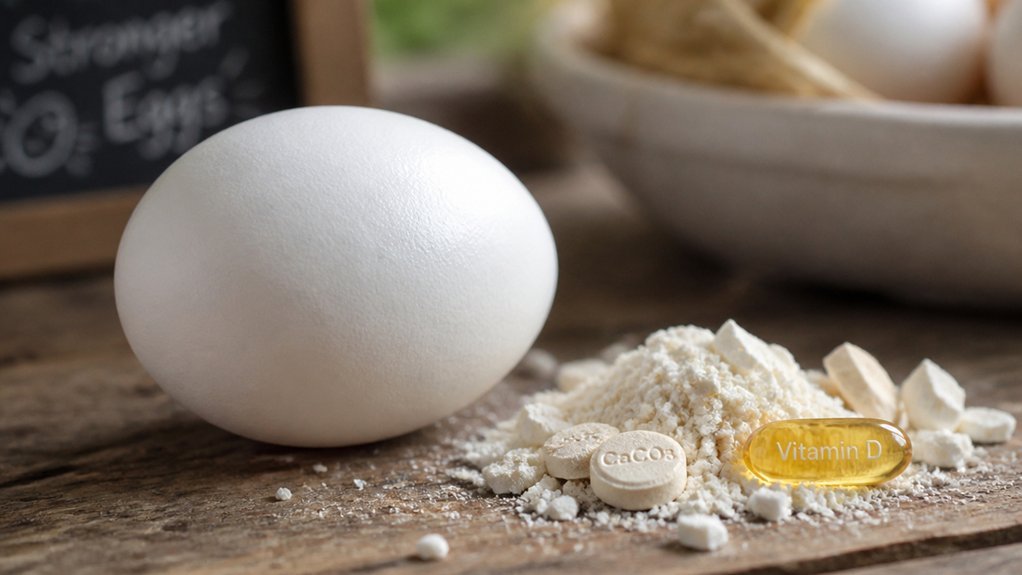
When your hens get enough calcium, they can form stronger shells and support larger eggs more reliably. You’ll often notice steadier production when their bodies aren’t borrowing minerals from bones to finish each egg.
Enough calcium helps hens lay stronger shells and larger eggs more consistently, without pulling minerals from their bones.
Calcium also helps the shell gland work smoothly, so yolks can develop into fuller eggs without thin, fragile shells.
- White oyster shell in a feeder
- Crushed limestone beside grain
- A hard shell cracking cleanly
- A hen resting after laying
- Bright eggs in a basket
If calcium stays available, your hens can keep building shell quality while laying. That balance helps them carry more weight inside each egg, so size doesn’t suffer as much from mineral stress. Proper calcium metabolism is essential for maintaining optimal egg size and shell strength.
Feed Amounts for Backyard Hens
You should give your backyard hens a steady daily feed portion so they get the energy and nutrients they need.
Watch how much each bird eats and adjust the amount if your flock is laying more eggs or showing signs of hunger. When production changes, you can tweak feed so your hens stay healthy and keep laying well.
For optimal digestion, consider the appropriate grit size for each stage of your hens’ development to ensure proper feed grinding.
Daily Feed Portions
Daily feed portions matter because a hen’s intake directly affects her energy, health, and egg production. You should give each backyard hen a steady, measured daily ration so she can peck, scratch, and rest without running short on fuel.
A consistent portion looks like this:
- a small scoop of layer feed at dawn
- a light refill after noon
- clean water beside the feeder
- a dust-free bowl in the coop
- enough feed to leave a little, not a lot
When you portion feed well, you help your hens stay calm and active. Too little feed leaves them hungry; too much encourages waste.
Using no-waste feeders can also help reduce feed spillage and ensure each hen gets her fair share.
Keep the routine simple, watch their body condition, and let each hen eat in peace every day.
Adjusting By Egg Production
If your hens are laying heavily, they’ll usually need a bit more feed to keep up with the energy demand, especially in colder weather or during peak production. You should watch egg counts, body condition, and appetite to judge whether they need extra ration.
When production drops, you can reduce feed slightly, but don’t cut so much that birds lose weight or slow down too fast.
High-producing hens often benefit from consistent access to a balanced layer feed, plus fresh water and calcium. If you free-range, remember that forage doesn’t always replace a full ration.
You can tweak portions in small steps, then observe shell quality, egg size, and flock health for a week before making another change.
Water Access and Egg Size
Because hens need constant access to fresh water, even short gaps in drinking can affect egg size and overall egg quality.
When you time feedings, you also shape drinking patterns, and that matters because water supports digestion, nutrient transport, and shell formation.
If your hens sip less during hot hours or after a long wait, they may lay smaller eggs with thinner shells.
Keep water close, clean, and easy to reach:
- A shaded drinker beside the coop
- Fresh droplets sparkling in the morning
- Cool water after a dusty scratch session
- Low, sturdy bowls that won’t tip
- Refilled containers that never run dry
When you pair meals with reliable water access, you help hens stay hydrated and build fuller eggs consistently.
Signs Your Hens Need a New Schedule
Even with steady water access, your flock can still show you when feeding times aren’t working. Watch for restless pacing, loud early-morning squawking, or hens crowding the feeder long before you arrive.
If they finish meals too quickly, then act hungry again, your timing may be off. You might also notice uneven egg sizes, thin shells, or a drop in daily production when meals come too late or too far apart.
Hens that pick at bedding, scratch excessively, or seem sluggish before feeding often need a more consistent routine. Track when these signs appear, then compare them with your current schedule. When the behavior lines up with feeding gaps, your hens are telling you the rhythm needs adjusting.
How to Adjust Feeding for Bigger Eggs
To encourage bigger eggs, start by timing feed so hens don’t go long stretches without enough nutrition. Offer a consistent morning meal, then provide a small afternoon top-up so birds can refill energy before roosting.
You can also match feed times with natural activity, when hens are keen to scratch and peck. Keep fresh water nearby, since hydration supports shell and egg development.
- A feeder in the dawn light
- Hens gathered around a steady ration
- A calm afternoon scratch in the yard
- Clean water glinting beside the coop
- A full crop before evening perches
When you adjust timing, watch body condition and egg output, then fine-tune portions so hens stay productive without overfilling themselves.
Common Feeding Mistakes That Reduce Egg Size
Missing feed windows, skimping on protein, or letting the ration run out can all shrink egg size. You need to keep hens on a steady schedule because long gaps between meals limit nutrients for yolk and albumen growth. If you switch feeds too often, you may upset intake and lower production. Don’t overload treats, either; they displace balanced feed and reduce key amino acids.
| Mistake | Result |
|---|---|
| Late feeding | Smaller eggs |
| Low protein | Weak egg formation |
| Empty feeders | Reduced lay size |
You should also watch water access, since dry hens eat less and make smaller eggs. Check feeders daily, measure rations, and stick to a consistent plan so your flock gets what it needs when it needs it.
Frequently Asked Questions
Can Breed Affect Egg Size More Than Feeding Schedule?
Yes, breed can affect egg size more than feeding schedule. You’ll usually see bigger differences from genetics, while diet mainly fine-tunes size and consistency. Still, you can improve results with balanced feeding and steady management.
Does Hen Age Change How Feeding Impacts Egg Size?
Yes, hen age can change how feeding affects egg size. Younger hens usually respond more strongly to nutrition, while older hens’ eggs often depend less on feed timing and more on overall health and production stage.
How Long After Feeding Do Hens Lay Eggs?
You usually won’t see hens lay right after feeding; they’ll often lay later that day, about 4 to 6 hours after they eat, though timing varies with age, light, breed, and their daily laying rhythm.
Do Treats Reduce Egg Size in Backyard Hens?
Yes, if you give too many treats, you can reduce egg size because hens eat less balanced feed. Keep treats under 10% of their diet, and you’ll help them maintain steady, healthy egg production.
Can Stress Override the Effects of a Feeding Schedule?
Yes, stress can override your feeding schedule’s benefits. If your hens feel threatened, overheated, or crowded, their bodies may divert resources from egg production, and you’ll often see smaller or fewer eggs until conditions improve.
In Summary
Changing your hens’ feeding schedule can affect egg size because it changes when and how they get the nutrients they need to build each egg. If they go too long without feed, egg formation may slow down or suffer. Giving regular meals, enough protein, and constant water helps support larger, healthier eggs. Watch your hens closely, adjust their schedule as needed, and avoid common feeding mistakes to keep egg size consistent.