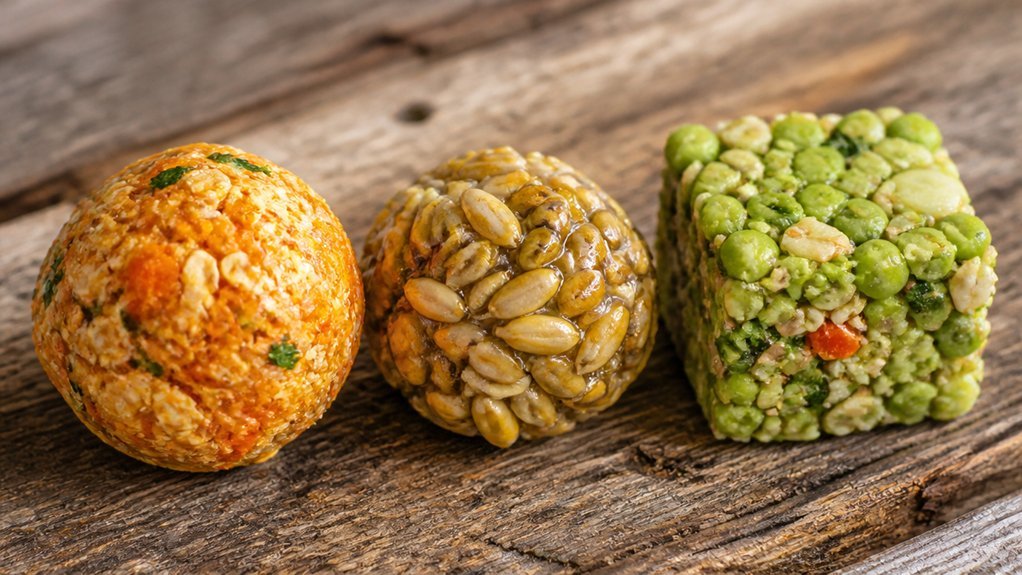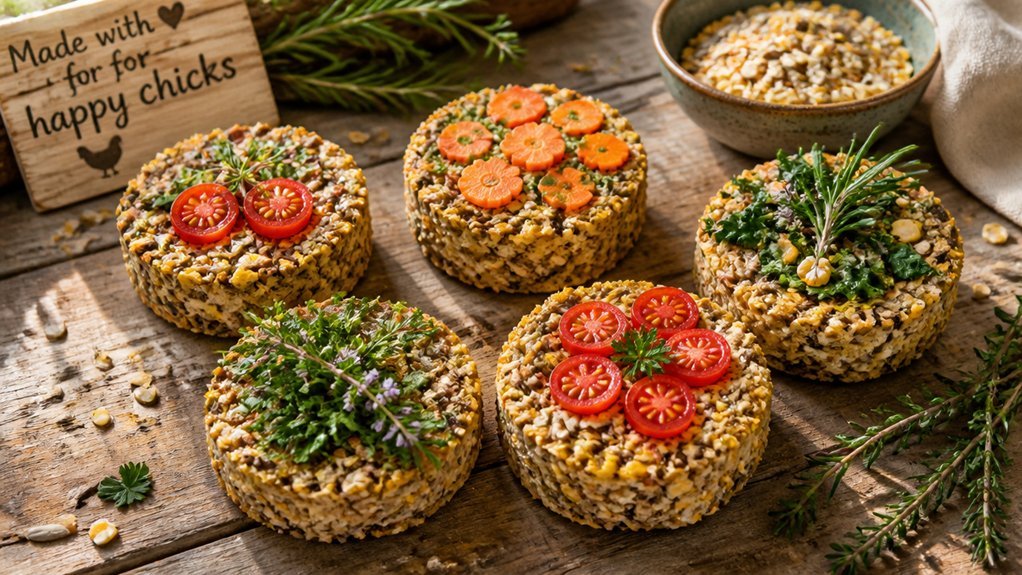
You can make five easy homemade treats your chicks will love: plain rolled oats, slightly moistened oats, finely chopped leafy greens, tiny bits of cucumber or zucchini, and soft ripe fruit like berries or melon. Keep everything small, soft, and unsalted so your chicks can peck and swallow it safely. Offer treats in pinches, not piles, and remove leftovers quickly. If you keep going, you’ll pick up simple tips that make treat time even better.
Why Soft Treats Are Safer for Chicks
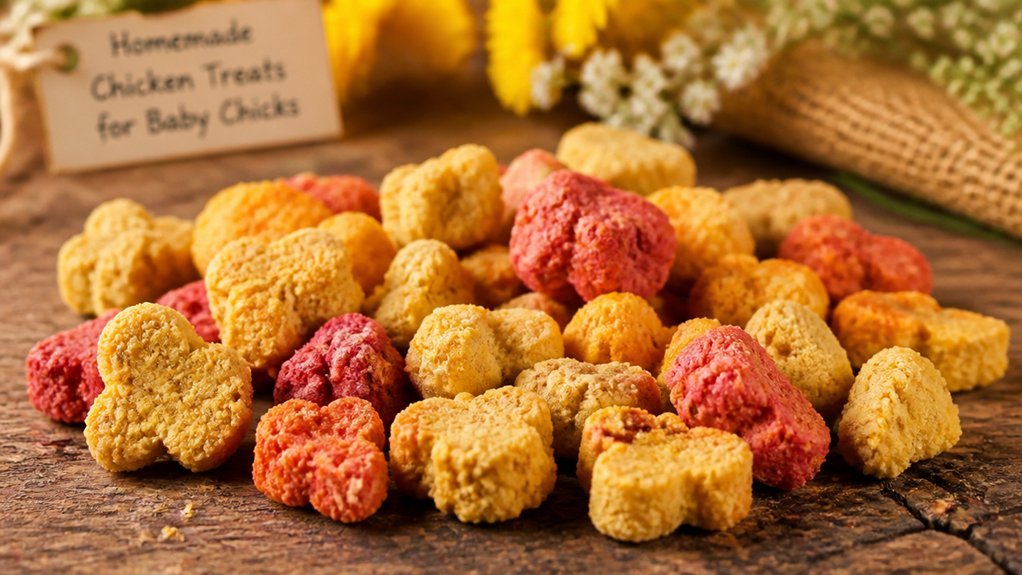
Soft treats are safer for chicks because they’re easier to peck, swallow, and digest than hard or dry foods. You protect their tiny beaks and delicate throats when you offer soft textures that don’t require forceful chewing. You also help them eat with less stress, which matters when they’re still learning to forage. Additionally, using appropriate probiotic strains in feed or treats can improve their gut health and nutrient absorption during this critical growth stage. Soft foods break apart quickly in the crop and move through the digestive system more smoothly, so chicks can absorb nutrients without struggling. If you choose moist, tender treats, you lower the risk of choking and reduce wasted food. You can still keep treats simple and fresh, but you should always make sure they’re small enough for young birds to handle safely.
Easy Oat Treats for Chicks
Oats make one of the easiest treats to offer chicks because they’re mild, soft, and quick to prepare. You can serve them plain, slightly moistened, or mixed with a little warm water to make a gentle mash.
Keep the portion small so your chicks nibble, not gorge, and always offer the treat in a clean dish. If you want extra interest, sprinkle a few oats on the brooder floor and let them peck naturally. This gives them a chance to forage without stress.
Use rolled oats or quick oats, but avoid flavored packets and anything with sugar or salt. You’ll keep treat time simple, safe, and affordable while giving your chicks a small, satisfying snack they can easily eat. Textural qualities are important to encourage enthusiastic feeding and foraging behaviors.
Healthy Veggie Treats for Growing Chicks
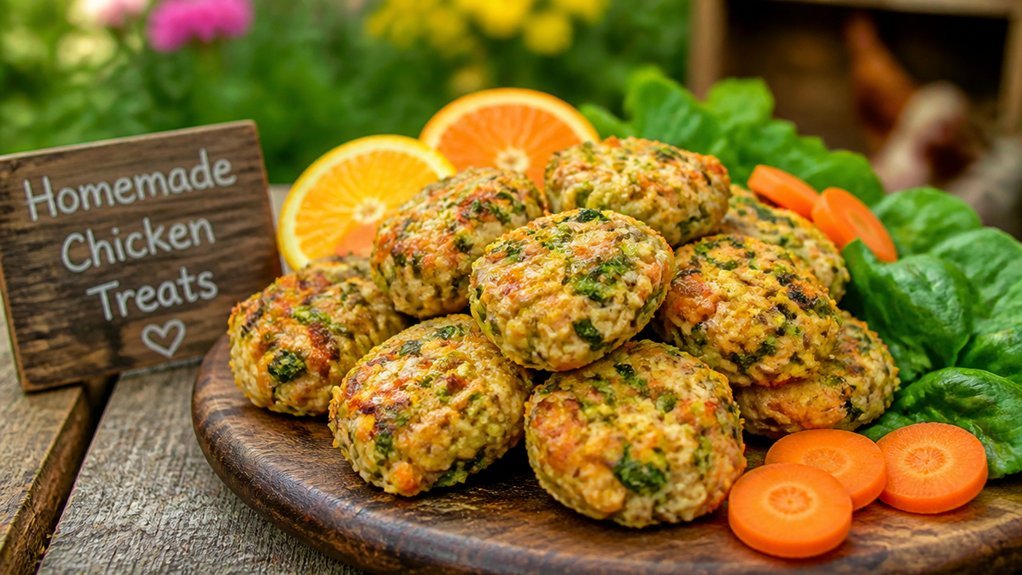
When you’re ready to add more variety, fresh veggies can be a great next treat for growing chicks. You can offer finely chopped lettuce, spinach, cucumber, zucchini, or peas for extra nutrients and hydration.
Serve only small amounts at first, so your chicks can adjust without digestive upset. Always wash produce well, then cut it into tiny pieces that are easy to peck and swallow.
You should mix veggie treats with their regular starter feed, not replace it, because balanced nutrition still matters most. Remove any leftovers after a short time to keep the brooder clean and reduce spoilage.
Additionally, introducing insoluble grit can help your chicks digest these treats more effectively by supporting their gizzard function.
Fruit Treats Chicks Can Snack On
Fruit can make a tasty occasional treat for chicks, as long as you choose safe options and keep portions small. You can offer soft, ripe fruit for extra flavor and quick energy.
Apples, berries, and melon all work well when you remove seeds and tough skins. Chicks usually enjoy sweet bites, but fruit shouldn’t replace their main feed.
One additional consideration is to avoid fruits high in sugar or acids that could upset their digestion, aligning with the importance of digestive support in their diet.
Keep fruit variety simple so your chicks don’t fill up on sugar. A little fruit adds interest, supports enrichment, and helps you reward curious young birds without overdoing it.
How to Serve Treats Safely to Chicks
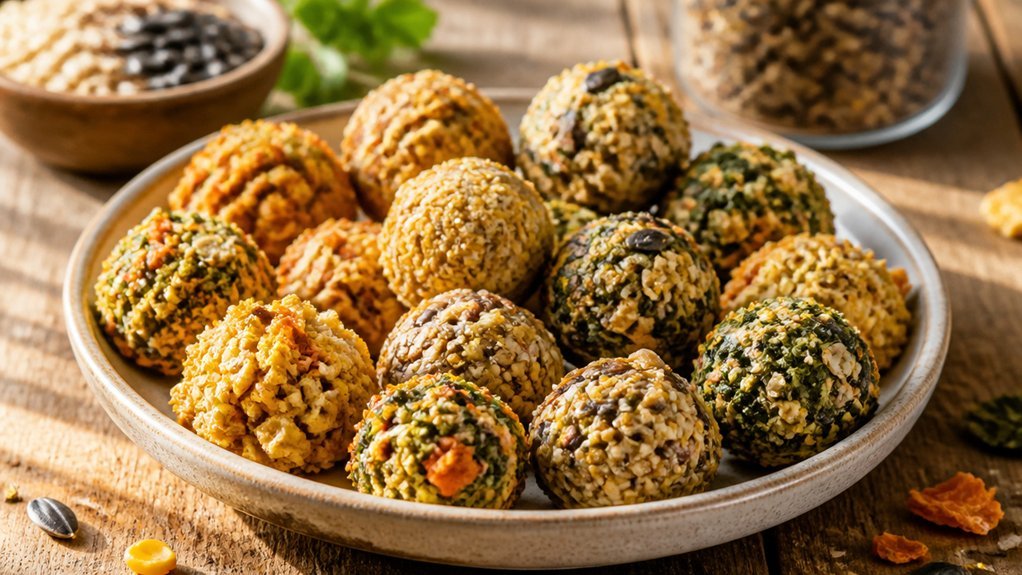
Even the safest treats need to be served the right way so your chicks stay healthy and comfortable. Offer treats in tiny amounts, and keep them soft enough for easy pecking. You should wash produce, chop it finely, and remove any uneaten food before it spoils. A protein boost from treats like black soldier fly larvae can support overall health and egg quality.
| Safe Step | Why It Matters | Your Action |
|---|---|---|
| Small portions | Prevents overeating | Start with a pinch |
| Clean food | Reduces germs | Rinse well |
| Soft texture | Protects chicks | Cut or mash treats |
| Fresh serving | Limits spoilage | Remove leftovers |
| Supervised feeding | Catches problems | Watch while they eat |
Always provide fresh water beside the treats. Skip salty, sugary, or seasoned foods, and don’t let treats replace starter feed. By serving carefully, you’ll help your chicks build healthy habits and stay strong.
Frequently Asked Questions
How Often Can Chicks Have Homemade Treats?
You can offer homemade treats 2-3 times a week, keeping them under 10% of your chicks’ diet. You’ll want to prioritize chick starter feed and fresh water, and avoid overfeeding sugary or salty ingredients.
Can Chicks Eat Treats Every Day?
No, you shouldn’t give chicks treats every day. You can offer them sparingly, since too many treats upset balanced nutrition. Keep treats to a small part of their diet and prioritize chick starter feed.
What Ingredients Should Never Be Used in Chick Treats?
You should never use chocolate, caffeine, avocado, onion, garlic, moldy foods, salty snacks, or anything sugary in chick treats. You’ll protect your chicks by keeping ingredients plain, fresh, and age-appropriate.
How Should Treats Be Stored to Stay Fresh?
You should store treats in an airtight container, keep them cool and dry, and refrigerate any moist batches. You’ll want to label dates, use them quickly, and toss anything that smells off or looks moldy.
At What Age Can Chicks Start Having Treats?
You can start giving chicks treats at about 2 weeks old, once they’re eating starter feed well. Keep treats tiny, soft, and occasional so you don’t upset their digestion or nutrition.
In Summary
These homemade treats can give your chicks a tasty boost while keeping them safe and happy. Stick to soft, bite-sized snacks, and always serve them in moderation so they still eat their balanced feed. With a little care, you can offer oats, veggies, and fruit your chicks will love without upsetting their digestion. Try a few simple recipes, watch how they respond, and enjoy seeing your chicks peck, grow, and thrive.