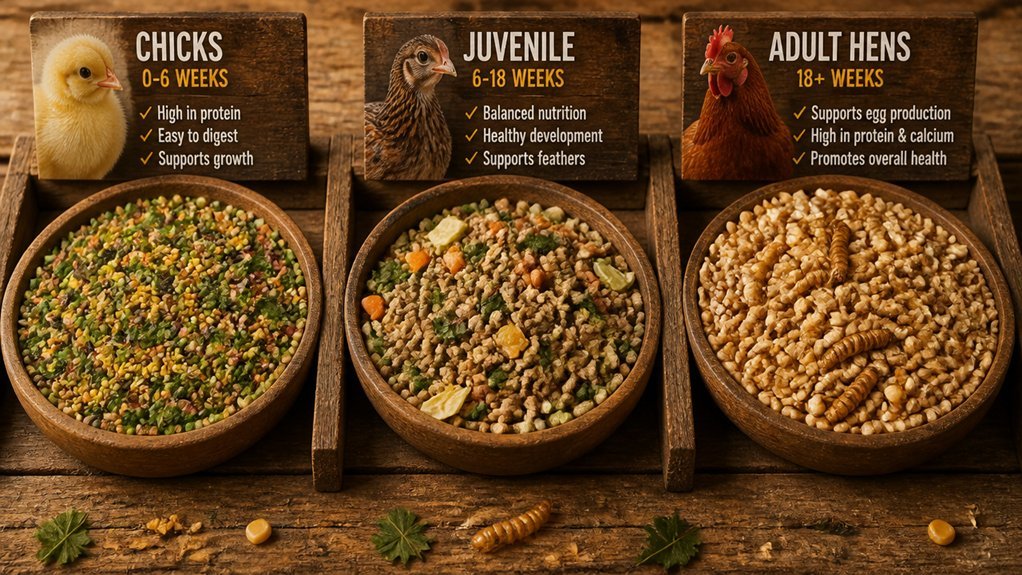
You should feed chickens by age to match their needs. For chicks, choose a high-protein starter crumble with amino acids, vitamins, minerals, and niacin for strong growth and healthy legs. For pullets, use a balanced grower feed with moderate protein to support steady bone, muscle, and feather development. For hens, switch to a calcium-rich layer feed with about 16% protein to support egg production, shell strength, and overall health, and there’s more to know.
What Chick Starter Feed Should Include
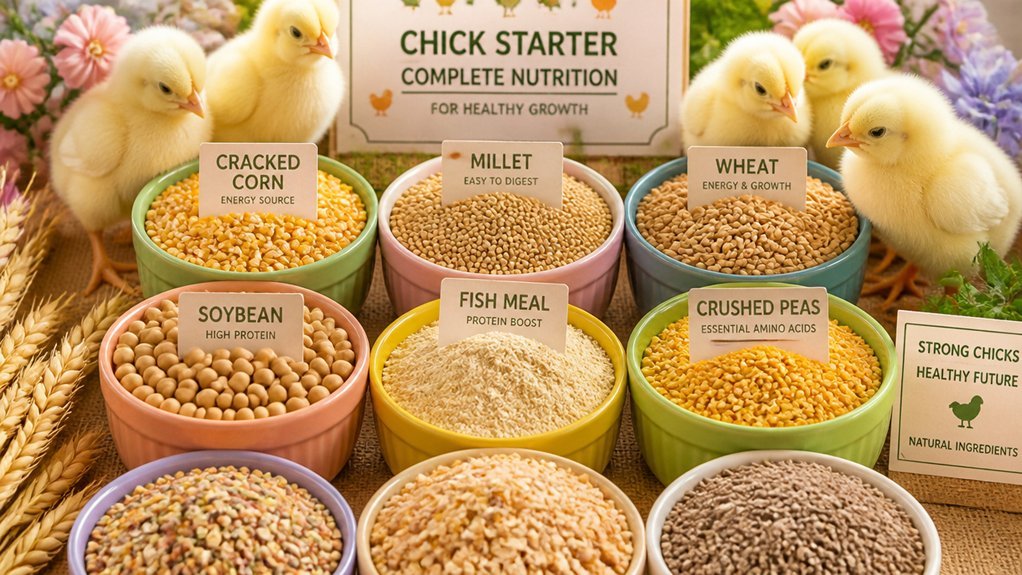
When you choose chick starter feed, look for a balanced formula with plenty of protein, essential vitamins, and minerals to support healthy growth.
You should give your chicks feed made for their first weeks, because it supports rapid feathering, strong muscles, and steady development. Choose a crumble that’s easy for tiny beaks to eat, and make sure fresh water stays available at all times.
You can also look for added nutrients like niacin, which helps support leg health, especially in fast-growing breeds. Avoid feeds with large particles or low protein, since they can slow development.
Including amino acids like lysine and methionine in the feed ensures proper tissue building and overall growth. Keep the feed clean, dry, and accessible so your chicks can eat often and grow well. Proper starter feed gives you a strong foundation for healthy, active birds.
What Pullets Need in Grower Feed
As your chicks grow into pullets, they need a grower feed with moderate protein, enough energy, and a balanced mix of vitamins and minerals to support steady development without pushing overly fast growth.
You want feed that helps bones, muscles, and feathers mature at a healthy pace. Keep the ration consistent and fresh, and make sure clean water’s always available. Avoid overloading them with rich ingredients that can crowd out balanced nutrition.
A properly formulated grower feed also emphasizes balanced amino acids, which are essential for optimal nutrient utilization and healthy development.
Think of the feed as a bridge between chick starter and adult rations, giving your birds exactly what they need during this in-between stage.
- A sturdy frame
- Smooth, glossy feathers
- Even, calm growth
- Bright, alert eyes
What Layer Feed Needs to Support Egg Production
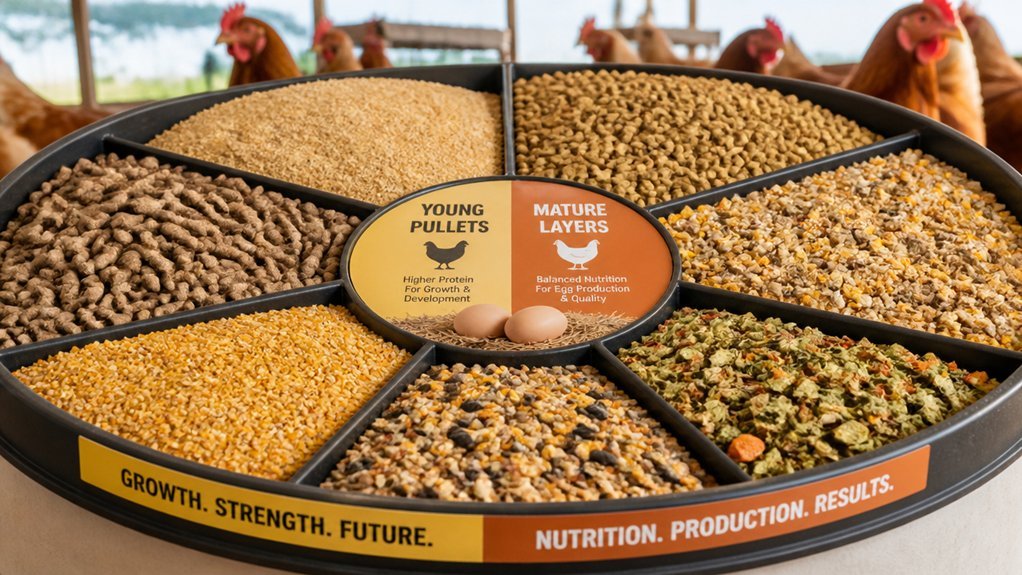
Layer feed should give hens the extra calcium, protein, and energy they need to lay strong eggs regularly. You should look for about 16% protein, plus enough calcium to build sturdy shells and prevent losses.
Balanced amino acids help your birds turn feed into eggs efficiently, while added phosphorus and vitamin D support bone health and calcium use.
You’ll also want moderate energy so hens keep eating enough without becoming overweight. Fresh water matters too, since egg production drops fast when hens don’t drink well.
Avoid feeding layer feed too early, because pullets need less calcium while they’re still growing. When you match feed to laying hens, you support steady production, better shell quality, and healthier birds overall. Organic grains in their diet can also enhance overall nutrition and egg quality.
Frequently Asked Questions
How Often Should Chickens’ Feed Recipes Change by Age?
You should change feed recipes as chicks grow, usually at 6–8 weeks, then again when pullets start laying, around 16–18 weeks. Keep monitoring their condition and adjust sooner if you’re raising broilers.
When Should Grit Be Introduced to a Chicken’s Diet?
You should introduce grit when your chickens start eating anything besides starter crumble, usually around 2 to 3 weeks old. If they free-range or get treats, offer it so they can grind food properly.
Do Chickens Need Supplements Besides Standard Feed?
Usually, you don’t need supplements if you feed a complete ration. You should add extras only when you see specific gaps, like calcium for laying hens, grit for digestion, or vitamins during illness.
How Much Water Do Chickens Need Daily?
You should provide chickens clean, fresh water every day; most drink about 1 to 2 cups each, but hot weather, laying, and growth raise needs. Check bowls often and refill them before they’re empty.
Can Treats Replace Any Part of a Chicken’s Regular Feed?
No, you shouldn’t let treats replace feed. You can offer them sparingly, but your chickens need balanced feed for proper nutrition, growth, and egg production. Keep treats under 10% of their daily diet.
In Summary
Feeding your chickens the right diet at each stage helps them grow strong and stay healthy. Start chicks on a balanced starter feed with plenty of protein, move pullets to a grower feed that supports steady development, and switch laying hens to a layer feed with extra calcium for strong eggshells. When you match feed to age, you give your flock the nutrients they need to thrive and produce their best.