
If you’re rotating chickens through pasture in 2026, the right poultry netting can make or break the setup. You need a fence that’s easy to move, tough enough for predators, and reliable with your energizer. The best options balance height, conductivity, and portability, but the differences aren’t always obvious. Before you choose one for your flock, it’s worth looking closely at what separates the top nets from the rest.



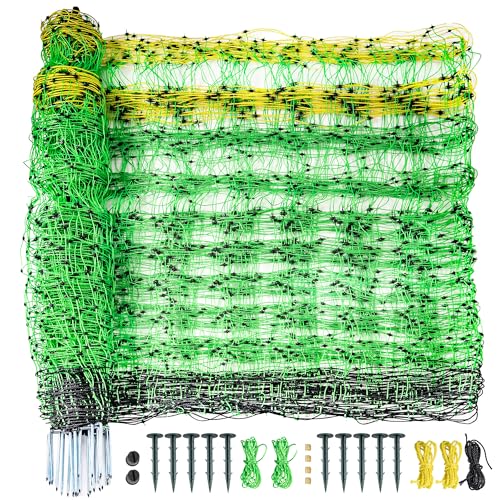


More Details on Our Top Picks
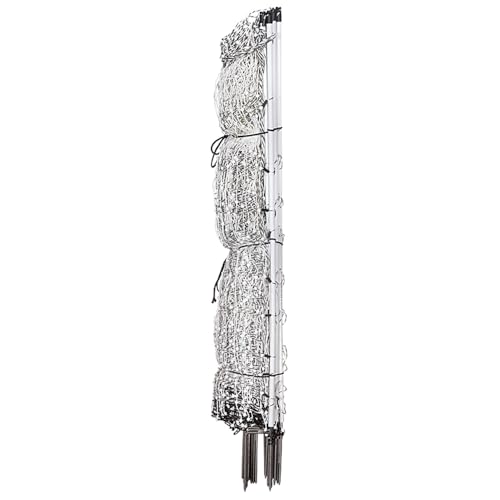
Premier 1 PoultryNet® Plus Electric Fence for Chickens – 48″H x 100’L
Premier 1 PoultryNet® Plus stands out as the go-to pick for portable, all-around rotational grazing. You get a 48-inch by 100-foot electric mesh fence with preinstalled posts every 6.8 feet, so you can set it up fast and keep it steady. Its built-in struts help prevent sagging, which boosts reliability on uneven ground. You can use it for chickens, ducks, sheep, goats, cattle, and guard dogs. It also blocks deer, bears, raccoons, foxes, and more. You’ll need a proper energizer, and you shouldn’t use a continuous current unit.
- Height:48″
- Length:100′
- Livestock Use:Poultry, sheep, goats, cattle
- Predator Protection:Deer, bears, raccoons
- Portability:Portable
- Energizer Required:Yes
- Additional Feature:6.8-foot post spacing
- Additional Feature:Integrated plastic struts
- Additional Feature:Less sagging between posts
Gallagher Electric Poultry Netting Chicken Fence
If you move poultry often, Gallagher’s 48-inch electric netting is a premium pick. You get 164 feet of coverage, plus 14 double-spike posts, a carry handle, a warning sign, and a repair kit. The 9 mixed-metal strands use copper and stainless steel turbo wire, so you’ll get strong, steady shock, fewer tangles, and better stretch resistance. At 23 pounds, you can carry and set it up easily. Connect it to a Gallagher energizer, trim nearby grass, and you’ll protect chickens from most predators in windy conditions.
- Height:48″
- Length:164′
- Livestock Use:Poultry
- Predator Protection:Most predators
- Portability:Portable
- Energizer Required:Yes
- Additional Feature:9 mixed-metal strands
- Additional Feature:Braided turbo wire
- Additional Feature:Includes repair kit
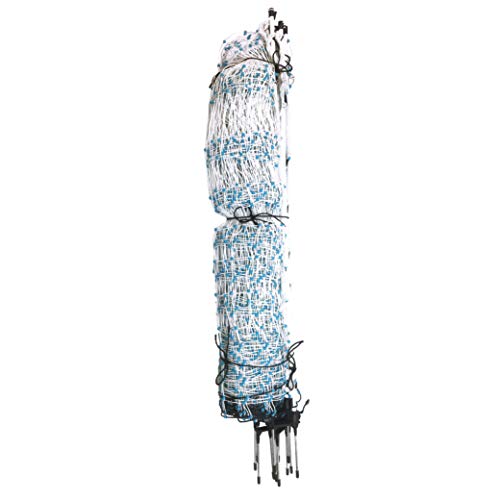
Starkline Electric Poultry Netting with Fiberglass Posts
Starkline Electric Poultry Netting with Fiberglass Posts works well for you when easy rotation and predator defense matter most. You can set it up in minutes, then move it quickly to fresh pasture as forage recovers. The electric barrier helps keep out mink, raccoons, foxes, coyotes, and skunks, so your chickens, ducks, and geese stay safer. Its white and cyan design stands out clearly, reducing collisions for birds and people. You also get a flexible option for backyard flocks or larger farms, plus a healthier free-range environment that supports better eggs and meat.
- Height:48″
- Length:Not specified
- Livestock Use:Poultry, ducks, geese
- Predator Protection:Mink, raccoons, foxes
- Portability:Portable
- Energizer Required:Yes
- Additional Feature:White and cyan polywire
- Additional Feature:High-visibility boundary marking
- Additional Feature:Supports pasture rotation
Starkline Electric Poultry Netting with Fiberglass Posts
For keepers who rotate birds often, this netting makes pasture moves simple and secure. You can set up Starkline Electric Poultry Netting with fiberglass posts in minutes, then shift it to fresh ground as forage changes. It helps your birds roam, scratch, and graze naturally, which can support better health, nutrition, and egg or meat quality. The white and cyan polywire stands out clearly, helping keep birds in and predators like raccoons, foxes, coyotes, mink, and skunks out. Pair it with an energizer, connector clips, and a grounding rod for reliable, portable performance everywhere.
- Height:48″
- Length:Not specified
- Livestock Use:Poultry, ducks, geese
- Predator Protection:Mink, raccoons, foxes
- Portability:Portable
- Energizer Required:Yes
- Additional Feature:Minimum 0.15 joules
- Additional Feature:Includes grounding rod
- Additional Feature:Solar energizer compatible
Pet & Livestock HQ Electric Poultry Net Fencing
Pet & Livestock HQ Electric Poultry Net Fencing suits mixed flocks and small livestock with confidence. You get a 48-inch-tall, 164-foot run that helps contain chickens, goats, sheep, and lambs while discouraging coyotes, dogs, skunks, raccoons, and foxes. Its 19 fiberglass posts and double spikes add stability, and 14 horizontal strands, including 12 stainless-steel conductors, improve protection. The bottom two strands don’t electrify, so weeds won’t short it out. You can set it up alone, move it fast, and pair it with a separate solar energizer for flexible grazing anywhere.
- Height:48″
- Length:164′
- Livestock Use:Poultry, goats, sheep, lambs
- Predator Protection:Coyotes, dogs, skunks
- Portability:Portable
- Energizer Required:Yes
- Additional Feature:19 fiberglass posts
- Additional Feature:Four corner guy lines
- Additional Feature:Bottom two non-electrified
VEVOR Electric Poultry Netting Fence Kit
Need reliable electric fencing for rotating chickens, ducks, or rabbits? VEVOR’s Electric Poultry Netting Fence Kit gives you 48-inch-high, 168-foot-long coverage with scientifically spaced grids that help keep animals securely enclosed. You’ll get double-spiked stakes and fiberglass posts for steadier setup, plus windproof parts that hold up in rough weather. It’s suitable for chickens, ducks, geese, rabbits, and other small livestock. The controlled current protects without harming. You can run it on 110–240V AC, or pair it with solar or DC power. A warning sign and repair kit simplify maintenance.
- Height:48″ (1.21 m)
- Length:168′
- Livestock Use:Poultry, rabbits
- Predator Protection:General predator deterrence
- Portability:Portable
- Energizer Required:Yes
- Additional Feature:110-240V AC support
- Additional Feature:Includes warning sign
- Additional Feature:Includes repair kit
PPOLB Electric Poultry Fence Netting 164′ x 41.5
PPOLB Electric Poultry Fence Netting is ideal if you need a portable, humane barrier for rotational grazing. You get 164 feet of protection and 41.5 inches of height, enough to shield chickens, ducks, geese, rabbits, and similar animals from dogs, coyotes, foxes, and raccoons. Its 11 horizontal strands, including 9 conductive lines, and glass fiber rods every 12.5 to 13.1 feet help keep it stable. Triple-braided stainless steel adds durability. You’ll need a fence energizer, grounding rod, and connector clips. Use a 0.25-joule solar or AC/DC unit, not continuous current.
- Height:41.5″
- Length:164′
- Livestock Use:Poultry, rabbits
- Predator Protection:Stray dogs, coyotes, foxes
- Portability:Portable
- Energizer Required:Yes
- Additional Feature:11 horizontal strands
- Additional Feature:Triple-braided stainless wire
- Additional Feature:0.25-joule recommendation
Electric Poultry Netting,47.2″H x 164’L Electric Chicken Fence for Chickens
At 47.2 inches tall and 164 feet long, this electric poultry netting suits you if you’re fencing large grazing areas. You get a portable barrier with 14 pre-attached fiberglass posts spaced every 12 feet, plus steel ground stakes that help it stay upright on uneven ground. The blue-and-white fence sets up without tools, so you can unroll it, push in the posts, and move it fast for rotational grazing. Its 14 wires, including low bottom spacing under 2 inches, help keep chicks in and predators out. You’ll need a separate 0.25-joule energizer.
- Height:47.2″
- Length:164′
- Livestock Use:Poultry, sheep, goats, pigs
- Predator Protection:Coyotes, dogs, bears
- Portability:Portable
- Energizer Required:Yes
- Additional Feature:14 pre-attached posts
- Additional Feature:7-inch steel stakes
- Additional Feature:Bottom spacing under 2 inches
Electric Poultry Netting Fence with Double Spike Posts
If you need portable predator protection, this electric poultry netting delivers strong value for rotational grazing. You can shield chickens, ducks, and turkeys from raccoons, foxes, and coyotes with its 41.5-inch-high, 164-foot-long layout. The double spike posts and fiberglass structure help keep it steady in farms, backyards, and homesteads. Its 11 strands include 9 conductive lines built with triple-braided stainless steel wire for reliable performance. You’ll save time because it’s pre-assembled: unroll it, step in the posts, and connect an energizer. It works with solar, AC, or DC units for temporary fencing or crop protection.
- Height:41.5″
- Length:164′
- Livestock Use:Poultry, ducks, turkeys
- Predator Protection:Raccoons, foxes, coyotes
- Portability:Portable
- Energizer Required:Yes
- Additional Feature:11 horizontal strands
- Additional Feature:Triple-braided stainless wire
- Additional Feature:Fiberglass post support
Factors to Consider When Choosing Poultry Netting for Rotational Grazing
When you choose poultry netting for rotational grazing, start by checking the fence height and total net length to match your birds and pasture area. You’ll also want the right post spacing so the net stays tight, plus strong predator resistance to keep your flock safe. If you move pens often, pick netting that’s lightweight and portable enough to set up and take down quickly.
Fence Height
Fence height matters because it directly affects both containment and predator protection in rotational grazing. You’ll usually want poultry netting between 41.5 and 48 inches tall to keep chickens, ducks, and similar birds where they belong. If you’re dealing with larger predators or birds that can fly, choose fencing at 48 inches or higher. That extra height also helps in mixed-species setups with goats or sheep, where you need better overall control. Keep the height consistent so the electric strands line up properly and deliver reliable shock coverage at different levels. For portable setups, aim for a height that balances safety with easy handling. The right height gives you strong containment without making installation harder than it needs to be.
Net Length
Net length should match the size of your grazing area without making moves between paddocks a hassle. You need enough fencing to enclose each section cleanly while still letting you shift birds to fresh forage fast. Shorter lengths are easier to carry, set up, and roll away, so they work well when you move often. Longer lengths can cover bigger paddocks or link multiple areas, but they may call for more energizer power and more support for stability. Most options run from about 100 feet to 164 feet or more, so you can choose what fits your layout. If one run isn’t enough, you can join multiple nets to build the total length you need.
Post Spacing
Post spacing plays a big role in how well poultry netting holds up, especially if you move birds often. When you keep posts about 6 to 7 feet apart, you’ll cut sagging and boost stability, which helps your fence stay tight as you rotate birds. If you spread posts farther apart, up to 10 or 12 feet, you can set up faster and use fewer posts, but you may need extra support to keep the net from drooping. Aim for spacing that keeps tension even so the fence stays charged well. Also, match your layout to your ground: uneven terrain or thick vegetation may call for closer intervals. That way, you’ll get a fence that’s easy to move and reliable in the field.
Predator Resistance
Beyond keeping your netting tight and well-spaced, you also need to think about predator resistance. Choose electric netting with multiple conductive strands so raccoons, foxes, coyotes, and stray dogs get a strong, humane shock before they test the fence. Look for closely spaced posts and built-in struts or fiberglass rods, because they help the net stay taut and block gaps predators can exploit. Tight mesh near the bottom matters too; it helps stop climbing, digging, and squeezing, while keeping chicks safely inside. Braided stainless steel wire adds durability without harming poultry or other animals. You can also pick high-visibility colors or polywire combinations, which warn predators and cut down on accidental breaches.
Portability
Portability matters because you’ll be moving poultry netting often in a rotational grazing system, and the easier it is to shift, the better you can keep birds on fresh forage and avoid overgrazing. Choose lightweight, compact netting so you can set it up and take it down quickly, often without tools or extra hands. Prefabricated posts built into the fence make relocation faster and reduce hassle when you move to a new paddock. Look for designs that fold or roll up neatly, since that makes transport and storage much simpler between rotations. When your netting is easy to carry and reset, you can manage birds more flexibly and keep them safely contained in different pasture spots without wasting time or energy.
Energizer Compatibility
Energizer compatibility is critical because your poultry netting only works well when the charger matches the fence’s design and power needs. You need a compatible energizer to send strong shocks that keep poultry inside and predators out. Choose a low-impedance pulse unit, not a continuous current charger, because some netting can’t handle constant output. Check the netting’s joule requirement; many setups need at least 0.15 to 0.25 joules to stay effective, especially when weeds touch the fence. Make sure you ground the system properly and use tight connection clips so power transfers cleanly. If you move paddocks often, a solar energizer can fit fully portable or remote runs. For fixed sites, AC or DC units can work well too.
Durability Materials
When you’re choosing poultry netting for rotational grazing, durability starts with the materials in the fence itself. You’ll want braided stainless steel or mixed metal strands, like copper and stainless steel, because they resist breakage and hold up under daily use. Fiberglass posts add steady support and handle wind and weather well, so your setup stays reliable season after season. Plastic or polypropylene polywire can boost visibility without giving up flexibility, which helps you manage the flock easily. Look for double-spiked stakes, too; they anchor the netting, reduce sagging, and keep tension tight. Corrosion-resistant metals and weatherproof parts matter as well, since they protect your fence from wear, rust, and early failure outdoors in changing conditions.
Frequently Asked Questions
How Long Does Poultry Netting Usually Last Outdoors?
You’ll usually get 3–7 years outdoors, though UV, weather, and handling can shorten that. If you store it well, inspect it often, and avoid dragging it, you can extend its life a lot.
Can Poultry Netting Keep Predators Away From Chicks?
You can use poultry netting to deter some predators, but it won’t fully protect chicks. You’ll need tighter mesh, secure edges, overhead cover, and supervision, because raccoons, dogs, and hawks can still get through.
Is Poultry Netting Safe for Ducks and Geese?
Yes, you can use poultry netting for ducks and geese if you choose taller, sturdier mesh and supervise closely. They may push through or tangle, so keep nets tight, low-voltage, and checked often.
How Often Should Rotational Grazing Fences Be Moved?
You should move rotational grazing fences every 1 to 7 days, depending on forage height, stocking density, and weather. Move them before animals overgraze, so you protect pasture recovery and keep grazing consistent.
Does Electric Poultry Netting Work on Uneven Ground?
Yes, you can use electric poultry netting on uneven ground, but you’ll need to adjust and secure it carefully. You should level low spots, add support stakes, and check tension often so predators don’t slip through.