
You can prevent most chicken nutrition errors by giving fresh water daily, keeping feed dry and clean, and matching feed to each age stage. Use starter crumble for chicks, grower feed for pullets, and layer feed when hens begin laying. Limit treats to no more than 10% of the diet and give them after regular feed. Keep calcium and grit available separately, and watch for dull feathers, weak shells, or weight loss so you can catch problems early and learn more.
What Backyard Chickens Need Daily

Backyard chickens need a daily balance of clean water, quality feed, and enough calcium to keep laying hens healthy and productive. You should refresh water every day, since birds drink more than you might expect, especially in heat.
Offer feed in a dry, accessible feeder so hens can eat without waste or contamination. Keep a separate calcium source available if your flock lays eggs, and make sure every bird can reach it.
You’ll also need to check for spoilage, mold, and droppings in food and water containers. Watch each chicken’s body condition and behavior, because appetite changes often signal a problem.
Ensuring a balanced amino acid profile in the diet supports strong shells and overall health. When you keep the basics consistent, you support steady egg production, strong shells, and better overall health without adding unnecessary supplements or complicated routines.
Choose the Right Feed for Each Age
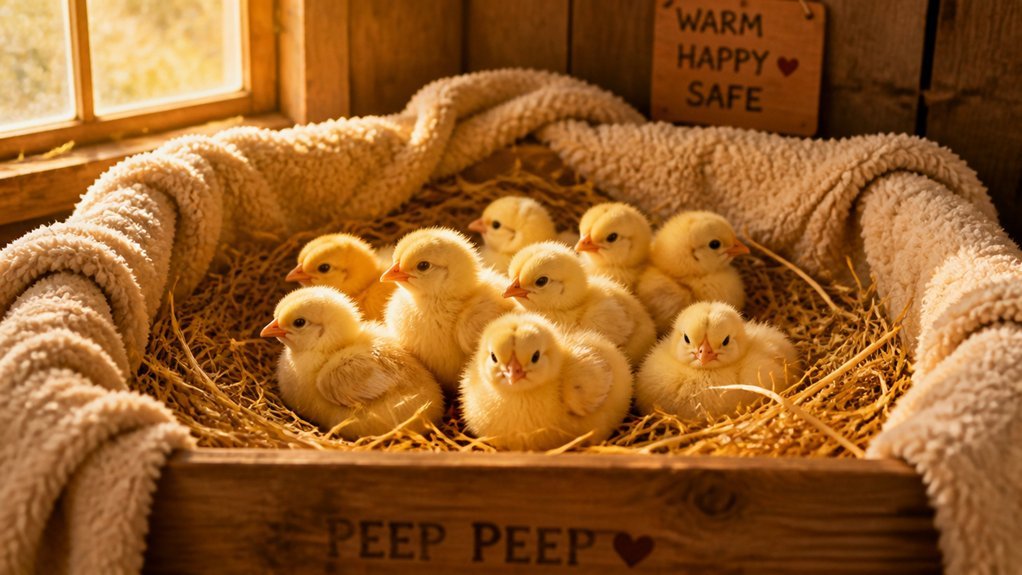
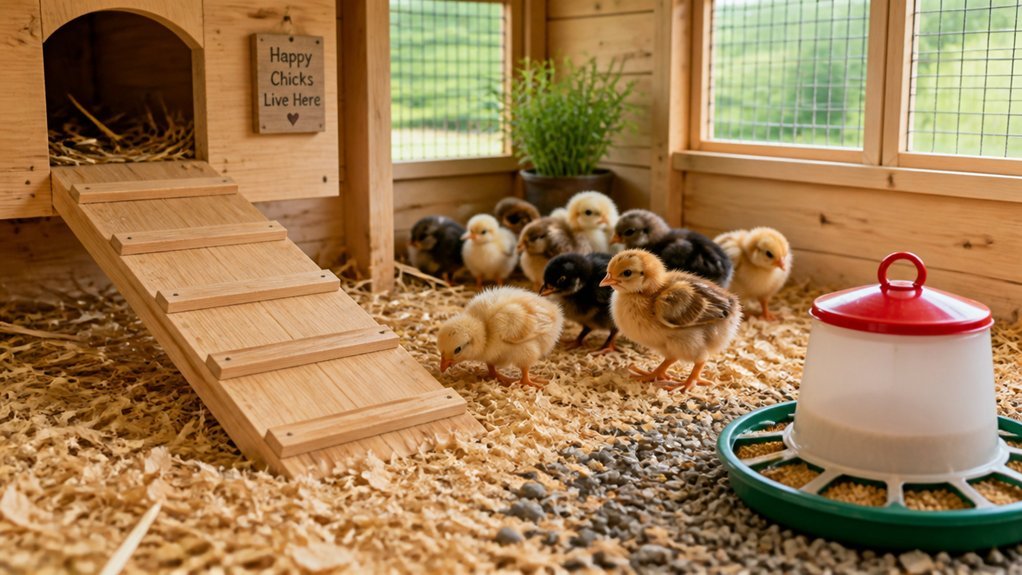
Once you’ve got water, feed, and calcium covered, the next step is matching the feed to your chickens’ age. You should give chicks a starter crumble with higher protein so they can grow strong feathers, bones, and muscles. Properly balanced amino acids in the starter feed are essential for optimal tissue development. When they reach pullet age, switch to a grower feed that supports steady development without pushing premature laying. Once hens begin laying, move them to a layer feed with the right calcium level for sturdy shells. Keep the bag label handy and check protein, calcium, and age guidance before you buy. 1. Tiny chicks peck at fine crumble. 2. Teen birds scratch through grower pellets. 3. Laying hens eat a richer layer ration.
Balance Treats Without Reducing Feed

Treats can be a healthy bonus, but they shouldn’t crowd out the feed your chickens need every day. You can keep rewards useful by limiting them to about 10% of what they eat.
Offer small portions after they’ve eaten their regular ration, so they don’t fill up too soon. Choose treats that add variety, like chopped greens, berries, or mealworms, and avoid turning snacks into meals.
If you hand out extras, measure them instead of guessing; it’s easy to overdo it. Watch their appetite, body condition, and egg production so you catch imbalances early.
Consistency helps most. When you treat chickens as a supplement, not the main event, you’ll support steady nutrition, better flock behavior, and fewer feeding mistakes. Proper organic feed formulation ensures they receive balanced nutrients for optimal health.
Add Calcium, Grit, and Fresh Water
Along with keeping treats modest, make sure your chickens always have the basics they need for healthy digestion and strong shells.
You can support that with three simple staples:
- Calcium: Offer crushed oyster shell or a similar supplement in a separate dish so hens can take what they need for sturdy eggshells.
- Grit: Provide insoluble grit, especially if your birds eat whole grains, greens, or forage. It helps their gizzards grind food efficiently.
- Fresh water: Keep clean water available at all times and refill it often. Chickens eat and digest better when they’re well hydrated, and water access matters even more in heat.
- Grit material: Choose the appropriate grain material such as crushed granite, quartzite, or crushed granite blends, to support their specific stage and needs.
When you keep these essentials in reach, you help your flock use feed well and stay on a steady routine every day.
Spot Signs of Poor Nutrition

If your chickens aren’t getting what they need, they’ll often show it in plain sight. You may notice dull feathers, slow growth, pale combs, weak eggshells, or fewer eggs.
Some birds’ll eat constantly but still lose weight, while others may pick at their feed and seem listless. Watch for curled toes, trembling, or a wobbly walk, which can signal vitamin or mineral shortages.
Dirty vents, poor feathering, and repeated pecking at litter can also point to an unbalanced diet. Check each bird’s body condition and compare it with the flock’s overall behavior.
When you spot these clues early, you can adjust feed, add needed supplements, and prevent bigger health problems before they spread through your flock. Ensuring proper vitamin coverage supports overall health and prevents deficiencies that can lead to these symptoms.
Frequently Asked Questions
How Do Seasonal Changes Affect a Chicken’s Nutritional Needs?
Seasonal changes shift your chickens’ energy needs: cold weather makes them burn more calories, while heat lowers appetite and increases water demands. You’ll adjust feed, protein, and supplements to keep them healthy year-round.
Can Chickens Safely Eat Kitchen Scraps Every Day?
Yes, you can feed chickens kitchen scraps daily, but you shouldn’t rely on them alone. You need to keep scraps clean, varied, and limited so your birds still get balanced feed and enough nutrients.
What Supplements Help Hens During Molting?
You can help hens molt with extra protein, oyster shell, and a poultry vitamin supplement; these support feather regrowth and shell quality. Keep fresh water available, and don’t overfeed treats while they recover.
How Does Feed Storage Impact Nutrient Quality?
Poor feed storage degrades nutrients; you’ll lose vitamins, fats can turn rancid, and moisture invites mold. Keep feed cool, dry, sealed, and fresh so your hens get the nutrition they need.
When Should a Chicken’s Diet Be Adjusted for Laying?
You should adjust her diet when she’s about 16 to 18 weeks old, just before laying starts. You’ll increase calcium and slightly raise protein, so she’s ready for strong eggshells and steady production.
In Summary
Feeding your flock well doesn’t have to be complicated. When you choose the right feed, keep treats in check, and provide calcium, grit, and fresh water, you help your chickens stay healthy and productive. Watch for signs of poor nutrition so you can fix problems early. With a little daily care, you’ll give your birds everything they need to thrive and lay strong, nutritious eggs.