You can make protein-rich chicken treats at home by using plain, cooked chicken breast and skipping garlic, onion, salt, and processed foods. Mix shredded chicken with pumpkin, oat flour, yogurt, carrot, or sweet potato for easy DIY recipes. Bake thin pieces at 275°F until firm for longer shelf life. Store cooled treats in airtight containers, then serve small portions based on your dog’s size so you don’t overfeed. You’ll find even more simple tips ahead.
Choose Safe Chicken Treat Ingredients
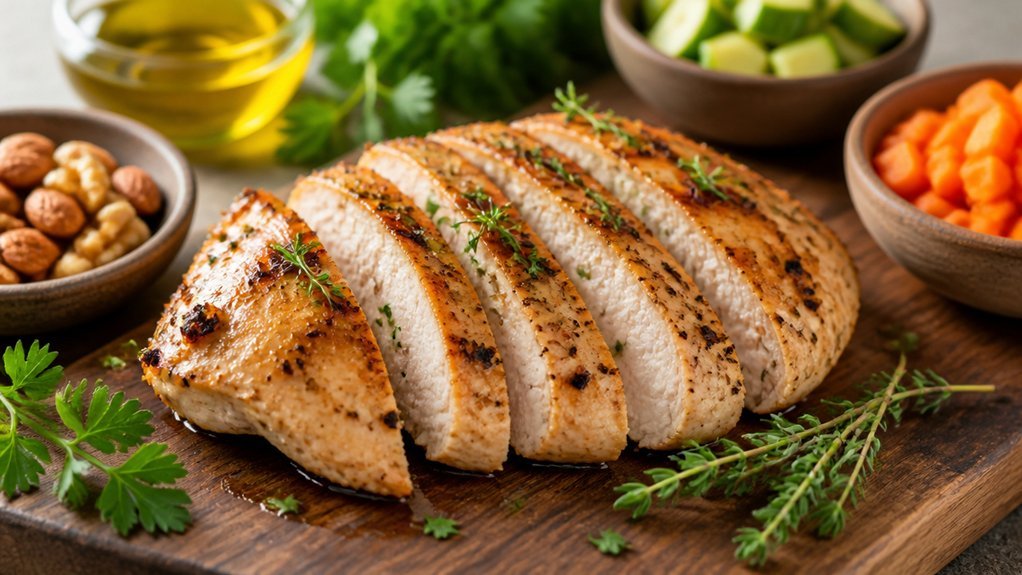
Start with plain, cooked chicken breast because it’s lean, high in protein, and easy to digest. You should keep your ingredient list short and simple so you can spot problems fast. Use skinless chicken without bones, seasoning, garlic, onion, or added salt.
Choose fresh, whole foods that won’t upset your dog’s stomach. If you add extras, pick dog-safe options like pumpkin, oats, or carrot in small amounts. Avoid anything fatty, spicy, sweetened, or processed, since those can harm your pet. Always check labels on store-bought ingredients for hidden additives.
Wash your hands, utensils, and cutting boards before you prepare anything. When you focus on safe, clean ingredients, you lower risk and make treats healthier for your dog.
Make 5 Easy Chicken Treat Recipes
Mix shredded cooked chicken with mashed pumpkin, spoon little dollops onto a lined tray, and freeze them for a cool bite.
Blend chicken with oat flour and egg, then roll into tiny balls and flatten with a fork.
Stir chicken, plain yogurt, and chopped parsley for a creamy mix you can portion into silicone molds.
Combine chicken and grated carrot, form small nuggets, and steam them lightly for a soft chew.
For a final option, pulse chicken with cooked sweet potato, shape into strips, and dry them briefly in a warm oven.
Additionally, incorporating protein-rich treats like dried black soldier fly larvae can boost nutritional value and support eggshell strength.
Keep portions small, watch your dog’s reaction, and rotate recipes so treat time stays exciting.
Bake Chicken Treats for Better Shelf Life
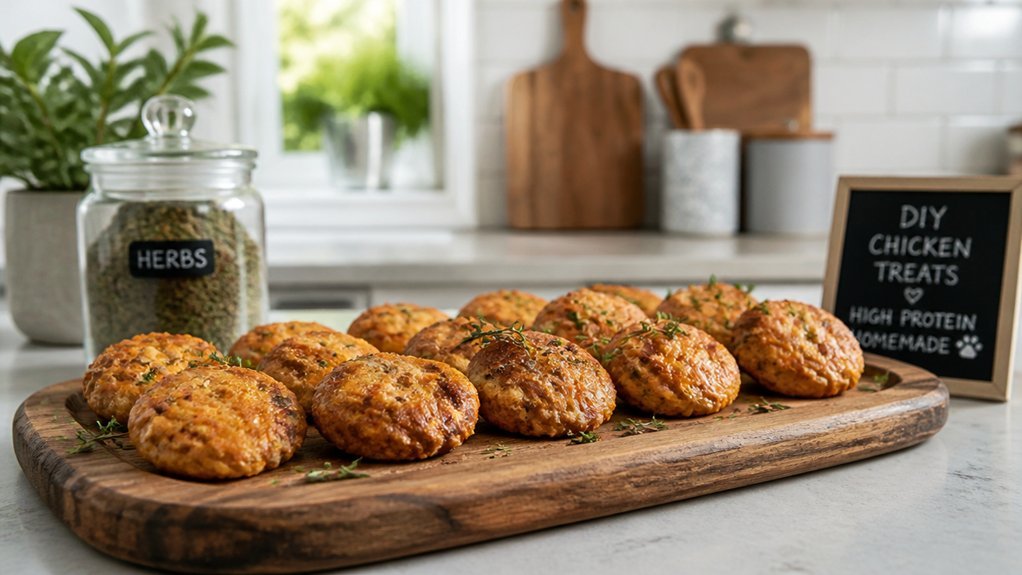
If you want your chicken treats to last longer, baking is the easiest way to dry them out safely. Preheat your oven low, around 275°F, so the meat cooks through without scorching.
Slice the chicken into thin, even pieces; thinner cuts dry faster and reduce the chance of spoilage. Line a baking sheet with parchment, arrange the pieces in a single layer, and leave space between them for airflow.
Bake until the treats feel firm and no moisture remains in the center. Flip them halfway so both sides dry evenly. Let the treats cool completely before handling them.
When you remove extra moisture, you make the treats less inviting to bacteria and help them stay fresh longer. Baking them a little more if they still feel soft reduces spoilage risk.
Let the treats cool thoroughly to prevent condensation and mold growth during storage.
Store Homemade Chicken Treats Safely
Once your chicken treats are fully cooled, store them in an airtight container to keep out moisture and odors. Keep the container in a cool, dark pantry if you’ll use the treats within a few days, or refrigerate them for longer freshness.
If you make a large batch, portion them into smaller bags so you only open what you need. Always check for any off smell, sticky texture, or mold before serving, and discard anything that looks questionable. Label each container with the prep date so you can track freshness easily.
- Use clean, dry hands when packing treats
- Seal containers tightly after each use
- Refrigerate treats for extended storage
- Freeze extra batches for later use
Serve Chicken Treats Without Overfeeding

With your treats stored and ready, focus on portion size so they stay a reward, not a meal. You can break each piece into tiny bites and count them into your daily calorie budget. Use this quick guide:
| Dog size | Treat amount | Frequency |
|---|---|---|
| Toy | 1 small piece | 1-2 times daily |
| Small | 2 small pieces | 1-2 times daily |
| Medium | 3 pieces | Once or twice |
| Large | 4 pieces | Once daily |
| Active | 5 pieces | As training rewards |
Offer treats after good behavior, not whenever your dog begs. If you train often, reduce kibble slightly to keep balance. Watch your dog’s weight, stool, and appetite, and cut back if you notice extra pounds. Treats should support health, not replace meals, so keep portions smart and consistent every day. Paying attention to nutritional content ensures treats enhance your pet’s well-being without leading to overfeeding.
Frequently Asked Questions
Can I Use Chicken Liver Instead of Breast?
Yes, you can use chicken liver instead, but you’ll want less of it because it’s richer and stronger-tasting. You should cook it thoroughly, then mix it with breast meat to keep treats balanced and safe.
Are Dehydrators Better Than Ovens for Treats?
Yes, you’ll usually get better results with a dehydrator because it dries treats evenly, gently, and efficiently. You can still use an oven, but you’ll need to watch closely, rotate trays, and prevent overbrowning.
How Do I Make Treats for Picky Dogs?
You can make treats for picky dogs by using strong-smelling ingredients, keeping them small, and baking or dehydrating them lightly. Try chicken, peanut butter, or pumpkin, then test one flavor at a time and reward promptly.
Can I Freeze Homemade Chicken Treats?
Yes, you can freeze homemade chicken treats; you’ll preserve freshness and extend shelf life. Portion them first, then freeze in airtight bags. Thaw only what you need, and don’t refreeze once they’ve fully thawed.
What Signs Show My Dog Likes the Treats?
You’ll know your dog likes the treats if they perk up, wag, sniff enthusiastically, gobble them fast, and keep coming back for more. They may also sit, stare, or gently nudge you for another.
In Summary
With these easy DIY chicken treat tips, you can make protein-rich snacks your pet will love and trust. By choosing safe ingredients, baking them well, and storing them properly, you help keep every treat fresh and healthy. Just remember to serve them in small amounts so you don’t overfeed. A little prep goes a long way, and your homemade chicken treats can be a simple, rewarding part of your dog’s routine.