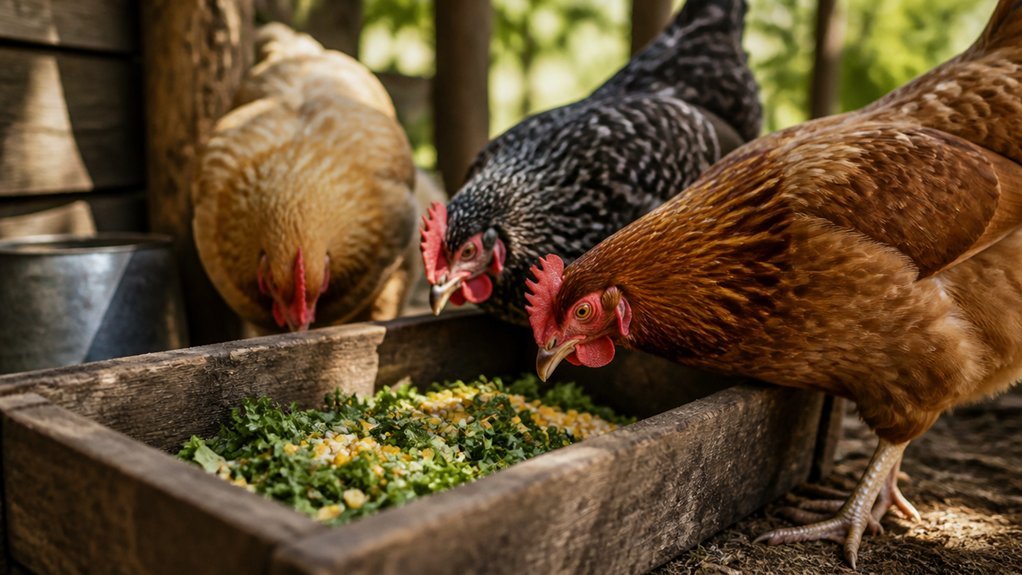
You can keep mixed-age backyard chickens healthy by feeding each age group the right ration and preventing crowding. Give chicks starter crumble, pullets grower feed, and laying hens layer feed with calcium, while keeping chicks’ feed separate so adults don’t overeat it. Offer fresh water and grit every day, feed at set times, and use multiple stations or feeders at different heights. Watch body condition, feathers, and egg output, and there’s more to fine-tune below.
Set Up a Mixed-Age Feeding Plan
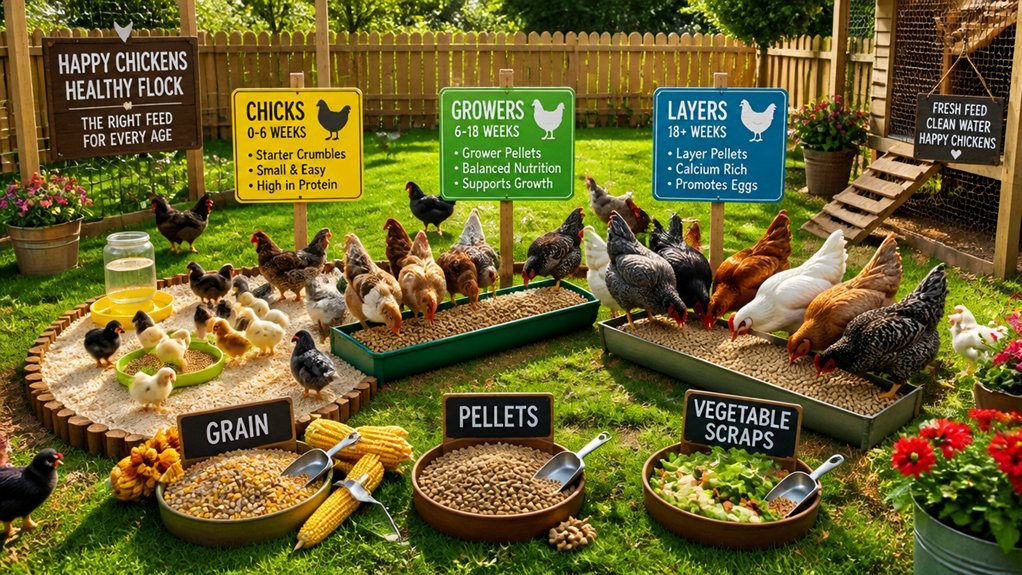
When you keep chicks, growers, and laying hens together, you need a feeding plan that fits each bird’s stage without creating waste or imbalance.
A mixed-age flock needs a feeding plan that matches each bird’s stage without waste or imbalance.
Set up separate feeding zones so you can offer the right ration without crowding. Place feeders at different heights and in protected spots, and use containers that limit tossing and scratching. You can feed the flock in shifts if needed, giving each group time to eat before you move the feeders.
Keep clean water close to every station so birds don’t rush or compete. Watch intake daily and remove leftovers before they spoil.
A mixed-age system works best when you track which birds eat where, adjust feeder space, and keep routines consistent. That way, you reduce waste, support steady flock behavior, and keep feeding simple. Using adjustable feeder height helps prevent waste caused by awkward feeding postures and accommodates different bird sizes.
Match Feed to Each Chicken’s Age
Chicks, growers, and laying hens each need feed that matches their growth stage, so you should never use one ration for the whole flock if you can avoid it.
You can keep everyone thriving by tracking age and serving the right blend at the right time.
- Offer high-protein starter feed to young chicks for rapid feather and bone development.
- Shift growing birds to a balanced grower ration as their bodies lengthen and muscle builds.
- Feed mature hens a layer ration when they begin laying, because they need more calcium for shells.
- Watch each bird closely and adjust portions if one bird seems too thin or too heavy.
- Incorporating feeds with appropriate protein and amino acids, such as lysine and methionine, supports optimal growth and immune health for your flock.
This age-based approach helps you support health, reduce waste, and keep your flock productive through every stage.
Separate Chick Starter From Layer Feed

Keep chick starter and layer feed separate so young birds don’t get extra calcium before they need it. You should store each feed in its own sealed container and label it clearly, so you don’t grab the wrong bag during chores. Give chicks starter crumble with the right protein for growth, and offer hens layer feed only when they’re ready to produce eggs. If you keep both feeds in the same area, use different scoops and clean them after each use to prevent mix-ups. Check bowls before filling them, because even small amounts of layer feed can change what chicks eat over time. Properly managing feed helps prevent digestive issues and ensures your flock develops healthily. When you manage feed this way, you support healthy development, steady growth, and a smoother routine for your flock every day.
Feed Chicks Without Overfeeding Adults
To feed chicks without overfeeding adults, offer young birds their own measured portion at chick-height so they can eat comfortably without giving the whole flock constant access to extra feed.
You’ll cut waste, reduce bullying, and keep hens from raiding high-protein crumble meant for chicks. Try this simple routine:
- Place a small feeder in a protected corner.
- Give only enough feed for one meal window.
- Remove leftovers before adults can gorge.
- Watch chick appetite and adjust portions daily.
You can still let adults eat their normal ration nearby, but keep the chick feeder separate and controlled. That way, you meet the chicks’ needs without turning every feeding into a free-for-all.
Use consistent timing, and you’ll quickly learn how much each group actually eats.
Furthermore, employing specialized treadle feeders designed to deter rodents can help ensure only intended birds access the feed, reducing waste and pests.
Keep Pullets on a Safe Transition Plan

You should switch pullets to grower feed gradually by mixing it with their current ration over several days. Watch their growth, weight, and appetite closely so you can spot any problems early. Incorporating balanced amino acids into their diet can support proper growth and feather development during this transition. If they stay steady and healthy, you can keep the progression moving at a safe pace.
Gradual Feed Mix
As your pullets move toward a layer ration, mix the new feed with their current starter or grower feed gradually so their digestive system can adjust without stress.
Start with a small portion of layer feed, then increase it in steps over about a week. You’ll help them accept the change while keeping mealtime calm and consistent.
- Blend 25% layer feed with 75% starter feed.
- After a few days, move to a 50/50 mix.
- Shift to 75% layer feed and 25% starter feed.
- Finish with full layer feed once they’re settled.
Keep the mix fresh, and don’t rush the progression. A steady change supports appetite and routine, so your pullets stay comfortable as they adapt to their new ration.
Incorporating gradual transition helps minimize digestive upset and reinforces healthy feeding habits during this important growth phase.
Monitor Growth Closely
Watch your pullets closely during the adjustment so you can spot growth spurts, weight changes, and any sign that the new ration isn’t sitting well. Weigh each bird weekly, check feathering, and watch comb development and activity. If one bird lags, keep her on starter or a higher-protein blend a bit longer. Use this quick guide:
| Checkpoint | What to do |
|---|---|
| Weekly weight | Record gains |
| Droppings | Watch for changes |
| Appetite | Note refusals |
| Behavior | Track energy |
| Body condition | Feel keel bone |
Adjust feed slowly, and don’t rush the flock to layer feed before they’re ready. Healthy growth tells you the adjustment is on track. Proper probiotic support can help maintain gut health during these dietary transitions.
Balance Protein for Growing Birds
As your birds grow, you need to match protein to their age so they get steady support without getting too much.
Younger birds usually need a richer feed, while older growers do better with a balanced mix that fits their stage. You can choose the proper feed blend by checking the label and adjusting as they mature. Additionally, incorporating varied grains can support egg production, feather growth, and healthy digestion throughout their development.
Protein Needs by Age
Chicks need more protein than adult birds because their bodies are building feathers, muscles, and bones fast. Proper protein intake supports these vital developmental processes and helps prevent growth issues. You’ll want to match protein to age so each bird gets what it needs without overfeeding older hens. Younger birds thrive on higher protein, while mature birds usually need less to stay healthy and productive.
- 0–6 weeks: Prioritize strong growth and feathering.
- 6–18 weeks: Support steady development without pushing rapid weight gain.
- Laying hens: Maintain condition and egg production with moderate protein.
- Roosters and older birds: Keep diets balanced so they don’t gain excess weight.
Watch your flock’s body condition, feather quality, and energy levels. If birds look thin or grow slowly, they may need more protein for their age.
Protein requirements are crucial to consider in tailoring your feeding schedule effectively.
Choose Proper Feed Mix
Choosing the right feed mix helps you give growing birds the protein they need without overdoing it. You can use a starter or grower feed for chicks and pullets, then shift to a lower-protein layer ration once they’re mature. Keep birds on separate feeders if possible so young chickens don’t steal adult feed, and adults don’t get too much extra protein. For added variety, dried mealworms from trusted brands can be an excellent supplement crisp texture to encourage natural foraging behavior and enhance overall nutrition.
Add Calcium Only for Laying Hens

Once your hens start laying, you can add a calcium supplement to support strong eggshells and healthy production.
Once hens start laying, a calcium supplement helps support strong eggshells and healthy egg production.
Offer it only to layers, not to chicks, pullets, or roosters, because they don’t need the extra mineral and may get unbalanced nutrition.
- Keep oyster shell in a separate dish.
- Let laying hens choose how much they need.
- Refill it as soon as you notice it’s low.
- Watch shell quality and adjust if eggs stay thin.
You can also check that your layer feed already contains enough calcium for daily needs.
If your flock includes mixed ages, separate feeders help you match each bird’s stage without overdoing any nutrient. That simple step keeps your hens productive and your younger birds growing well.
Use Scratch and Treats Sparingly
You can give scratch feed, but keep it to a small amount and offer it only a few times a week.
Use treats as occasional rewards, not a regular meal. This helps your chickens stay interested in their feed while still getting the nutrition they need.
Limiting Scratch Frequency
Although scratch and treats can be a fun part of your flock’s routine, it’s best to offer them sparingly so they don’t crowd out a balanced feed. You’ll keep your birds healthier when you set clear limits on how often you scatter extras.
- Offer scratch only a few times a week.
- Give it after hens have eaten their regular ration.
- Sprinkle small amounts so they peck, then move on.
- Watch body condition and egg output to guide adjustments.
When you limit frequency, you help chicks, growers, and adults all get the nutrients they need from their main feed. Keep the schedule predictable, and don’t let enthusiastic birds beg you into overdoing it.
Consistency makes it easier to maintain healthy weight, steady laying, and good flock manners.
Treats As Occasional Rewards
Treats work best as small rewards, not a major part of the diet. You can offer scratch, mealworms, or kitchen scraps to train your flock, encourage calm behavior, or make handling easier. Keep the portions tiny so your hens still eat their complete feed first.
If you scatter treats, do it after they’ve eaten their main ration, not instead of it. Young chicks need even less, since excess treats can crowd out the protein and nutrients they need for steady growth.
For mixed-age birds, watch the older hens too; they’ll often hog the best morsels. Offer treats a few times a week at most, and always adjust based on body condition, egg production, and activity level.
Offer Feed in the Right Daily Rhythm

A steady daily rhythm helps your chickens stay calm, eat well, and avoid waste. You’ll get the best results when you feed at the same times each day, because birds learn routines fast and settle in quickly.
Offer most feed in the morning so they can fuel up for foraging and laying, then top up later if needed.
- Set a consistent morning feeding time.
- Refill only what they’ll eat before it gets dirty.
- Check evening levels and adjust for weather or flock size.
- Keep clean water available beside the feed.
When you stick to a simple rhythm, chicks, pullets, and hens all know what to expect. That predictability supports steady eating, better digestion, and less wasted crumble or pellets.
Prevent Feed Bullying in the Coop
Even with a steady feeding rhythm, some chickens may rush the feeder and push smaller birds aside. You can stop that by spreading feed across several stations, so timid hens get room to eat. Place one low dish for pullets and one higher feeder for stronger birds. Watch for pecking, blocking, or chasing, and interrupt it calmly.
| Sign | What you do |
|---|---|
| Loud squawking | Add another feeding spot |
| Guarded feeder | Separate dominant birds briefly |
| Uneven crops | Check access for smaller hens |
| Dirt scratching | Raise or stabilize feeders |
You should also keep enough space around each dish. When birds can eat without pressure, they settle faster, waste less, and maintain steadier condition.
Try Free-Choice Feeding If It Fits Your Flock
If your flock eats calmly and you keep their feed dry and secure, free-choice feeding can save you time and keep birds from going hungry.
You’ll often see better access for smaller or timid hens when feed stays available all day. It works best when your chickens self-regulate well and you can monitor their condition closely.
Free-Choice Benefits
When your flock has steady access to balanced feed, free-choice feeding can make life easier and support healthier birds by letting them eat what they need when they need it. You’ll also save time because you’re not timing every meal or topping up bowls all day.
- You reduce competition at feeding time.
- You let birds regulate intake across ages.
- You support steady energy for laying, growing, and maintenance.
- You make daily care simpler and more consistent.
With feed always available, hens can nibble after ranging, roosters can eat without crowding, and younger birds can return often for small meals.
Keep fresh water nearby, and check that every bird reaches the feeder comfortably.
When It Works
Free-choice feeding works best when your flock has steady access to a balanced ration, enough feeder space for every bird, and a calm setup that keeps stronger hens from bullying the rest.
You can use it when your birds eat at different rates, your schedule changes, or you want to reduce daily labor without risking missed meals. It also suits small flocks that self-regulate well and don’t waste feed by scratching it out.
Watch your birds closely at first. If you see one hen overeat, another stay thin, or feeders empty too soon, adjust the plan.
You should pair free-choice feeding with clean water, secure storage, and routine body checks so you catch problems early and keep the flock in good condition.
Adjust Feed Amounts by Season
As the seasons change, you should adjust feed amounts to match your chickens’ energy needs. In cold weather, you’ll usually offer a little more feed because birds burn extra calories staying warm.
In hot weather, they often eat less, so keep feed available but don’t overfill containers.
- Winter: Increase portions slightly and keep feed dry.
- Spring: Return to normal amounts as foraging improves.
- Summer: Offer smaller refills and fresh water alongside feed.
- Fall: Raise feed a bit again as temperatures drop.
You should watch how fast the flock empties the feeder and change the amount gradually. Mixed-age birds may need the same feed schedule, but younger layers and older hens can still eat at their own pace. This keeps feeding simple and practical year-round.
Spot Signs of an Unbalanced Diet
A balanced feeding plan only works if you notice problems early, so watch your flock for signs that their diet isn’t meeting their needs. You may see hens losing weight, growing slowly, or laying fewer eggs than usual. Feathers can look dull, brittle, or patchy, and birds may peck each other more often.
If chicks seem weak, sleepy, or delayed in development, their ration may lack enough protein or energy. On the other hand, too many treats or scratch grains can leave birds hungry for nutrients even when they’re eating plenty.
Check droppings, comb color, and overall activity daily. When you spot changes, review the feed label, compare it with each bird’s age, and adjust portions before small issues become bigger health problems.
Make Water and Grit Always Available
Once you’ve ruled out a feed imbalance, make sure your chickens can always reach fresh water and suitable grit. Water helps them digest feed, regulate body temperature, and stay active. Check containers twice daily and refill them before they run low. In hot weather, refresh them more often.
Always provide fresh water so chickens can digest feed, regulate temperature, and stay active.
- Place water where birds can reach it easily.
- Keep grit in a dry, sheltered container.
- Use the right grit size for their age.
- Replace dirty water and spilled grit promptly.
Chicks need fine grit, while older birds need larger pieces. Offer both water and grit every day, even if they free-range.
When you keep these basics available, you support steady eating, better digestion, and healthier growth without adding unnecessary stress.
Set Up Feed Zones to Reduce Competition
If you’ve got several chickens eating from one spot, spread the feed out into more than one zone so the smaller or lower-ranking birds can eat without being chased off. Place feeders in different corners of the run, or use multiple hanging and ground-level stations to match your flock’s size and age mix.
You’ll cut down pecking order drama and help every bird get its share. Keep each zone easy to reach, dry, and visible so timid hens don’t have to wander far. If you notice one bird guarding a feeder, add another station or move one farther away.
Clean up spilled feed often, since clutter invites competition and pests. By giving your flock several feeding spots, you’ll reduce stress, support steady growth, and make mealtime calmer for everyone.
Frequently Asked Questions
How Often Should I Clean and Refill Chicken Feeders?
You should clean and refill chicken feeders daily, checking them morning and evening. Refill whenever feed runs low, and scrub out mold, dust, or droppings regularly so your flock stays healthy and food stays fresh.
Can Fermented Feed Replace Dry Feed for Backyard Chickens?
Yes, you can replace dry feed with fermented feed if you keep it nutritionally complete and fresh. You’ll need clean water, monitor intake, and avoid spoilage, because chickens still need consistent balance daily.
Should Mixed-Age Chickens Get Different Feeder Heights?
Yes, you should use different feeder heights for mixed-age chickens. You’ll help younger birds reach feed, reduce bullying, and keep larger hens from blocking access. Adjust heights so everyone eats comfortably and safely.
What Feeder Styles Reduce Waste Best in Rainy Weather?
You’ll waste less with treadle feeders, covered troughs, and hanging feeder systems; they keep feed dry and limit scratching. Use deep-lipped designs, and you’ll reduce spills even more in wet, windy conditions.
How Do I Store Chicken Feed to Prevent Spoilage?
You should store feed in airtight containers, off the floor, in a cool, dry spot. Keep it sealed, rotate stock, and check for mold, pests, or off smells so you don’t feed spoiled grain.
In Summary
You can keep your mixed-age flock thriving when you match feed to each bird’s stage, separate starter from layer feed, and make sure chicks, pullets, and adults all get what they need. Keep water and grit available, adjust portions with the seasons, and watch for signs that something’s off. With a few simple feed zones and a steady routine, you’ll reduce competition and support healthy growth across every age in your backyard flock.