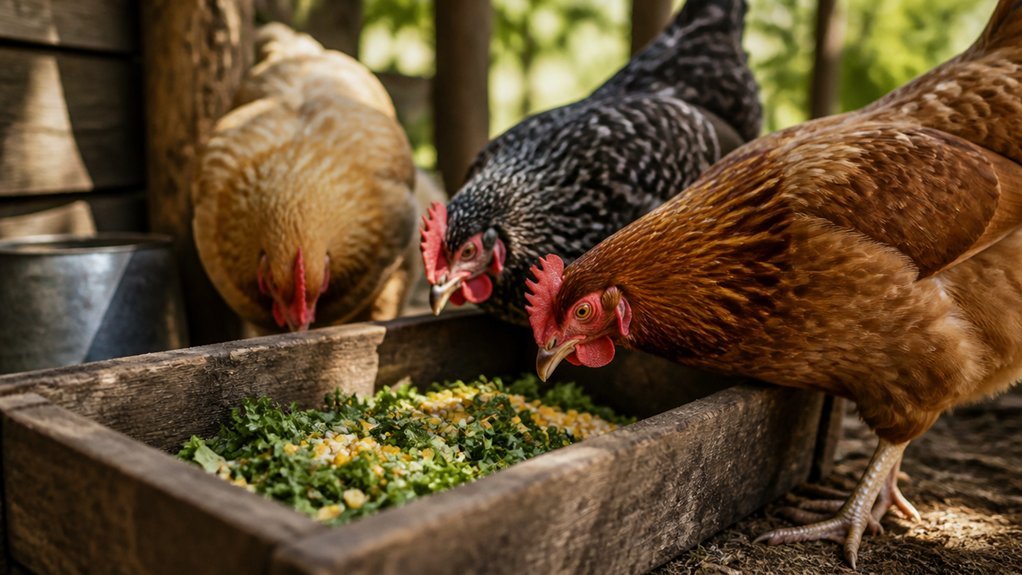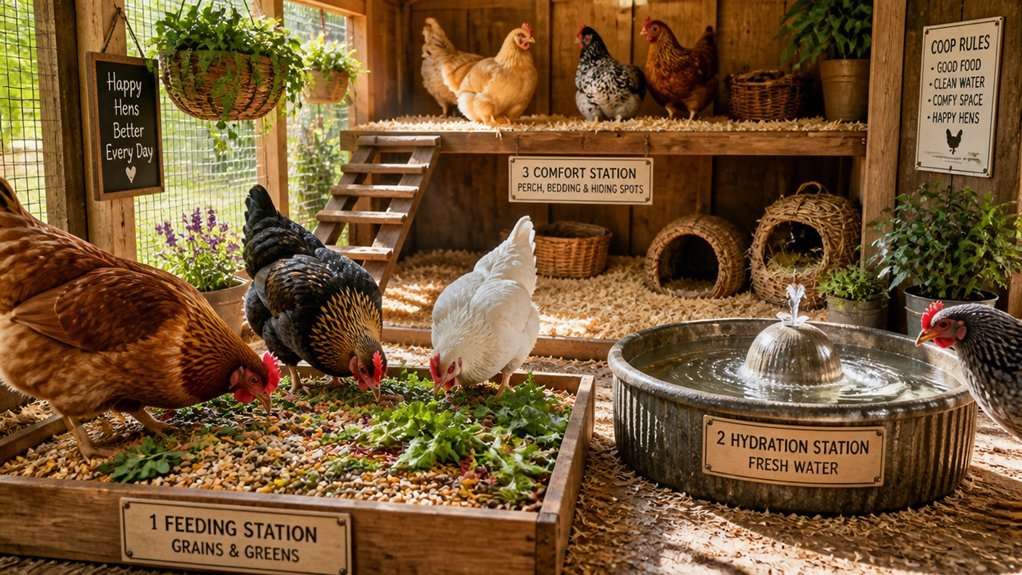
You can cut chicken aggression fast by feeding your flock at the same time every day, so they learn a steady routine and feel less stressed. Add more than one feeder and place them apart, with each one equally filled, so birds don’t crowd or guard the food. Give every chicken enough space to eat comfortably, especially timid birds. Keep the setup calm and consistent, and you’ll soon spot a few more easy ways to improve flock peace.
Feed Chickens at the Same Time Every Day
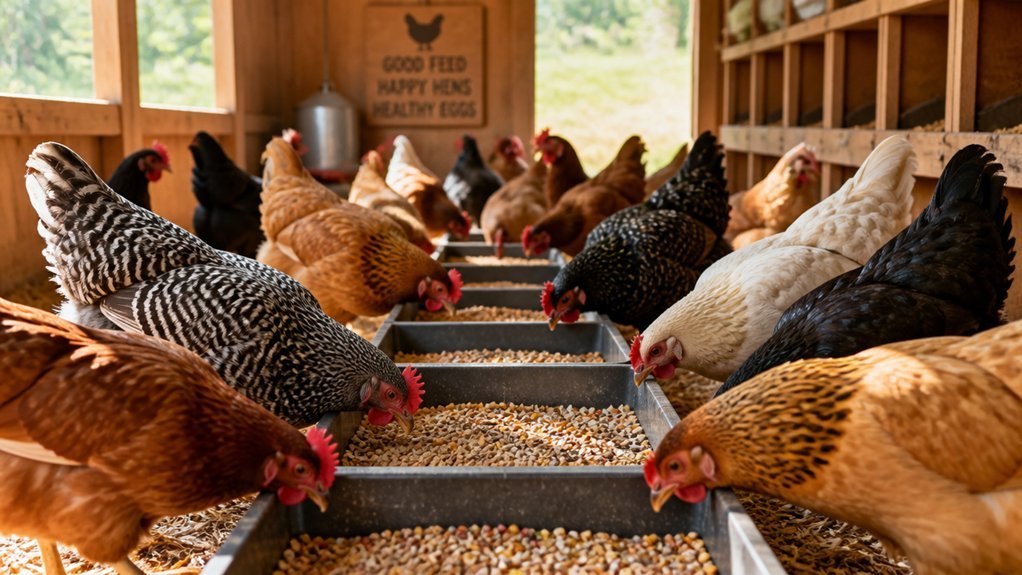
Feeding your chickens at the same time every day helps create a predictable routine that lowers stress and reduces squabbles at the feeder. When you keep meals on a set schedule, your flock learns when food arrives and doesn’t panic or rush as much. This steadiness can make even bossy birds calmer because they stop competing over uncertain access.
Try to feed them morning and evening at the same times daily, and stay consistent on weekends too. If you change the schedule often, you can trigger excitement and pecking order disputes.
A reliable routine also helps you notice changes in appetite sooner, which can signal illness or discomfort. By making feeding times consistent, you give your chickens structure, security, and fewer reasons to fight, especially when balanced nutrition and proper feed form support their overall health.
Set Up Multiple Feed Stations
Another way to cut down on feeder fights is to give your flock more than one place to eat. Spread feed stations around the run or coop so hens can’t guard a single bowl. Place them where birds can approach from different sides, and refill each one evenly. You’ll see calmer behavior when lower-ranking chickens can slip in without challenge. Using individual access points can further minimize competition and pecking disputes.
| Feed Station Tip | Why It Helps |
|---|---|
| Use several feeders | Reduces competition |
| Separate them apart | Breaks up crowding |
| Keep them filled equally | Prevents guarding |
| Offer easy access | Lets timid birds eat |
| Check stations often | Spots problems early |
Rotate locations if one spot turns into a hotspot. Clean each station regularly, and remove spilled feed before it attracts extra squabbling.
Give Chickens Enough Space at Feeding Time
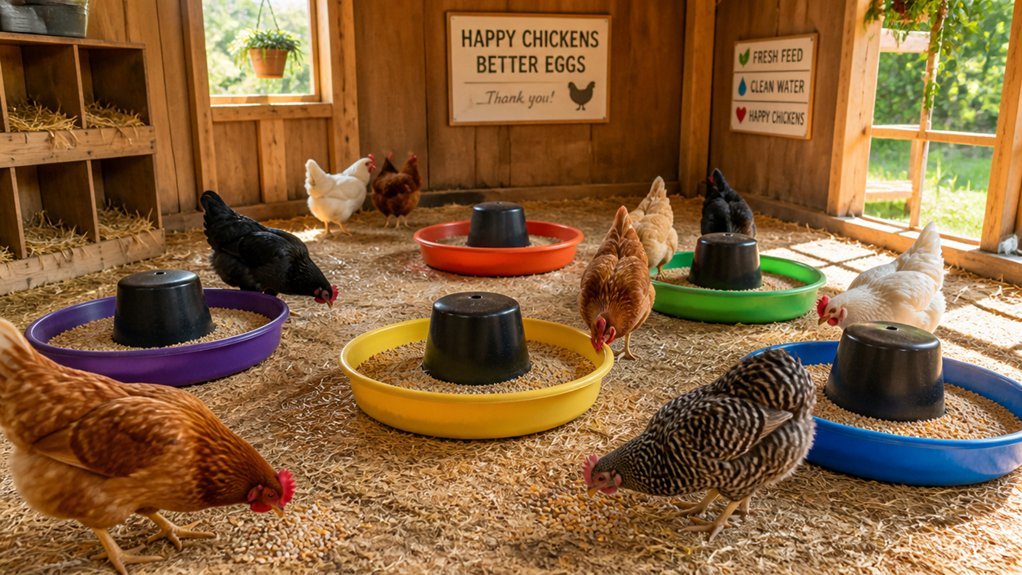
Crowded feeding areas can quickly turn peaceful hens into pushy, aggressive birds, so make sure each chicken has room to eat without feeling threatened. Space feeders far enough apart that timid birds can approach without being blocked or pecked away.
If you’re using long troughs, leave enough room for every bird to stand comfortably beside it. Watch the flock during meals and adjust spacing if you notice jostling, squabbles, or one bird dominating the feed. You can also spread feed over several spots to reduce competition.
When chickens can eat without crowding, they stay calmer, less stressed, and less likely to challenge each other. Proper spacing also supports waste reduction and encourages natural feeding behaviors, making mealtime more peaceful for the entire flock. Good spacing helps protect smaller birds, lowers tension, and makes feeding time smoother for the whole flock.
Frequently Asked Questions
Can Diet Changes Affect Chicken Aggression Levels?
Yes, you can influence aggression with diet changes. If you balance protein, minerals, and feeding space, you’ll often see calmer birds. Sudden changes or nutrient gaps can make chickens peck more and compete harder.
What Foods Help Calm Aggressive Chickens?
You can offer calm-inducing treats like leafy greens, oats, cooked rice, and mealworms in moderation. Make sure they’ve got constant access to balanced layer feed, fresh water, and enough space, too.
Should Treats Be Limited to Reduce Pecking?
Yes, you should limit treats, because too many can increase competition and pecking. You’ll keep hens calmer by offering small amounts, spacing feeding spots, and making sure everyone gets enough balanced feed.
Do Feed Types Influence Flock Hierarchy Behavior?
Yes, you’ll see feed types influence flock hierarchy behavior. You can reduce competition by offering balanced, consistent rations and spreading feed out. Messy changes or favorite treats can trigger pecking, dominance, and squabbles.
How Often Should Water Be Available During Feeding?
You should keep water available all the time during feeding. Chickens need easy access to drink while eating, and constant water helps reduce stress, prevents crowding, and supports healthier digestion and calmer flock behavior.
In Summary
By feeding your chickens at the same time every day, you help create a calm routine they can count on. When you set up multiple feed stations, you cut down on squabbling and make sure everyone gets a fair share. And by giving your flock enough space at feeding time, you reduce stress and pushy behavior. Stick with these simple habits, and you’ll make mealtime smoother, safer, and much more peaceful for your birds.