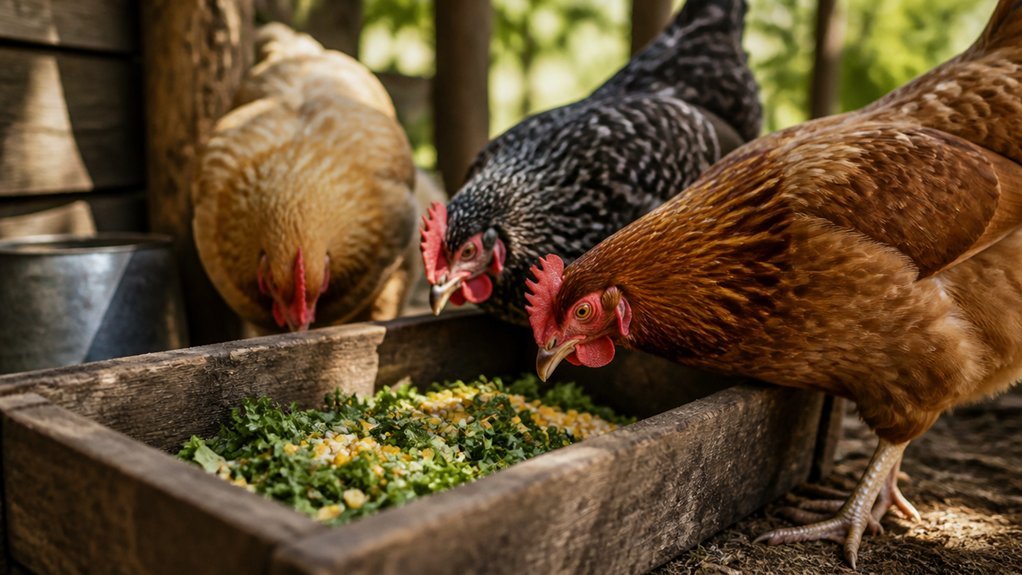
For outdoor broiler chickens, you can follow five feeding schedules: give a complete starter crumble with 20–22% protein in week 1, keep starter feed through weeks 2–4, switch to a grower ration around week 5, feed most of it early morning and evening, and increase feed in hot weather with fresh water always available. Watch for empty crops, slow growth, or crowding at feeders, and you’ll see how to keep your flock thriving.
What Should Outdoor Broilers Eat Each Day?
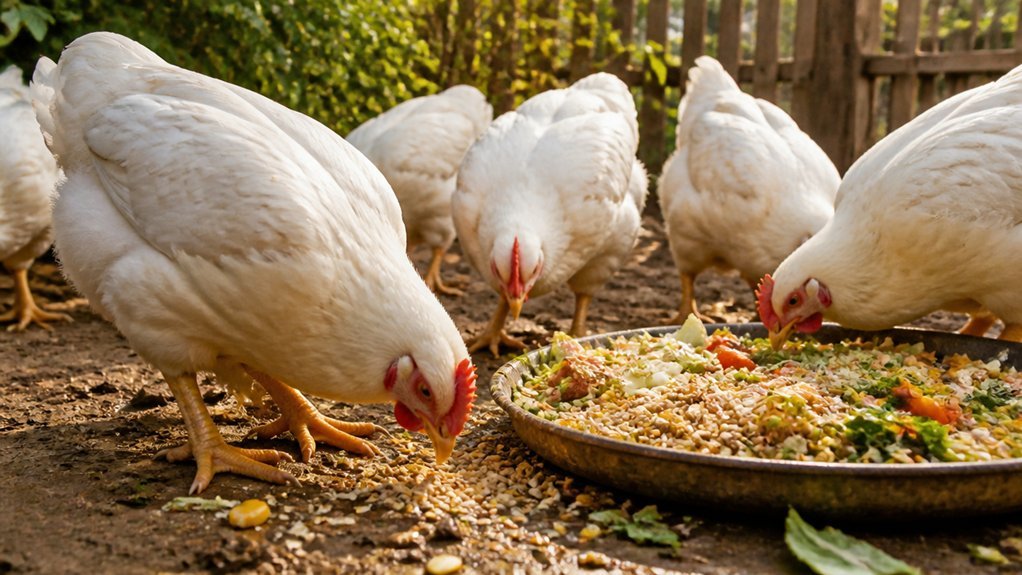
Outdoor broilers should eat a balanced feed every day that matches their age and growth stage, with fresh water always available.
You should offer a complete broiler ration, not scratch grains or kitchen scraps, because they can dilute nutrition and slow growth. Choose feed with enough protein, energy, vitamins, and minerals to support muscle development and strong bones.
You can also provide small amounts of safe greens or garden forage, but they shouldn’t replace the main ration. Keep feeders clean, dry, and easy to reach so birds can eat without stress.
Check feed daily for mold, spoilage, or pests, and discard anything contaminated. If your birds range outdoors, make sure they still get enough balanced feed to meet their needs.
Broiler Feeding Schedule by Age
During the first week, offer starter crumble with about 20 to 22 percent protein and keep it easy to reach. From week two through four, continue starter feed, but monitor body condition and crop fill so you know they’re eating enough. Incorporate balanced amino acids like lysine and methionine to support proper tissue development during this period. Around week five, switch to a grower ration with slightly lower protein and higher energy to support steady muscle gain.
When Should You Feed Broilers?

Broilers should eat on a consistent schedule every day, with feed available as soon as they wake and checked again often enough that the troughs never sit empty for long.
You’ll get the best results when you offer feed at the same times each morning and evening, because broilers thrive on routine. If you use free-choice feeding, still inspect the feeders several times a day so timid birds don’t miss out. In outdoor systems, you should refill feed after birds return from ranging, since they often eat heavily then.
Keep your timing steady on weekends and busy days, too. When you feed consistently, you help birds grow evenly, reduce crowding at the trough, and make it easier to notice changes in appetite before they become problems. Using automatic feeders can help maintain a steady schedule and reduce manual effort.
How to Adjust Broiler Feed in Hot Weather?
Hot weather changes how much and how often your broilers want to eat, so you may need to adjust both feed timing and feed type. Offer most of their feed early in the morning and again after sunset, when temperatures drop and birds feel more comfortable eating.
You can also switch to a higher-density ration so they get enough nutrients from smaller meals. Keep feed fresh, dry, and shaded, because heat can spoil it quickly and reduce intake.
Provide cool, clean water at all times; broilers eat less when they’re dehydrated. If you use wet mash, make only what they’ll finish fast.
Avoid crowding feeders, and give birds plenty of airflow so they don’t waste energy cooling themselves instead of growing. Ensuring proper electrolyte balance can also help maintain hydration and energy levels during extreme heat.
Signs Your Broilers Need More Feed
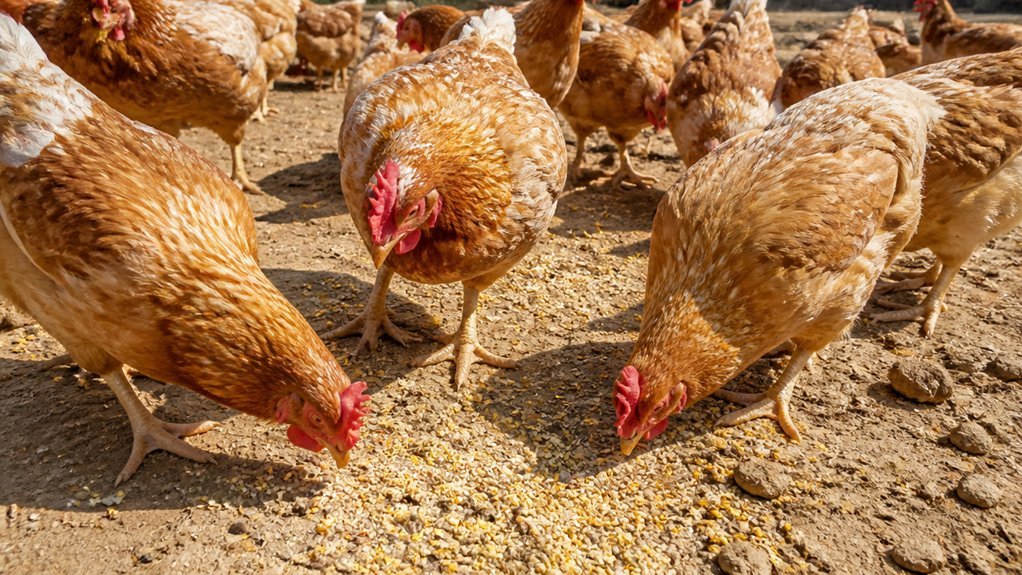
So, how can you tell when your broilers need more feed? Watch for restless birds that crowd the feeder, peck at litter, or finish meals too fast.
If they’re gaining weight slowly, looking smaller than flockmates, or showing uneven growth, they likely need extra feed. You may also notice frequent loud calling, weak activity, and birds ranging far from the feeder because they’re searching for more food. Check their crops too; empty crops late in the day can signal short rations.
Droopy posture, poor feathering, and reduced muscle fill are other warning signs. When you see these cues, increase feed access, inspect feeder space, and review your schedule so every bird gets enough to eat. Ensuring a balanced diet that includes proper protein, calcium, and vitamins supports optimal growth and shell quality.
Frequently Asked Questions
How Much Feeder Space Do Broilers Need Outdoors?
You’ll want about 2 to 3 inches of feeder space per broiler outdoors, and you should increase it as birds grow. Give enough room so they can eat together without crowding or wasting feed.
Can Broilers Eat Kitchen Scraps Safely?
Yes, you can feed broilers kitchen scraps, but keep them small, fresh, and unsalted. You shouldn’t replace balanced feed with scraps, and you’ll avoid moldy, greasy, or spoiled foods to protect their health and growth.
What Water Setup Works Best for Broilers?
You’ll do best with nipple drinkers or covered bell waterers, because they keep water clean and reduce spills. Place several low, easy-access stations around the run, and check them daily so your broilers stay hydrated.
Should Feed Be Protected From Rain and Pests?
Yes, you should protect feed from rain and pests. You’ll keep it dry, prevent mold, and avoid attracting rodents and insects. Use covered bins or feeders, and store extra feed indoors whenever possible.
How Often Should Feeders Be Cleaned?
You should clean feeders daily, and you’ll need to scrub them more often if feed gets wet, clumps, or attracts pests. Dry them completely before refilling so you keep birds healthy and feeding reliably.
In Summary
Feeding your outdoor broilers on the right schedule helps them stay healthy, grow well, and finish strong. As they age, you’ll want to adjust their feed, timing, and portions to match their needs and the weather. Watch their behavior closely, especially in hot conditions, so you can spot when they need more feed or water. When you stay consistent and attentive, you’ll give your broilers the best chance to thrive.