
Profitable small-scale sustainable chicken farms help you earn more by keeping feed waste low, protecting bird health, and selling into strong local markets. You can use pasture-based or mobile coop systems, choose hardy breeds, and manage water, bedding, and manure well to cut costs. Selling eggs by size or freshness, plus meat and compost, can boost income. If you keep going, you’ll see how to build a farm that stays efficient and grows smart.
What Drives Chicken Farm Profit?
Chicken farm profit comes down to a few core levers: feed efficiency, bird health, mortality rates, growth speed, and the price you can command at sale. You boost margins when birds convert feed into meat or eggs efficiently, stay healthy, and reach market weight on schedule.
Every extra day in the house raises labor, feed, and utility costs, so you should track growth closely. Mortality cuts into revenue and wastes inputs, so you need strong biosecurity, clean water, and careful observation.
Using high-quality, nutritionally balanced feed with appropriate protein levels and ingredients can significantly improve feed conversion efficiency, ensuring your birds grow faster and healthier. Your selling price matters too; direct buyers, premium labels, and loyal customers can improve returns. When you measure these factors together, you can spot bottlenecks quickly and make changes that protect profit without sacrificing animal welfare or sustainability.
Low-Cost Chicken Farm Models
You can keep startup costs low by using pasture-based systems that let your birds forage naturally and reduce feed bills. A mobile coop setup helps you move chickens to fresh ground, cut disease pressure, and make the most of your land. With waste-free feeding, you’ll stretch every dollar by reducing scraps, spills, and feed waste. Additionally, choosing coops with durable weather-resistant features ensures longevity and minimizes maintenance costs.
Pasture-Based Systems
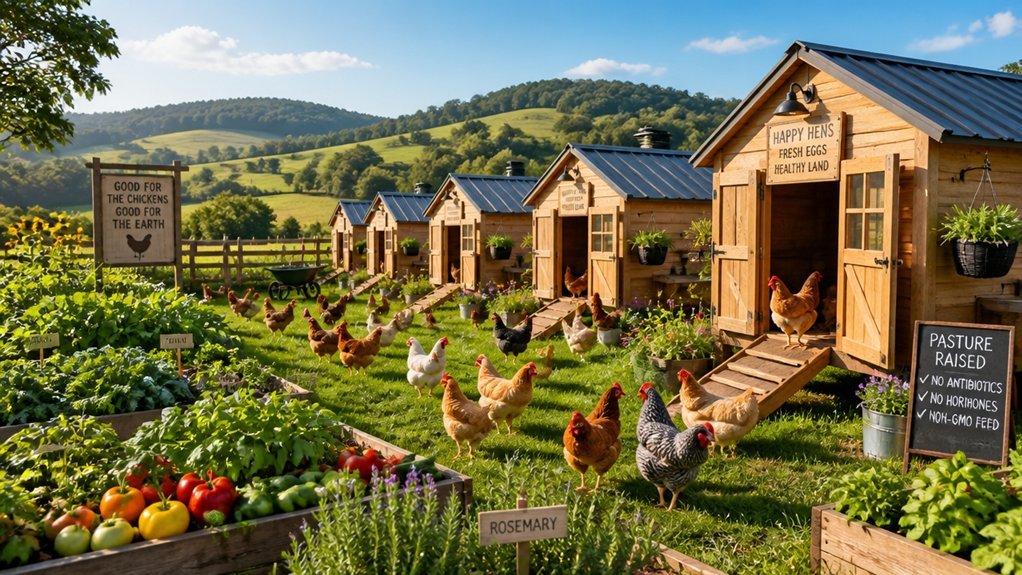
Pasture-based systems keep start-up costs low by letting birds do much of the work themselves, grazing fresh forage and moving regularly to new ground. You reduce feed bills, improve flock health, and build fertility as chickens scratch, peck, and spread manure across the pasture. Regularly rotating the flock and maintaining predator protection are essential to keep your birds safe and healthy in this system. This model works best when you match stocking rates to your land and monitor grass recovery closely. You’ll also cut bedding needs because birds spend more time outdoors, and you can market eggs or meat as pasture-raised for added value.
- Rotate birds before forage gets overgrazed
- Provide clean water, shade, and predator protection
- Track pasture rest to keep growth strong
Mobile Coop Setup
A mobile coop takes pasture-based efficiency a step further by letting you move the shelter, feeders, and water together as one unit. You can build one from lightweight lumber, salvaged wheels, or an old trailer frame, then size it to fit your flock and your towing method. Keep the floor raised enough to stay dry, and use mesh walls for airflow while protecting birds from predators. Add handles or a hitch so you can shift it daily with minimal labor. When you move the coop often, you give your chickens fresh ground, reduce soil stress, and avoid permanent infrastructure costs. You’ll also keep bedding cleaner and make management simpler, which helps your low-cost farm stay flexible, productive, and easy to expand. Incorporating walk-in coop features such as removable trays and easy access doors can further streamline cleaning and maintenance, making your mobile setup even more efficient.
Waste-Free Feeding
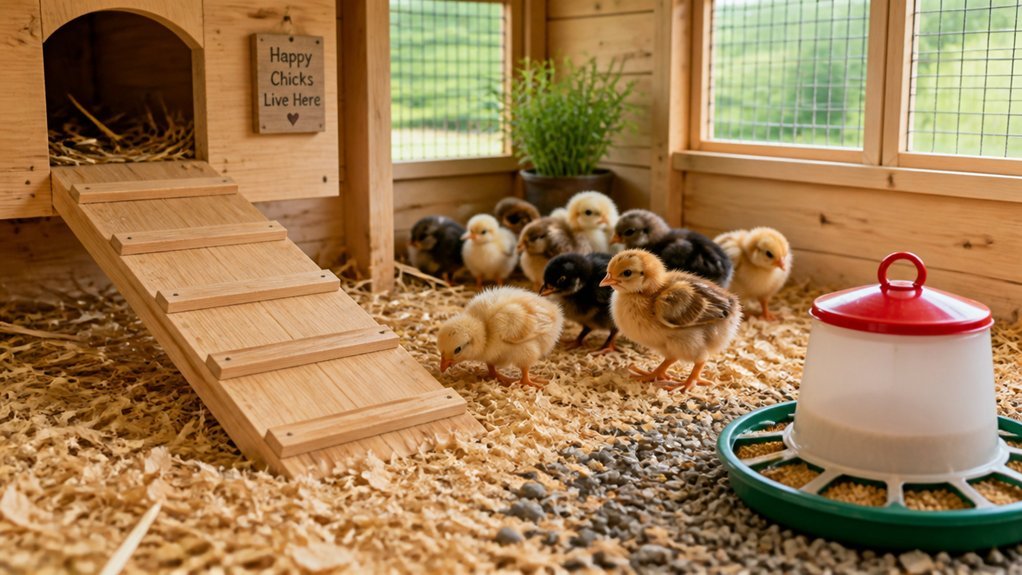
To cut feed costs without cutting flock performance, focus on ways to make every bite count. You can reduce waste by using sturdy feeders that keep hens from scratching out grain, and you should place them at back height to limit spillage.
Offer scratch feed sparingly so birds don’t scatter it, and mix in garden trimmings, kitchen scraps, and harvested greens to stretch rations. Rotate feeding stations if dominant birds guard one spot, and always store feed in sealed bins to block moisture and pests. Compost any bedding or leftover scraps you can’t reuse.
Using gravity feeders designed for minimal waste can also help ensure your flock gets every bit of feed efficiently.
- Use deep, narrow feeders to curb waste.
- Feed only what your flock will finish.
- Recycle safe leftovers into compost or treats.
Set Up a Small Chicken Farm
Start by choosing a site with good drainage, easy access to water, and enough space for both the coop and a small outdoor run.
Build the coop where it stays dry, catches morning sun, and avoids strong winds. Raise the floor slightly, add sturdy walls, and install windows or vents for fresh air.
Inside, give each bird enough roosting space and a nest box you can clean easily. Use smooth, washable surfaces to simplify sanitation.
Fence the run securely to keep predators out and let birds forage safely. Place feeders and drinkers where they stay clean and accessible.
Set up a simple compost area nearby for bedding and manure, so you can manage waste efficiently and keep the farm organized. Proper fence height and secure materials are essential to prevent chickens from escaping or digging under the fencing.
Choose Breeds for Profit and Resilience

Choosing the right breeds can make or break your farm’s profits, so focus on birds that grow efficiently, lay steadily, and handle your local climate well. You’ll do better with breeds that match your goals, whether you want eggs, meat, or a balanced dual-purpose flock. Selecting breeds based on climate adaptability ensures your flock stays healthy and productive year-round. Hardy birds usually need less help, recover faster from stress, and keep performing through weather swings. Look for calm temperaments too, since easier handling saves time and reduces losses. Test a few breeds on a small scale before expanding so you can see which ones thrive on your land.
- Pick dual-purpose breeds for flexibility.
- Choose heat- or cold-tolerant birds.
- Track growth, laying rate, and survival carefully.
Cut Feed Costs Without Slowing Growth
Once you’ve picked birds that fit your climate and goals, the next profit lever is feed, since it usually drives the biggest ongoing cost. You can trim that bill by matching protein levels to age and purpose, so chicks get richer feed and mature birds don’t waste costly nutrients.
Offer measured portions instead of free-feeding, and keep feeders adjusted to reduce spill. Let birds forage on pasture, garden scraps, and safe crop leftovers to stretch rations, but keep their diet balanced.
Buy feed in bulk only when you can store it dry and pest-free. Monitor weights and adjust rations quickly if growth slows.
Incorporating appropriate feed forms and supplements can further enhance shell strength and overall flock health, ensuring that every feeding contributes efficiently to your profitability.
Clean water, shade, and low-stress housing also help birds convert feed efficiently, so every pound you buy works harder.
Turn Eggs, Meat, and Manure Into Income
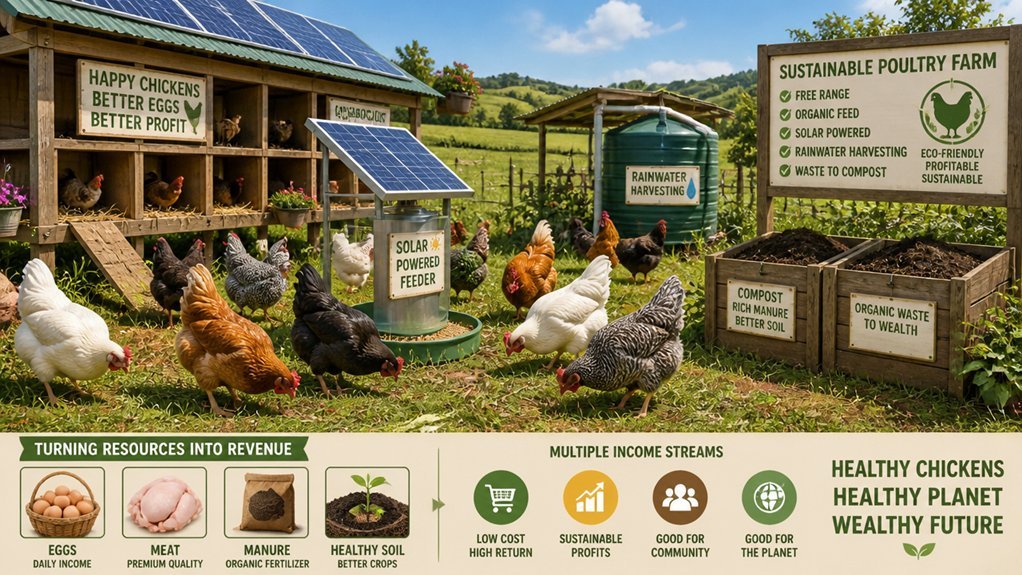
Eggs, meat, and manure can each become a steady revenue stream when you plan for all three from the start. You can sell fresh eggs to neighbors, restaurants, or a weekly market, then batch extra hens or cockerels for meat when they reach the right weight.
Package birds cleanly, price by local demand, and keep simple records so you know which channel pays best. Manure adds another layer of income when you compost it and offer it as fertilizer to gardeners or growers who value natural inputs.
- Price eggs by size, freshness, and delivery convenience.
- Schedule meat sales around peak demand and low processing costs.
- Compost manure well and market it as a soil booster.
- Choose a suitable compost bin to ensure efficient manure decomposition and maximize its value as fertilizer.
Reduce Waste on a Small Chicken Farm
Reducing waste on a small chicken farm starts with using every output well and cutting losses before they grow. You can save money by measuring feed carefully, storing it dry, and sealing bins tightly so rodents and moisture don’t ruin it.
Using compost pails with odor control features helps manage chicken scraps efficiently, preventing unpleasant smells and pests. Compost bedding, feathers, and manure instead of hauling them away, then use the finished compost on crops or sell it locally. Collect broken eggs separately and turn them into animal feed where safe and legal. Repair cracked drinkers and feeders quickly to prevent spills.
Track death losses, wasted feed, and unused materials each week so you spot problems early. Reuse cardboard, buckets, and packaging when possible. When you plan purchases around demand, you avoid overbuying and keep your farm lean, efficient, and profitable.
Welfare Practices That Improve Output
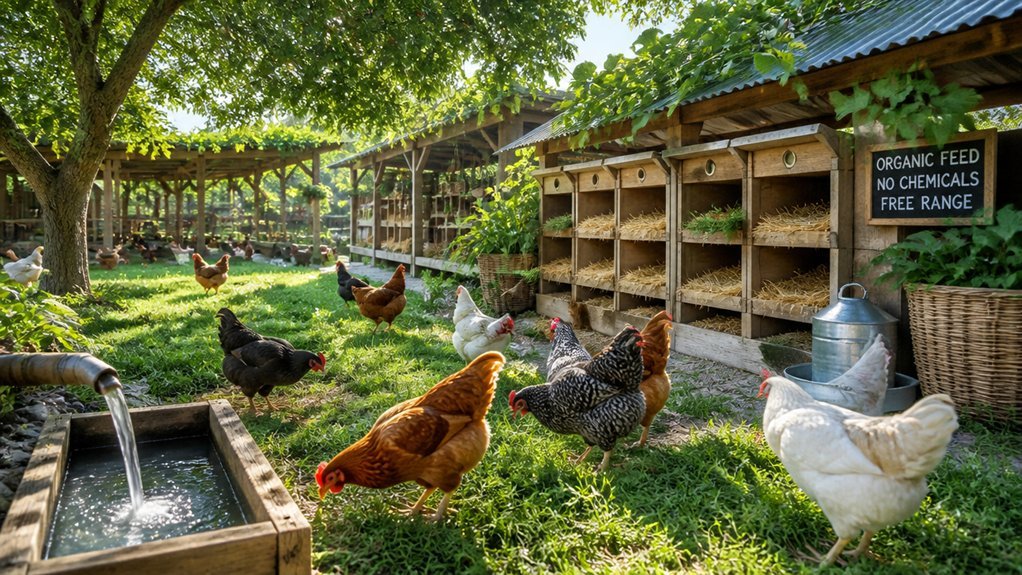
When you treat bird welfare as part of production, you’ll usually see better growth, steadier laying, and fewer losses. You should give birds enough space, dry bedding, clean water, balanced feed, and shelter from heat, cold, and predators. Less stress means they eat better, fight less, and convert feed more efficiently.
Bird welfare boosts growth, steadier laying, and fewer losses.
Gentle handling also keeps them healthier and reduces injuries that cut output. Choose breeds suited to your climate and manage stocking density so birds can move, perch, and rest comfortably. If you watch body condition and behavior, you’ll spot problems early and act fast.
- Provide fresh air and shade
- Keep housing clean and dry
- Select calm, productive breeds
Daily Routines for Small Chicken Farms
Your daily routine starts with morning coop checks, where you look for signs of illness, damage, or escape routes.
Next, you feed and water your flock so they stay healthy and productive throughout the day.
In the evening, you handle cleanup tasks to keep the coop sanitary and ready for tomorrow.
Morning Coop Checks
Before the day gets busy, a quick morning coop check keeps your flock healthy and your operation running smoothly. You’ll spot problems early, reduce stress, and protect your birds before small issues grow.
Walk the coop, watch for limping, drooping wings, or unusual silence, and note anything out of place. Check locks, vents, and nesting areas to make sure the space stayed secure overnight.
- Look for fresh droppings and signs of pests.
- Confirm bedding stays dry and clean.
- Scan roosts, doors, and windows for damage.
A calm routine helps you catch trouble fast and keeps your small-scale farm efficient. When you make these checks part of your morning rhythm, you support healthier hens, better egg production, and fewer surprise setbacks throughout the day.
Feeding And Watering
Feeding and watering set the tone for the rest of the day, so give your flock fresh feed and clean water first thing each morning. You should match portions to your birds’ age, breed, and production stage, then refill feeders before they empty.
Use balanced rations that support growth, egg laying, and overall health, and keep feed dry to prevent waste and spoilage. Check waterers for leaks, algae, and dirt, and scrub them often so your flock always drinks safely. In hot weather, watch closely for increased water use and refresh supplies more frequently. Scatter a little scratch or greens only as a treat, not a main diet.
When you stay consistent, your chickens stay healthier, you reduce losses, and your farm runs more efficiently.
Evening Cleanup Tasks
As daylight fades, do a quick cleanup so the coop starts the night dry, tidy, and safe. You’ll boost flock health, cut odors, and make morning chores easier. Start by removing wet bedding, scraping droppings boards, and checking for spilled feed that can attract mice.
Then top off nesting boxes with clean straw and close any gaps that let in drafts or predators. Watch each bird for limping, puffed feathers, or odd behavior, and separate anyone who seems off.
- Empty waterers if they’re dirty.
- Lock doors, latches, and pop holes.
- Sweep walkways to reduce mud and flies.
Finish by noting feed use, egg count, and any repairs you need tomorrow. Consistent evening cleanup helps your small farm stay efficient, sanitary, and profitable.
Common Costs That Reduce Profit
Even well-run small chicken farms can see profits shrink when hidden expenses stack up. You may overlook feed waste, pricey supplements, and poor storage that ruins grain. Veterinary bills can spike when you delay prevention and treat sick birds late. Bedding, water, and electricity also nibble at margins, especially if you use more than you need.
Labor costs rise when chores take longer because you’ve set up inefficient routines. Predators, weather damage, and broken equipment add surprise repairs. If you buy chicks, packaging, or processing services at retail prices, your costs climb fast.
Keep records, compare suppliers, and spot waste early so you can protect profit without cutting bird welfare.
Scale a Small Chicken Farm Sustainably

How do you grow a small chicken farm without outpacing your land, labor, or budget? You scale by adding birds only when your feed, housing, and pasture can absorb them. Track egg sales, mortality, and labor hours before each expansion.
Keep your flock healthy with rotation, clean water, and biosecurity, so you don’t trade growth for losses. Use modular coops and movable fencing to expand in stages, not all at once.
- Add one housing unit at a time.
- Match flock size to forage and waste capacity.
- Reinvest profits into better systems, not just more birds.
When you plan each step, you protect cash flow and keep your farm efficient, resilient, and profitable.
Frequently Asked Questions
How Long Does It Take to Recover Startup Costs?
You’ll usually recover startup costs in 1 to 3 years, depending on your flock size, feed costs, pricing, and sales channels. If you keep expenses low and sell well, you can break even faster.
What Permits Are Required for Small Chicken Farms?
You’ll usually need zoning approval, a business license, animal welfare compliance, and sometimes environmental or health permits. You should also check local setback, waste, and egg-sale rules, since requirements vary by county and state.
How Do You Market Sustainable Chicken Products Locally?
You market sustainable chicken products locally by selling at farmers’ markets, partnering with restaurants, joining community co-ops, and sharing your farm story online. You’ll build trust, highlight freshness, and offer samples to attract repeat buyers.
What Insurance Should a Small Chicken Farm Carry?
You should carry general liability, property, farm liability, workers’ compensation, and poultry mortality coverage. You’ll also want auto insurance for deliveries, plus business interruption protection and product liability if you sell eggs or meat.
How Do Seasonal Changes Affect Farm Profitability?
Seasonal changes hit your profitability through feed costs, egg production, heating bills, and disease pressure. You’ll earn more in mild months and spend more in winter, so plan housing, storage, and flock timing carefully.
In Summary
In a small-scale sustainable chicken farm, you can boost profit by keeping costs low, choosing hardy, fast-growing breeds, and managing feed, health, and welfare well. When you set up smart systems and stick to consistent daily routines, your flock stays productive without wasting resources. Watch for common expenses that eat into margins, and scale only when your setup can handle it. With the right approach, you can build a farm that’s both profitable and sustainable.