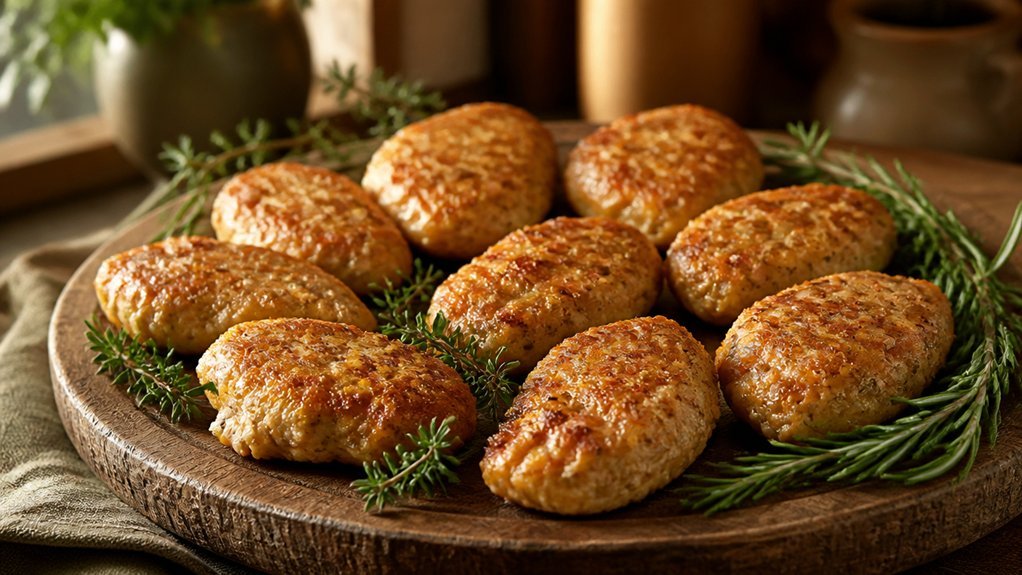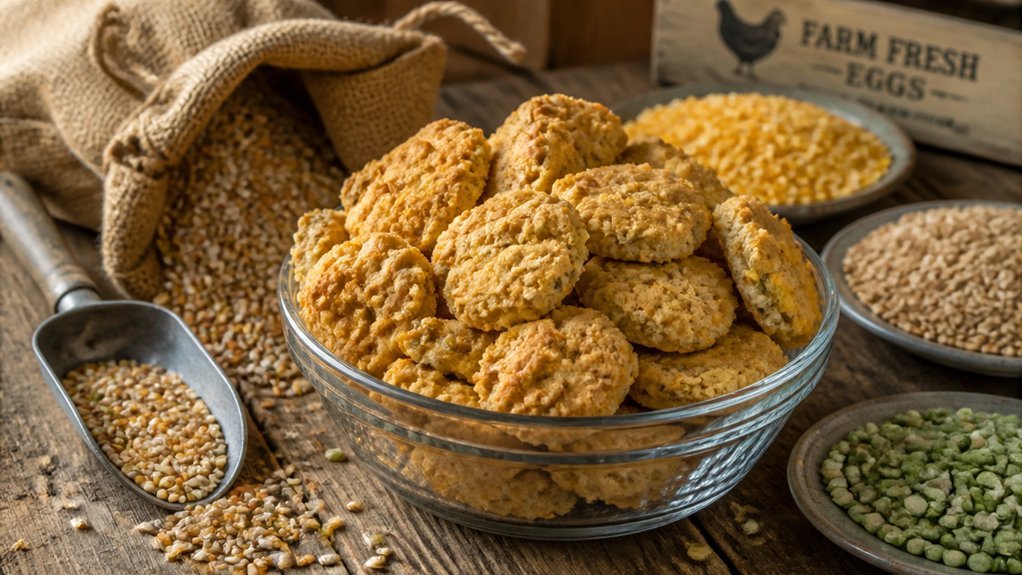
You can make homemade chicken scratch treats by mixing cracked corn, oats, wheat, barley, millet, and a few sunflower hearts or seeds, then adding small amounts of dried herbs or unsweetened fruit. Keep the mix mostly grains so it stays a snack, not a meal, and avoid salty, moldy, or processed ingredients. Dry it at low heat until firm, cool it fully, and store it airtight. With a few simple tweaks, you can make each batch even better.
Why Homemade Chicken Scratch Treats Help
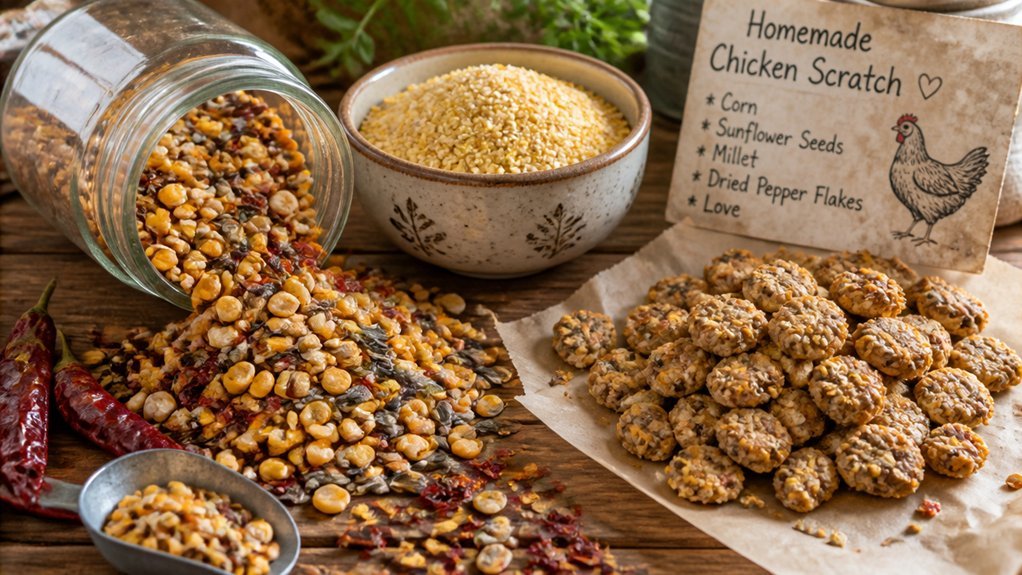
Homemade chicken scratch treats help you control exactly what your flock eats, so you can skip the fillers, excess salt, and questionable additives found in some store-bought mixes. You also match the mix to your birds’ needs, which matters when you want better nutrition without overdoing it.
When you make the treats yourself, you can tailor them for energy, season, and flock size. That flexibility lets you reward your chickens without relying on a bagged blend that may be too heavy in corn or too light in variety.
You’ll also know what goes into each serving, which helps you manage portions and avoid waste. Best of all, you can create a wholesome treat that supports active, healthy birds and fits your feeding style.
Additionally, incorporating natural ingredients ensures your chickens receive a balanced diet full of essential nutrients.
Gather Your Ingredients
Now that you know why making your own chicken scratch treats works so well, the next step is simple: gather the ingredients.
Gather your ingredients first, and the rest of the chicken scratch treat-making process becomes quick and easy.
Start with a clean bowl, measuring cups, and an airtight container for storage. Check your pantry for whole grains, cracked corn, oats, and dried herbs you already have on hand. Then set out a mixing spoon and a sheet pan if you want to blend everything evenly.
Keep your workspace dry and free of clutter so you can work quickly and safely. Before you mix anything, inspect each ingredient for freshness, insects, or odd smells. If something seems off, toss it.
Additionally, selecting appropriate grit size ensures your chickens can safely consume the treats without choking or digestive issues.
Having everything ready saves time and helps you make a consistent treat your flock can enjoy.
Choose the Best Seeds for Chickens
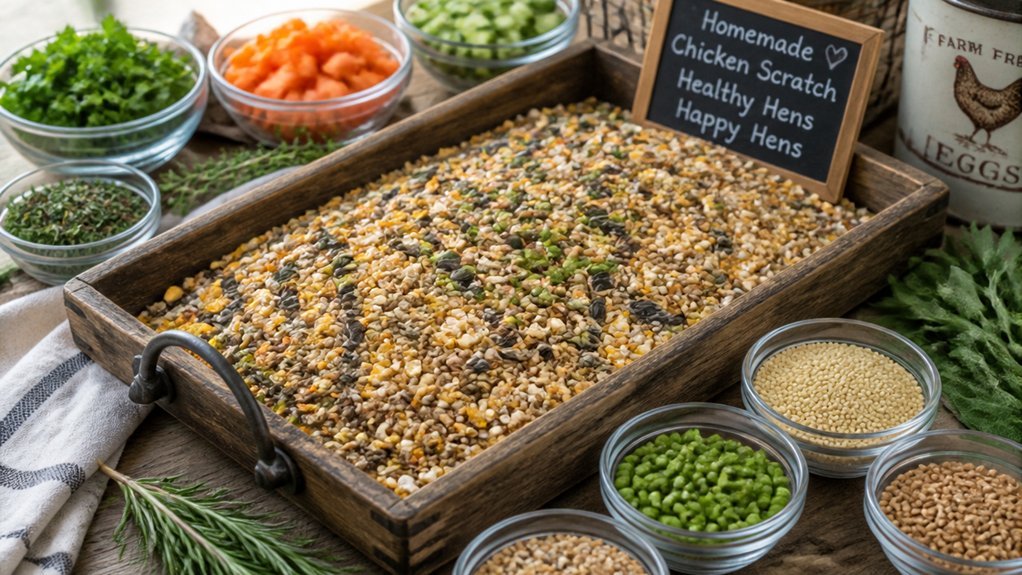
You’ll want to choose seeds that are safe for chickens, like millet, oats, and sunflower seeds. These options give your flock a tasty mix while also adding helpful nutrients.
Safe Seeds for Chickens
When you make chicken scratch treats, choosing safe seeds matters because the right mix gives your flock energy, variety, and enrichment without upsetting their digestion. You can offer simple, familiar seeds in moderation and keep the blend clean, dry, and free of mold. Avoid anything salted, seasoned, or coated. Introduce new seeds slowly so you can watch how your birds respond. Use the table below as a quick guide:
| Safe seed | Notes |
|---|---|
| Millet | Easy for chickens to peck |
| Oats | Good for a light treat |
| Sunflower hearts | Popular and easy to eat |
| Wheat | Common in scratch mixes |
| Milo | Handy in small amounts |
Rotate choices to keep treats interesting, and store them in airtight containers to protect freshness and quality. Organic grain sources and proper storage help ensure your flock receives high-quality, nutritious treats.
Nutritional Seed Choices
For the most nutritious chicken scratch, choose seeds that do more than fill your flock up—they should also bring protein, healthy fats, and steady energy.
Sunflower hearts give your chickens rich fat and protein, while millet offers easy-to-digest carbs that keep them active. Cracked corn works well in colder weather because it boosts calories, but don’t rely on it alone.
Oats add fiber and help balance the mix, and sesame seeds can supply extra minerals in small amounts. You should skip moldy, salted, or seasoned seeds, since those can harm your birds.
Aim for variety, and keep scratch treats to a modest portion so they complement, not replace, a complete feed. That way, you’ll reward your flock and support better health. Including balanced amino acids in treats helps ensure optimal growth and immune development.
Choose Safe Add-Ins for Chickens
You can round out your chicken scratch with safe grain mixes that add variety without upsetting their diet. Try small amounts of healthy fruit add-ins like chopped berries or apples for a fresh treat. Just keep portions modest so your flock stays balanced and happy. Incorporating a variety of balanced nutrients supports their overall health and egg production.
Safe Grain Mixes
Safe grain mixes help you turn simple scratch into a healthier treat by adding a few chicken-friendly extras in the right amounts. You can blend cracked corn with oats, barley, or wheat to give your flock variety and steady energy.
Keep the base mix simple so your chickens still recognize it as a treat, not a meal replacement. Use whole grains or lightly rolled grains, since they’re easy to scatter and peck.
You should also measure portions carefully and offer scratch sparingly, especially in cold weather when birds may eat more. If you make your own mix, store it in a dry container to prevent mold. Fresh, clean grains keep the treat safe, appealing, and useful for training or hand-feeding.
Adding proper storage methods can help maintain the freshness and nutritional quality of your homemade treats over time.
Healthy Fruit Add-Ins
Fresh fruit can make scratch mix more enticing, but it should stay a small bonus, not the main event. You can offer tiny, soft pieces of fruit as a treat, especially on hot days when your flock needs a cool snack.
Pick clean, ripe options and remove pits, seeds, and peels when needed. Keep portions small so you don’t upset digestion or crowd out balanced feed.
- Apples, chopped and seedless
- Berries, whole or halved
- Melon, cubed and fresh
- Bananas, sliced thin
You should skip moldy fruit, citrus, and anything sugary or processed. Toss fruit into scratch only occasionally, and watch how your chickens respond. If they peck enthusiastically and stay active, you’ve picked a safe add-in. Incorporating healthy ingredients like fresh fruit helps maintain natural foraging behaviors and supports overall flock health.
Use the Right Scratch Ratio
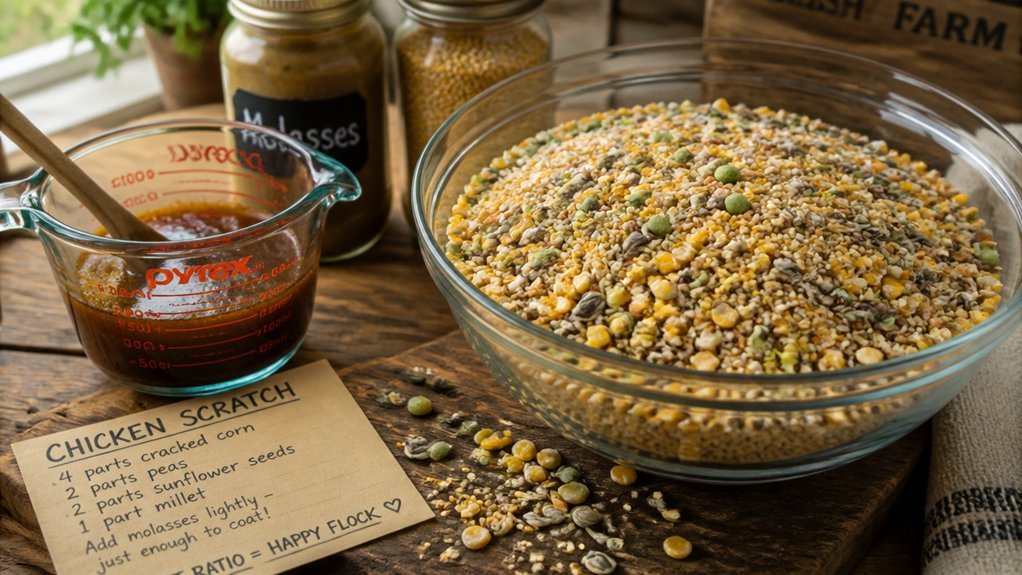
A good homemade chicken scratch treat starts with the right ratio, so the mix stays tasty without replacing a balanced feed. You should keep scratch grains as the base and use add-ins sparingly.
Aim for mostly cracked corn, oats, wheat, or barley, then fold in small amounts of seeds, dried fruit, or herbs for variety. If you load the mix with extras, your chickens may fill up on treats and eat less of their regular feed. That can throw off nutrition fast.
To maintain optimal health, ensure the treat does not exceed recommended feeding guidelines, which advise keeping treats as a small part of the overall diet. Keep each serving modest, especially for laying hens and young birds. A simple rule is to treat scratch as a snack, not a meal. When you measure carefully, you help your flock enjoy the mix while staying healthy, active, and well fed every day.
Mix the Chicken Scratch Treats
Once you’ve measured your grains and add-ins, combine them in a large bowl or container and stir well so everything is evenly distributed. Use a spoon, spatula, or clean hand to lift from the bottom and turn the mix over several times. You want every scoop to look consistent, with no clumps or bare patches. Incorporate natural ingredients to enhance the nutritional value of your treats and support your flock’s health. When the blend looks uniform, transfer it to a clean jar, bin, or feed-safe container. Keep the lid tight so your chicken scratch stays fresh and ready to serve.
Add Herbs, Grains, or Dried Fruit
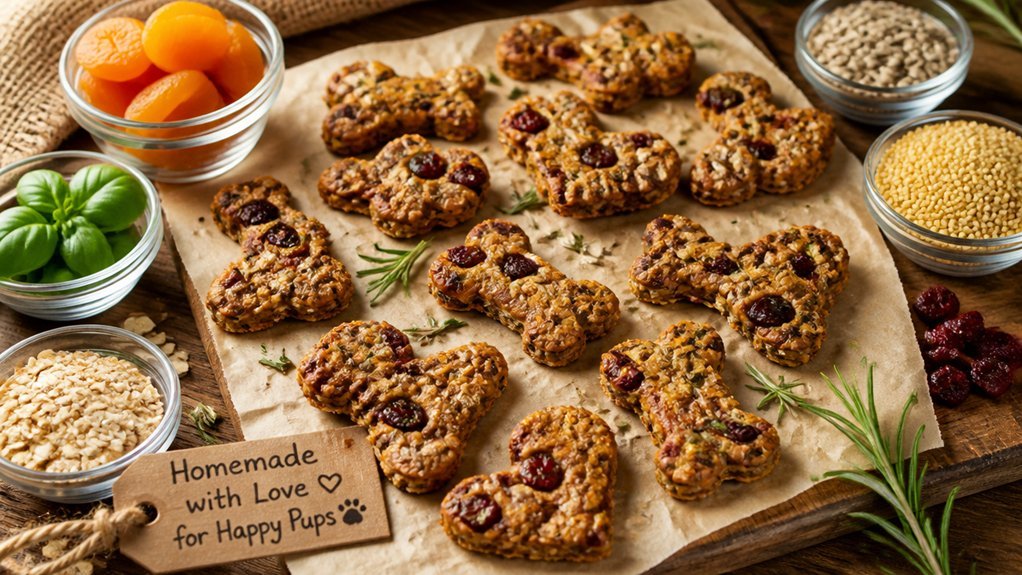
If you want to boost flavor and variety, stir in a small amount of dried herbs, extra grains, or unsweetened dried fruit after the main mix is combined.
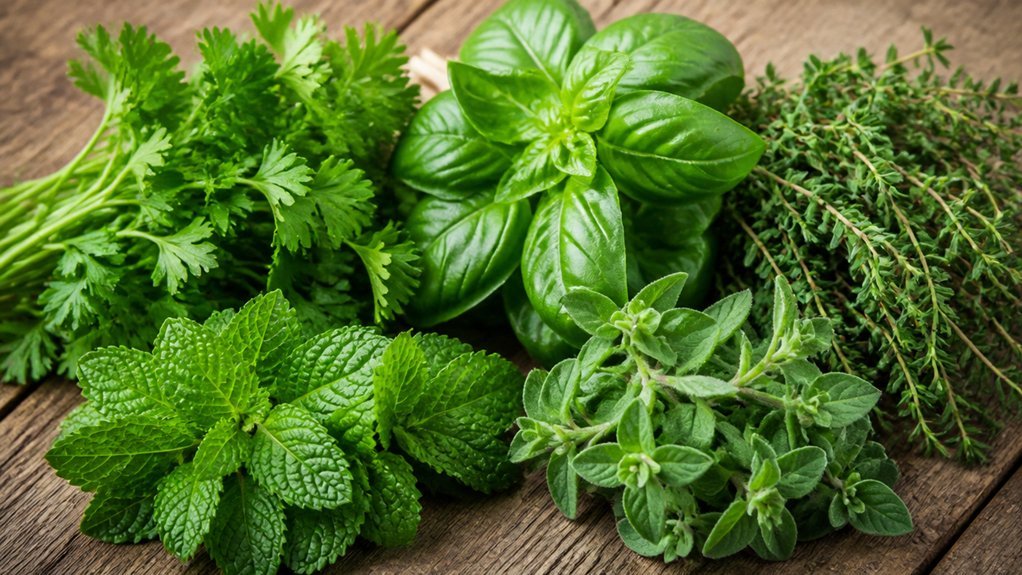
You can use parsley, oregano, basil, oats, barley, millet, or cracked corn to add interest and texture. Keep portions modest so the treats stay balanced and easy for your chickens to eat.
If you choose dried fruit, pick plain pieces with no added sugar, oil, or spices, and chop them into tiny bits. Mix everything evenly so no ingredient clumps in one spot.
You’ll give your flock a more appealing scratch treat while still keeping the recipe simple and wholesome. Check the blend for even distribution before you move on, and remove any large, hard, or sticky pieces that could cause problems. Additionally, incorporating natural calcium sources like crushed oyster shell can support healthy eggshell development.
Bake or Dry the Treats
You can bake your chicken scratch treats at a low, steady temperature so they dry without burning. Keep an eye on the time, because thicker treats need longer to reach a crisp, dry texture.
Let them cool completely before you serve them so they firm up and stay safe for your chickens.
Baking Temperature Basics
What’s the best baking temperature for chicken scratch treats? You’ll usually do well at a low oven setting, around 200°F to 250°F, so the grains dry gently without scorching. Keep your oven steady and avoid high heat, which can brown the outside too fast.
- Preheat your oven fully before the tray goes in.
- Spread the mixture in a thin, even layer.
- Use parchment so the treats don’t stick.
- Check the color often and rotate the tray if your oven runs hot.
You’re aiming for gentle heat that preserves the grains’ natural flavor and keeps them from overcooking.
If you’re using a dehydrator instead, follow the same idea: low, steady warmth works best.
Drying Time And Texture
Drying time depends on how thick your mixture is and how much moisture it holds, but most chicken scratch treats need about 45 minutes to 1.5 hours in a low oven or dehydrator.
You should check them halfway through and rotate the trays if your oven heats unevenly. Aim for a firm, dry exterior that doesn’t crumble when you lift a piece.
If the treats still feel soft or sticky, keep drying them a little longer. Thinner shapes usually finish faster, while thick clusters take more time and may need extra attention.
Don’t rush this step, because proper drying helps the treats hold their shape and keeps the texture pleasant for your flock. A lightly crisp finish works best, especially for scratch-style snacks.
Cooling Before Serving
Once the treats finish baking or drying, let them cool completely before offering them to your chickens. Hot scratch can burn beaks and tongues, and steam trapped inside can make the treats soften too soon. Set them on a wire rack so air reaches every side and moisture escapes.
You can use this quick check:
- Touch the center; it should feel fully cool.
- Break one piece and look for no warmth inside.
- Wait until the surface feels dry and firm.
- Store extras only after they’ve reached room temperature.
Cooling also helps the treats hold their shape better, so your flock gets crisp, safe bites. When you serve them chilled, your chickens can peck happily without risk, and you’ll keep the texture just right.
Cool and Store the Treats
Let the chicken scratch treats cool completely on the baking sheet before you move them, since warm treats can break apart or trap moisture.
Once they’re cool, lift them gently with a spatula and place them on a wire rack if you want extra air circulation. You can store the treats in an airtight container, a resealable bag, or a clean jar with a tight lid.
Keep them in a cool, dry spot away from sunlight and humidity. If you notice any softness, let them air-dry a bit longer before sealing them up.
Label the container with the date so you can use the oldest batch first. For longer storage, you can freeze the treats in portions and thaw only what you need.
Feed Chicken Scratch Treats Safely
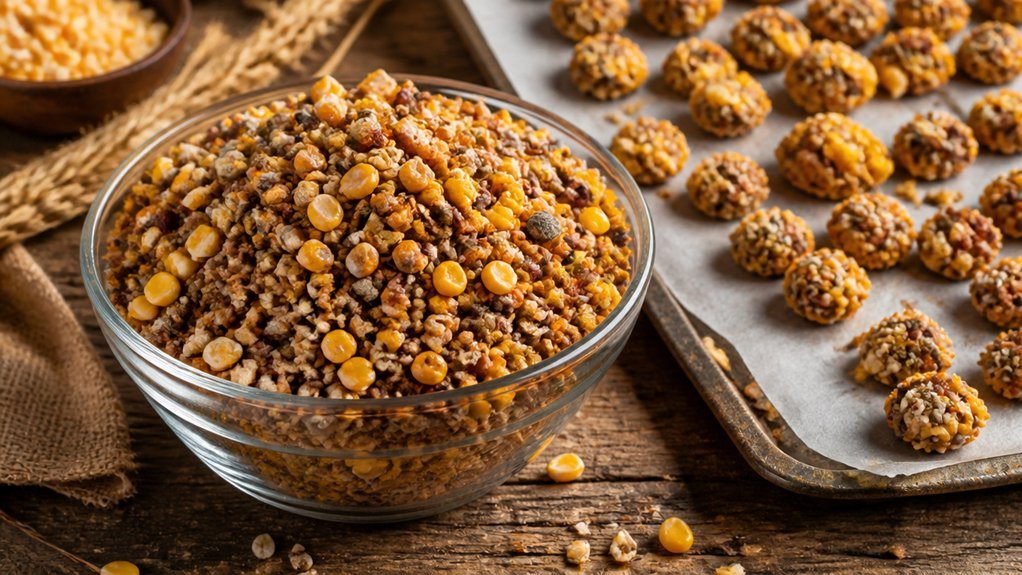
When you’re ready to feed chicken scratch treats, offer them only as a supplement, not a full meal, so your flock still gets balanced nutrition from their regular feed.
Offer chicken scratch only as a supplement, so your flock still gets balanced nutrition from regular feed.
Keep portions small and spread them on clean ground or in a shallow dish so every bird can eat without crowding. You can follow this simple routine:
- Measure a modest handful for a small flock.
- Scatter it after the birds have eaten their main feed.
- Watch shy hens so they don’t get pushed away.
- Remove any leftovers before dusk to keep pests away.
Always check that the treats stay dry, fresh, and free of mold.
If a bird ignores the scratch or acts off, skip the treat and observe closely.
Customize Treats by Season
You can also adjust chicken scratch treats to match the season, which helps keep your flock comfortable and interested year-round.
In summer, you can lighten the mix with oats, millet, and chopped herbs so your birds get a revitalizing snack without too much richness. In winter, you can add cracked corn, sunflower seeds, and a little dried fruit to give them extra energy for cold mornings.
During spring, try including fresh greens or sprouted grains for a nutrient boost while your hens recover from molting or start laying more. In fall, mix in pumpkin seeds or dried mealworms to support feather growth.
Avoid Common Chicken Scratch Mistakes
Even the simplest scratch mix can cause problems if it’s made carelessly. You can protect your flock by avoiding a few common errors and watching how they react at feeding time.
- Don’t overdo corn or sunflower seeds; too much can crowd out balanced feed.
- Skip dusty, moldy, or stale ingredients because chickens need clean, fresh grains.
- Don’t offer scratch as a full meal; use it as a treat so birds still eat their layer feed.
- Avoid scattering it too late in the day, when hens may gorge and waste leftovers.
You should also watch for birds that peck aggressively or ignore certain ingredients. If you notice problems, adjust the mix right away and keep portions small.
Consistency helps your flock stay healthy and enthusiastic for treats.
Make Chicken Scratch Treats in Bulk
Making chicken scratch treats in bulk saves time and keeps your flock’s favorite snack ready to go. You can mix oats, cracked corn, sunflower seeds, and dried herbs in a large bowl, then portion the blend into airtight jars or freezer-safe bags. Label each container with the date so you’ll know what to use first.
If you want extra convenience, divide the mix into single-serving scoops before storing it. Keep your bulk batch in a cool, dry place to prevent spoilage and pests.
When you’re ready to feed your hens, sprinkle a small amount over bedding or scratch it into the run. This method helps you stay prepared, cut down on prep work, and keep your chickens excited for treat time.
Frequently Asked Questions
Can Chickens Eat Homemade Scratch Treats Every Day?
No, you shouldn’t feed chickens homemade scratch treats every day because they’re too calorie-dense. You can offer them sparingly as a treat, while keeping their main diet balanced with complete feed and fresh water.
Do Chicken Scratch Treats Attract Mice or Rats?
Yes, chicken scratch treats can attract mice or rats if you leave them out. You’ll reduce pests by feeding only what your flock eats quickly, storing extras in sealed containers, and cleaning spills promptly.
Can I Use Kitchen Scraps in Chicken Scratch Treats?
Yes, you can use kitchen scraps, but you’ll need to keep them dry, safe, and poultry-friendly. Avoid salty, moldy, or spoiled foods, and don’t add meat or greasy leftovers to your scratch treats.
How Long Do Homemade Scratch Treats Stay Fresh?
They’ll stay fresh about 1 to 2 weeks if you store them airtight in a cool, dry place. You can refrigerate them longer, but toss any treats that smell stale or show mold.
Are Chicken Scratch Treats Safe for Chicks?
Not really—chicks shouldn’t eat scratch treats because you’ll give them too much fat and not enough protein. Use starter feed instead, and if you offer anything, keep it tiny and wait until they’re older.
In Summary
Now you know how to make homemade chicken scratch treats that your flock will love. By choosing safe seeds, using the right mix, and feeding them in moderation, you can give your chickens a healthy boost without overdoing it. Keep treats seasonal, store them well, and avoid common mistakes to keep your birds happy and thriving. With a little prep, you can make scratch treats in bulk and simplify feeding time.