
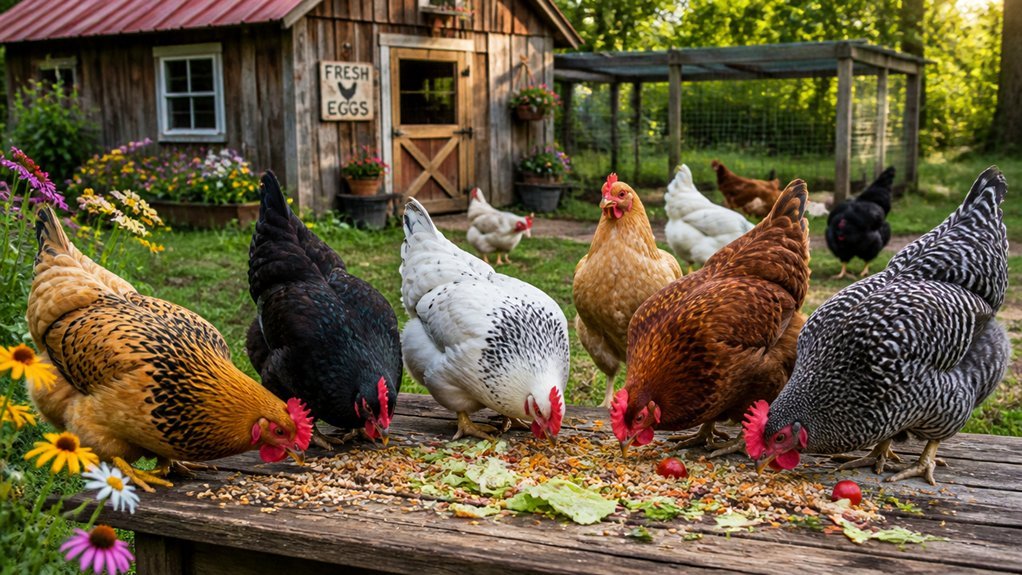
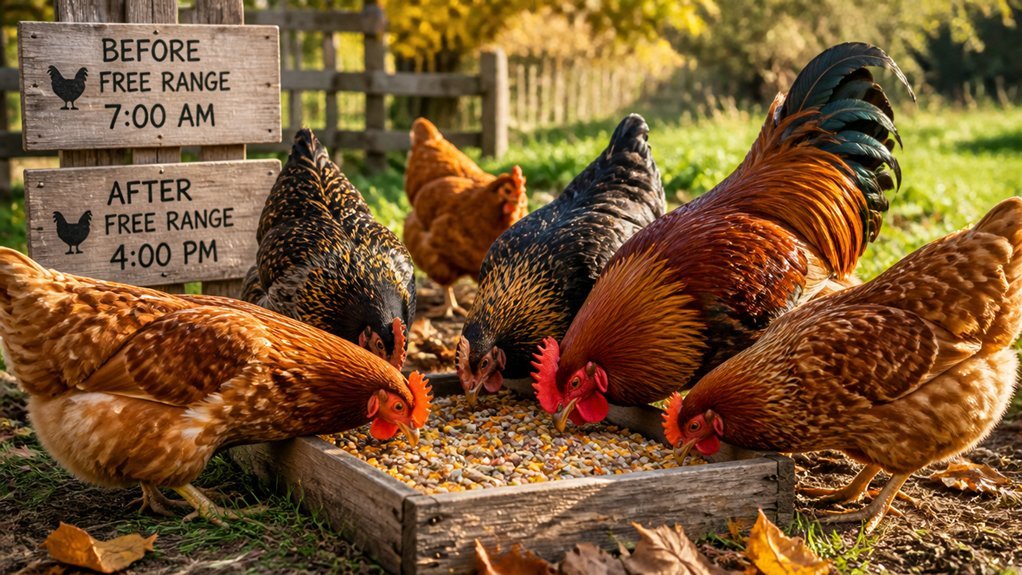
Feed your chickens a complete layer or grower feed before you let them roam, and keep fresh water and grit nearby. Feed at dawn or when they return so they learn a steady routine. After foraging, cut back slightly only if they’ve had plenty of grass and insects, and watch body condition and eggs. Offer treats after their main feed, not instead. Adjust portions with the seasons, and you’ll notice what works best over time.
Set the Right Feed Before Free Ranging
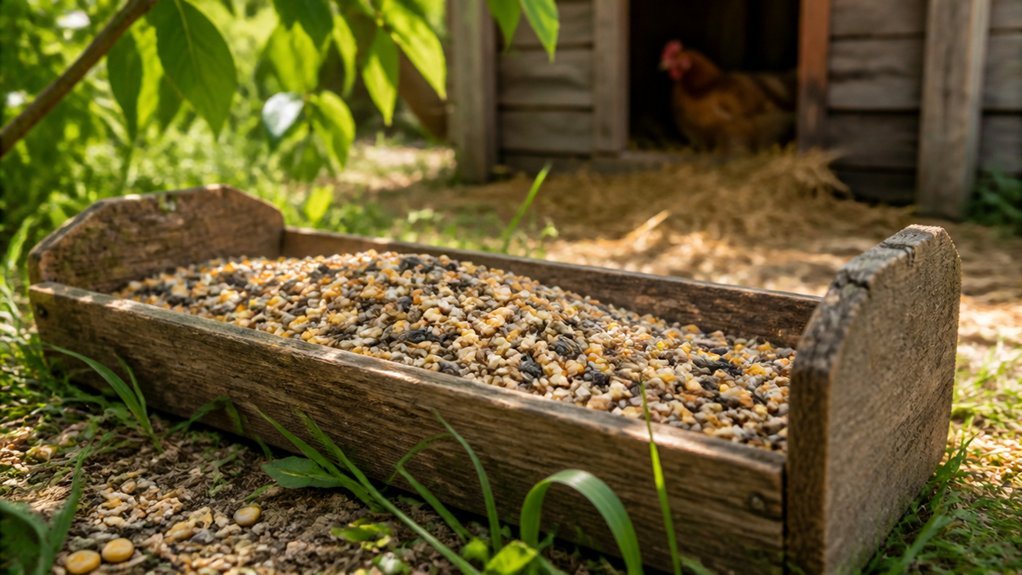
Before you let your chickens free range, make sure they’re getting the right feed first. You should offer a complete layer or grower feed that matches their age and purpose, because free-ranging won’t supply everything they need.
A balanced ration gives them enough protein, vitamins, and minerals to support eggs, feathers, and overall health. Don’t rely on scraps or grass alone; those foods can leave gaps in nutrition. Keep feed fresh, dry, and available in a clean feeder so your flock can eat before they roam.
When you start with solid nutrition, your chickens can forage more confidently and stay healthier. If you’re raising chicks, use chick starter instead, since their needs differ from adult birds. Proper feed form also influences intake consistency and shell quality, supporting their health during free-ranging.
Time Feedings Around Free-Range Hours
Try to feed your chickens when they’re most likely to be in the coop, not out ranging. Offer feed early in the morning before you open the run, or in the evening when they return and settle down. That way, you can make sure each bird gets a fair share without competition from grass, bugs, or distractions outside.
Implementing scheduled feedings also helps prevent waste and spoilage, especially when using waste reduction features on feeders to keep feed clean and minimize scattering.
If you keep a regular schedule, your flock will learn when to come back, and feeding will feel more orderly. You can also use mealtime to check appetite, behavior, and overall condition.
When you time feedings well, you reduce missed meals and keep your routine steady. Aim for consistency, because chickens thrive when they know when food appears and when the coop is home.
Adjust Feed After Foraging
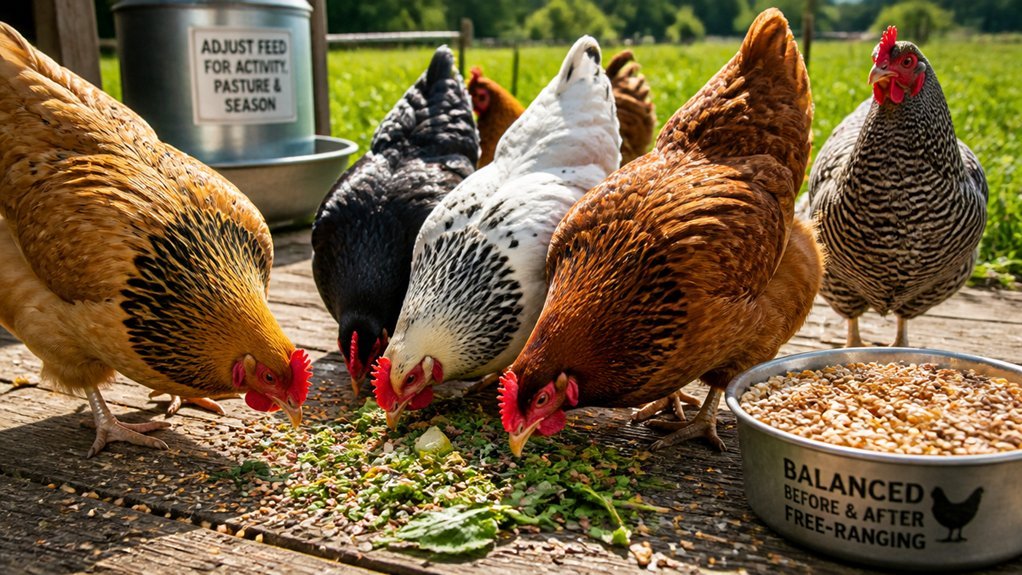
When your chickens spend more time foraging, you can usually scale back their feed a bit, since grass, seeds, insects, and garden scraps all add to what they eat.
More foraging can mean a little less feed, since grass, seeds, insects, and scraps all help nourish your flock.
Watch their body condition, egg output, and energy, then adjust the ration in small steps. If they look thin, peck hungrily at the feeder, or eggs drop, offer a little more layer feed. If they leave feed behind and still seem active, reduce it slightly.
Keep the feed nutritious, not diluted, so they still get enough protein, calcium, and vitamins. You can also split the ration into morning and evening portions so they eat steadily without overeating.
Recheck every few days, because forage quality changes with weather, season, and pasture condition.
Keep Water and Grit Ready
Even with better forage, your chickens still need fresh water and grit every day. You should place clean water where every bird can reach it, and check it often because free ranging increases thirst. Shade the container so it stays cooler, and scrub it before algae or droppings build up. If you move the flock around, carry water to the grazing area instead of making them travel far. Keep grit available in a separate dish or feeder. Chickens use it to grind fibrous plants, seeds, and insects they pick up outside. Even if your yard has bare soil, don’t assume they’ll find enough on their own. Offer insoluble granite grit for adults, and keep it dry so it doesn’t clump. A steady supply helps digestion stay smooth and healthy. Proper placement and sanitation of waterers, such as using easy-clean materials, support ongoing flock health and cleanliness.
Balance Treats With Layer Feed
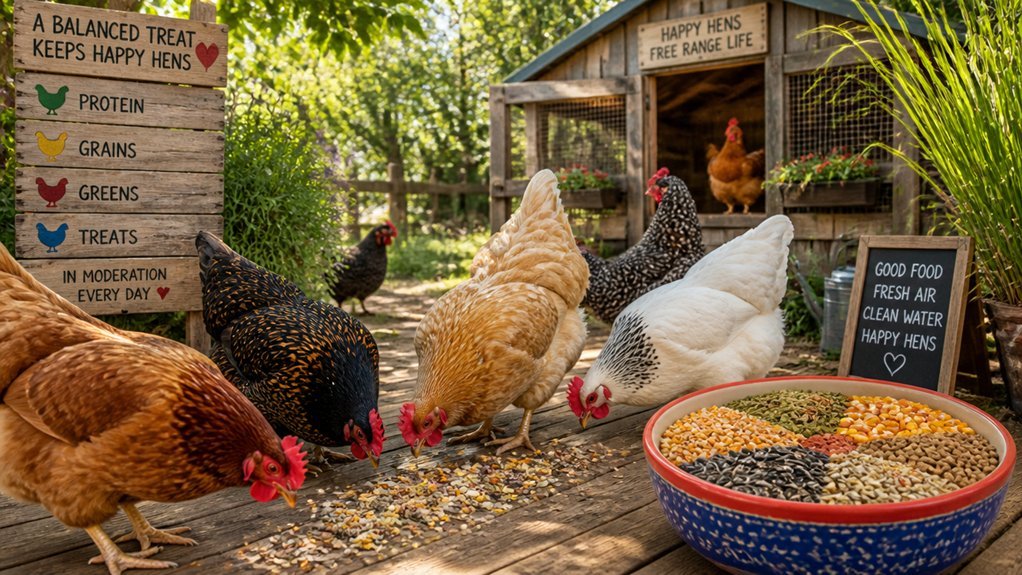
You can give your chickens treats, but keep them in moderation so they don’t crowd out their main diet.
Make layer feed the priority because it gives them the nutrients they need for steady egg production. A small treat now and then is fine, as long as it stays a supplement, not a replacement.
Incorporating probiotics and minerals into their diet can also support overall health and egg quality.
Treats In Moderation
Treats can be a fun part of feeding chickens, but they should stay just that—a small part of the diet. You can offer scratch grains, mealworms, vegetables, or fruit as rewards, yet you shouldn’t let snacks replace balanced feed.
Too many treats can dilute nutrition and leave your flock short on the protein, vitamins, and minerals they need. Keep portions small and occasional, and watch how your birds respond.
- Offer treats after they’ve eaten their regular feed.
- Break snacks into tiny pieces.
- Limit sugary or salty foods.
- Rotate healthy options for variety.
- Remove uneaten treats before they spoil.
- Nutritional balance is essential; providing high-quality dried mealworms supports their overall health and egg production.
When you treat chickens wisely, you help them stay healthy, active, and ready to lay.
Layer Feed First
Healthy treats still work best when they come after a solid base of layer feed. You should make layer feed the main meal because it gives hens the protein, calcium, and vitamins they need for strong shells and steady laying. Treats can add variety, but they shouldn’t replace a balanced ration. Feed layer feed first, then offer small extras after they’ve eaten well. Incorporating proper nutrition helps ensure your flock remains healthy and productive. When you keep feed first, you help your flock stay productive and healthy. If you free-range, top up the feeder before and after turnout so they don’t fill up on snacks alone.
Watch for Weight and Egg Changes
Keep an eye on your hens’ weight and egg production, since sudden changes often signal a feeding problem, stress, or illness. Check each bird regularly by feel and watch the nest box for shifts in laying pattern, shell quality, or egg size.
If a hen looks thin, quits laying, or drops weight fast, review what she’s eating and how much she’s getting. If she gains too much, she may need less rich feed and more movement.
- Note body condition weekly.
- Compare egg numbers over time.
- Watch for soft or thin shells.
- Track appetite and crop fill.
- Separate and observe any bird that changes fast.
- Electrolytes help support hydration and overall health during heat stress, ensuring your flock stays resilient.
Adjust the Feeding Schedule Seasonally
You can adjust your chickens’ feeding times as daylight changes through the year, since their routines often shift with seasonal light. In winter, you may need to feed a bit more to help them stay warm and maintain energy. In summer, offer feed during cooler parts of the day so they’ll eat comfortably despite the heat. Using weatherproof feeders with removable rain covers or hoods can also help protect feed from rain and moisture during storms or snow.
Seasonal Light Changes
As daylight shifts through the seasons, your chickens’ feeding needs can shift too. Shorter days often mean they spend less time foraging, so you may need to offer feed a bit earlier or keep it available longer. Longer daylight lets them roam more, which can slightly reduce what they eat at the feeder. Watch their behavior and adjust by small amounts, not big swings, so you keep a steady routine. Using no-waste feeders with enclosed ports can help minimize feed loss during these adjustments.
- Feed at dawn if mornings are darker.
- Remove leftover feed before nightfall.
- Offer more during low-forage daylight.
- Reduce waste by using covered feeders.
- Track appetite changes week by week.
Consistency matters more than exact timing. When you match feed access to changing light, you support healthy energy, steady egg production, and calmer flock routines.
Winter Feeding Adjustments
Winter changes call for a different feeding rhythm, especially when cold weather limits foraging and chickens burn more energy staying warm. You’ll want to feed earlier in the day so hens can eat before the temperature drops. Keep grain and layer feed available after dawn, then refresh it if they empty the feeder quickly. In winter, you can also split feed into two smaller meals to support steady energy.
| Time | Feed | Purpose |
|---|---|---|
| Morning | Layer ration | Quick energy |
| Midday | Scratch mix | Extra calories |
| Evening | Full ration | Overnight fuel |
Watch body condition and adjust portions if birds look thin. Provide clean water alongside feed, since dry winter air and frozen troughs can reduce intake and slow digestion.
Summer Heat Timing
When summer heat rises, shift feeding to the coolest parts of the day so chickens eat when they’re most comfortable. Offer breakfast at dawn and supper after sunset, when birds feel less stressed and appetite improves. You’ll keep feed fresher too, since heat can spoil wet scraps and mash fast. Using containers with airtight seals helps preserve feed quality in hot weather.
- Move feeders into shade.
- Refresh cool water before each meal.
- Reduce heavy midday feeding.
- Serve scratch only after dusk.
- Watch for panting, then adjust.
If your flock still skips feed, don’t worry; they often eat more once temperatures drop. Keep portions smaller in the afternoon and store feed in a dry, cool place.
Timing meals this way helps birds stay hydrated, maintain weight, and handle summer better.
Frequently Asked Questions
Can Free-Ranging Chickens Eat Grass Clippings Safely?
Yes, you can let free-ranging chickens eat grass clippings if you avoid clippings from treated lawns and keep them short. You’ll help them nibble safely, but don’t let piles mold or ferment.
How Do I Train Chickens to Return at Dusk?
You can train them by offering a consistent evening treat inside the coop, calling them at dusk, and closing them soon after they enter. Repeat daily, and they’ll learn to return reliably at dusk.
What Predators Target Free-Ranging Chickens Most Often?
You’ll most often face hawks, foxes, raccoons, coyotes, dogs, and snakes. Protect your flock with secure fencing, covered runs, and dusk lockup, since predators usually strike when you’re least watching.
Should Chicks Free-Range With Adult Hens?
No, you shouldn’t let chicks free-range with adult hens until they’re nearly full-grown. You can introduce them gradually in a secure run first, because hens may peck, trample, or outcompete them for food.
Can Free-Ranging Affect Egg Flavor?
Yes, free-ranging can change your eggs’ flavor a bit. Your hens may eat herbs, insects, and plants, which can make yolks richer and taste fresher, though diet, breed, and freshness matter more overall.
In Summary
By feeding your chickens the right way before and after free ranging, you help them stay healthy, active, and productive. You can set a steady routine, offer grit and fresh water, and keep treats in check so their layer feed still does the heavy lifting. Watch their weight, eggs, and appetite, then adjust as the seasons change. With a little consistency, you’ll support happier hens and better results every day.


